


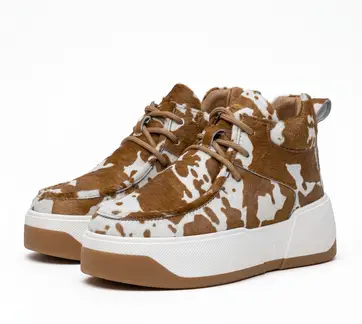

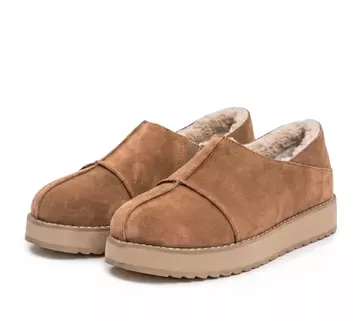
Sheepskin boots or winter boots: which to choose for winter
Sheepskin boots are warmer and lighter; leather boots handle slush, salt and ice better. We compare them on nine points using Babylon women's and men's models, with facts taken only from the product pages.


In short
Sheepskin boots are the warmest choice for dry frost: the product pages of Babylon's Frost-74 and Frost-84 state comfort from +5 to −20 °C. Leather or nubuck winter boots cope better with slush, road salt and ice thanks to a denser upper and a treaded sole; the men's Armor-11 with Winterfrost 500 insulation are rated +5 to −15 °C. For a dry, cold winter choose sheepskin boots; for a wet, icy one choose leather boots.
What is the main difference between sheepskin boots and winter boots?
Sheepskin boots are about warmth: sheepskin all the way up inside, a fur-covered insole and a light sole. Leather winter boots are about protection: a denser upper, a chunkier treaded sole and a firmer hold on the foot. So the choice depends on your winter: dry and frosty, or wet and icy.
The short answer:
- Dry frost, snow, lots of walking around town or driving — sheepskin boots.
- Slush, puddles, road salt, ice, long walks — leather boots.
- A mixed winter — ideally own both and alternate, so each pair has time to dry between outings.
Below we compare them point by point, using models from Babylon, a Ukrainian footwear factory with its own production in Kharkiv since 1997: the Frost-74 (women's) and Frost-84 (men's) sheepskin boots, and the Glori-14 (women's) and Armor-11 (men's) leather boots. All facts come from the product pages. The general rules for choosing winter footwear are in our guide “How to choose winter footwear”; here we only compare the two types.
Sheepskin boots vs winter boots: comparison table
| Criterion | Sheepskin boots | Leather boots |
|---|---|---|
| Warmth | Sheepskin inside, fur-covered insole; Frost-74 and Frost-84 rated +5 to −20 °C | Depends on lining: Armor-11 with Winterfrost 500 rated +5 to −15 °C; Glori-14 thick natural fur, no rating given |
| Upper | Double-face sheepskin leather | Genuine leather (Armor-11) or genuine nubuck (Glori-14) |
| Slush and rain | Only when treated, and briefly | Better: dense upper; Armor-11 has liquid rubber around the sole base |
| Road salt | Needs cleaning after every outing | Leather wipes clean easily; nubuck needs a brush, like sheepskin |
| Sole and grip | EVA or TPE, 3.5 cm inside | Armor-11: chunky, deep tread |
| Foot hold | Frost models lace up, but the shaft is soft | Armor-11: secure fit stated on the page |
| Weight | Lighter | Heavier because of the chunky sole |
| Style | Casual: jeans, joggers, puffer jacket | Casual to smarter: coats, chinos |
| Care | Soft brush, dry cloth, spray for suede or leather | Damp cloth, cream, water repellent |
Which is warmer: sheepskin boots or leather boots?
Usually sheepskin boots. Natural sheepskin is a natural insulator: the wool traps warm air and draws moisture away from the foot. The Frost-74 and Frost-84 pages state comfort from +5 to −20 °C, while Armor-11 boots with Winterfrost 500 insulation are rated +5 to −15 °C.
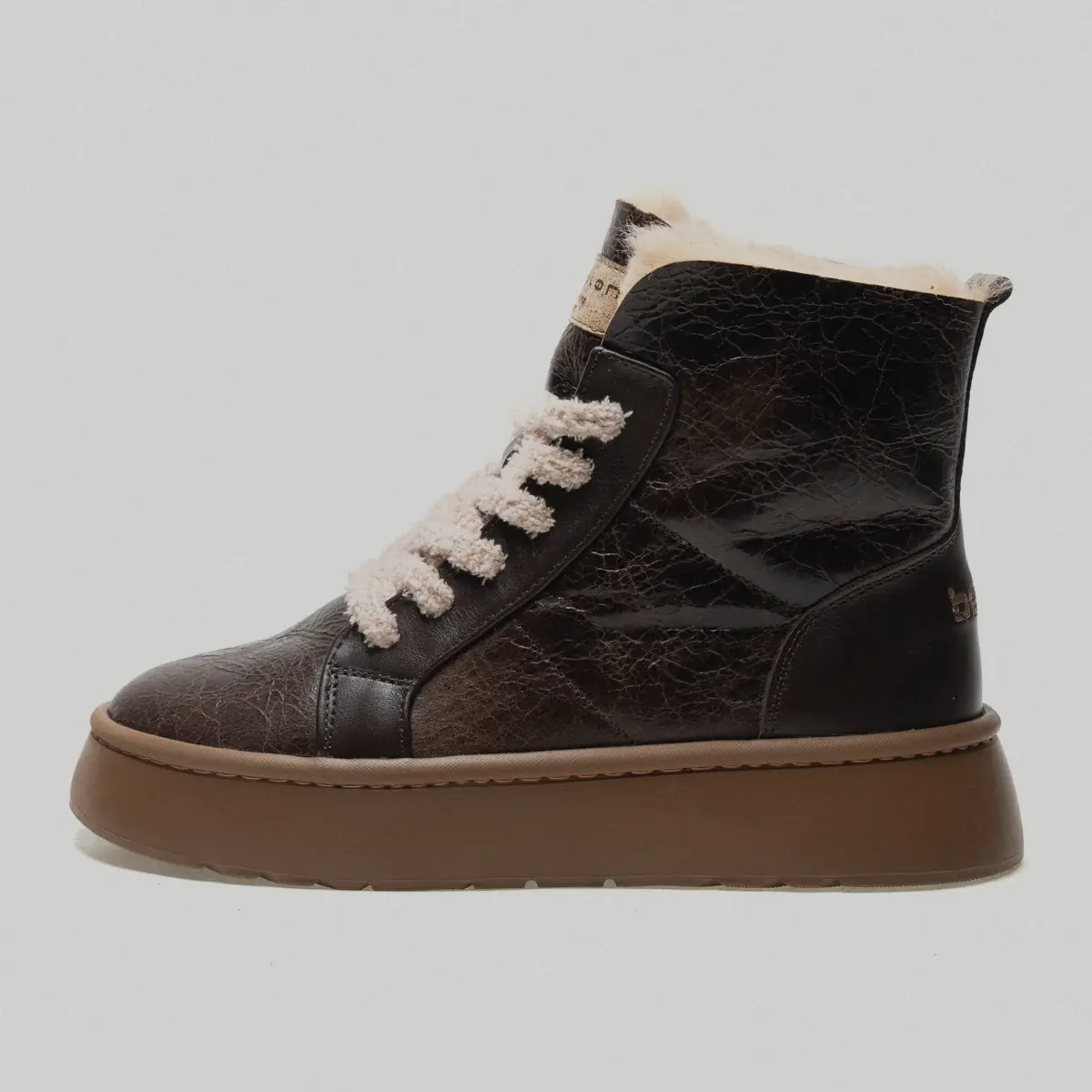
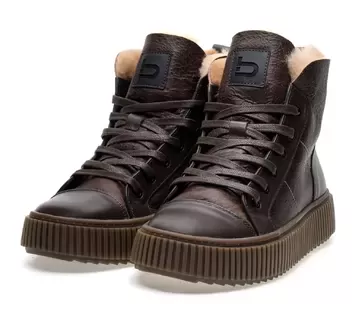
- Sheepskin all the way up. The Frost upper is double-face leather: leather outside, dense thick sheepskin fur inside, with no separate lining. The insole is fur-covered too.
- Sole height. According to the product page, Frost boots don't let the cold through: the fur insole and 3.5 cm of sole height inside keep the foot away from the cold ground.
- Leather boots rely on the lining. The men's Armor-11 come in two versions: with a breathable Respira lining or with Winterfrost 500 insulation. For frost, only the second option counts, rated +5 to −15 °C. The women's Glori-14 are lined with thick natural fur; their page gives no temperature range.
The NHS notes that frostbite mostly affects fingers and toes, so warm socks and warm closed footwear come first. The difference between double-face sheepskin, fur linings and faux fur is explained in “Real sheepskin boots”.
Which copes better with slush, rain and salt?
Leather boots. Dense genuine leather with a protected base handles wet snow and road salt better than sheepskin. You can wear sheepskin boots in snow or a short light shower if the upper is treated, but puddles, downpours and salty slush are not their weather.
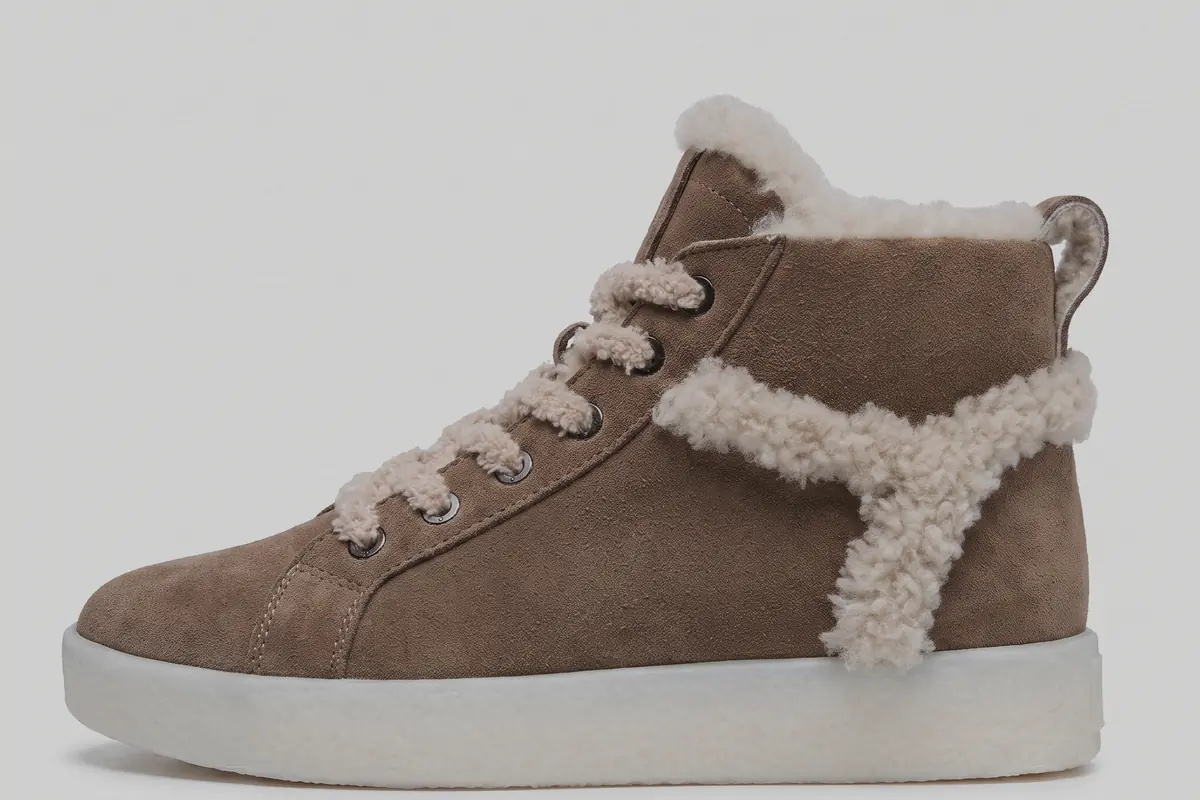
So, can you wear sheepskin boots in the rain? Yes, briefly and with preparation. Babylon's sheepskin boot pages recommend a water-repellent spray for suede or leather; a wet pair should be stuffed with paper or towels and dried at room temperature, never next to a radiator or heater. What to do once they are soaked or salt-stained is covered step by step in our “Sheepskin boot care” guide.
Leather boots have nuances too:
- Genuine leather is the most practical for slush. On Armor-11 the base of the sole is coated with liquid rubber, which the product page says protects the boot from moisture, dirt and damage. The leather upper keeps out water, snow and slush.
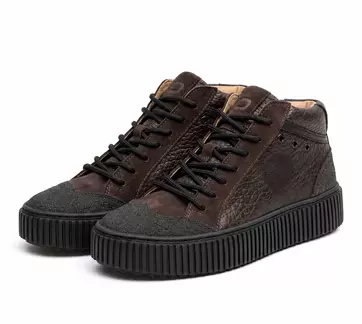
- Nubuck (as on Glori-14) looks great but darkens temporarily when wet and, like sheepskin, needs a water-repellent spray before the first wear and through the season. See “Nubuck and suede care”.
Which slips less on ice?
Boots with a chunky sole and a deep tread. The Armor-11 page states plainly that the foot stays steady even on slippery surfaces. Sheepskin boot soles are lighter and softer, yet ours do not slip on wet paving or ice either: according to our factory technologist Yevhenii, this goes for Frost, UG-1 and MARY, and MARY grips best.
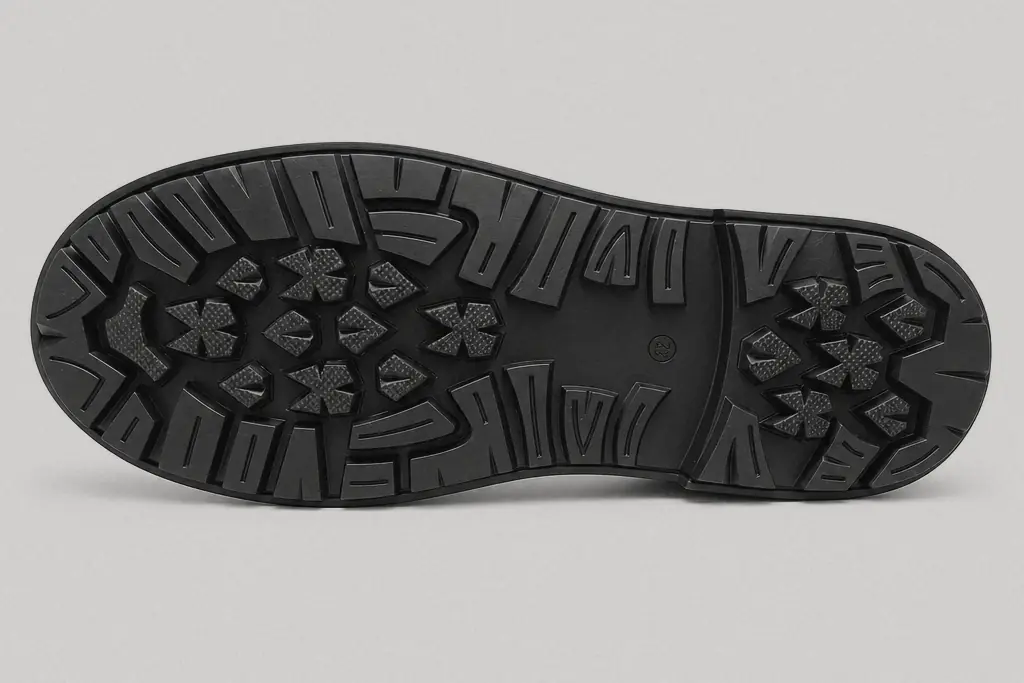
- Frost-74 has an EVA sole, a light foamed polymer that cushions each step. Frost-84 has a TPE (thermoplastic elastomer) sole, a rubber-like material. Both have 3.5 cm of height inside the sole.
- Armor-11 has a chunky sole with a deep tread. Glori-14 has a TPE sole that its page calls practical for the winter city.
Which holds the foot better, and which is lighter?
Leather boots hold the foot better; sheepskin boots are lighter. The gap is smaller than you might think: Babylon's Frost sheepskin boots lace up like boots, so the foot does not slide around. Still, a soft sheepskin shaft does not give the firm support of a leather boot on a chunky sole.
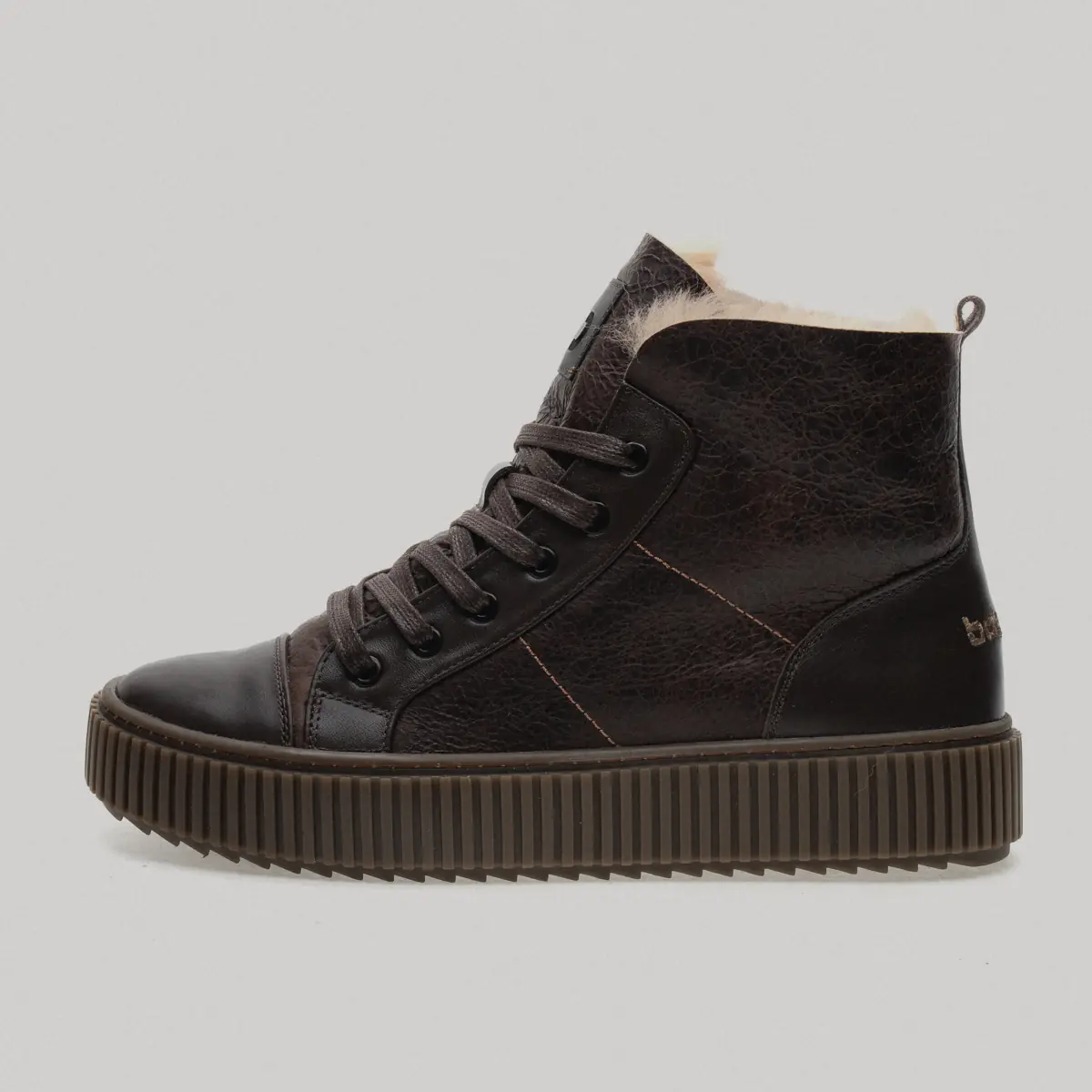
- Hold. Laces secure the foot in both Frost and leather boots, and the Armor-11 page highlights a secure fit. Slip-ons such as the nubuck MARY-94 hold the foot only with the shaft.
- Weight. The product pages give no weights, but the materials tell the story: an EVA sole is light, and “chunky” in the Armor-11 description speaks for itself.
- Driving. The Frost-74 and Frost-84 pages mention a comfortable height, easy both behind the wheel and on a walk around town.
Which is easier to care for?
Leather boots. A damp cloth, regular cream and a water repellent are enough. Sheepskin and nubuck need more attention: a dry brush after every outing, a dedicated stain cleaner and careful drying.
The advice on Babylon's product pages is the same for both types:
Treat a new pair with a water repellent before the first wear, and dry wet footwear naturally, away from radiators and hair dryers — sudden heat deforms leather.
How to put both pairs away for summer is covered in “How to store shoes between seasons”.
Who should choose sheepskin boots, and who leather boots?
Choose sheepskin boots if your feet get cold, your winter is mostly dry and frosty, you drive a lot, or you want light, warm everyday footwear. Choose leather boots if you walk a lot, often meet slush and ice, or need something to wear with a coat to work.
For women:
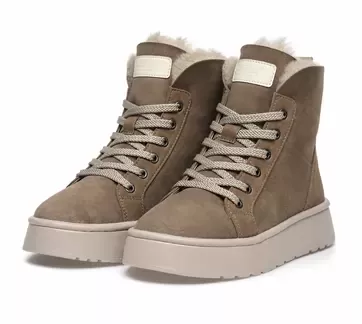
- Frost-74 sheepskin boots — double-face leather, sheepskin inside, EVA sole, +5 to −20 °C, sizes 36–41.
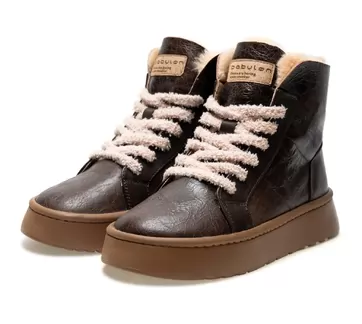
- Glori-14 boots — genuine nubuck, thick natural fur, TPE sole, sizes 36–41.
For men:
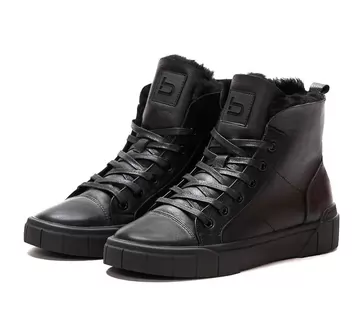
- Frost-84 sheepskin boots — double-face leather, sheepskin, TPE sole, +5 to −20 °C, sizes 39–45; the silhouette of a lace-up insulated boot.
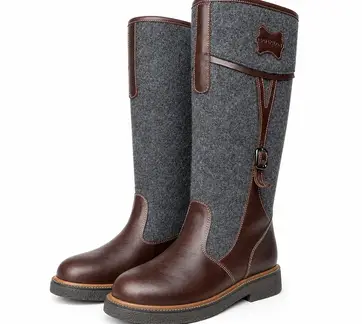
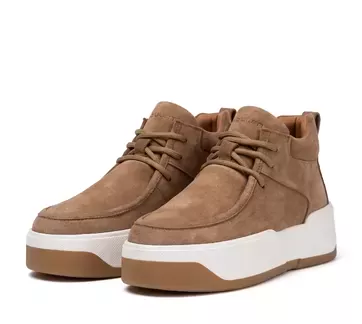
- Armor-11 boots — genuine leather, Respira or Winterfrost 500 lining, chunky deep-tread sole, sizes 39–45. More in “Men's winter boots”.
 LeatherWomen's sheepskin boots, down to −20 °C Frost-74Heel counter and decorative tongue insert: genuine leather; inside: dense; insole: fur-covered€115View
 LeatherMen's sheepskin boots, down to −20 °C Frost-84Heel counter and decorative tongue insert: genuine leather; inside: dense; insole: fur-covered€115View
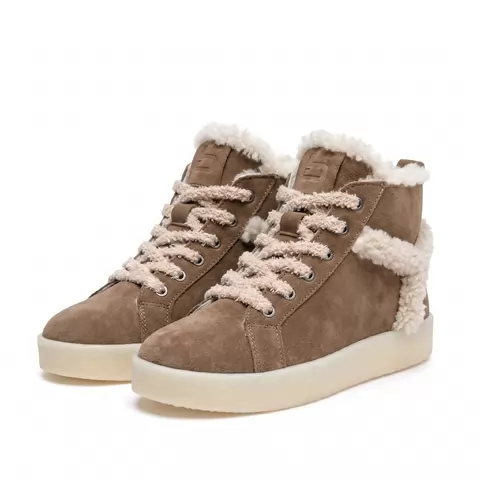 NubuckWomen's fur-lined winter nubuck boots Glori-14Lining: thick genuine fur; sole: thermoplastic elastomer (TPE)€107View
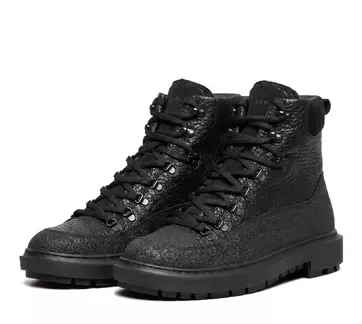
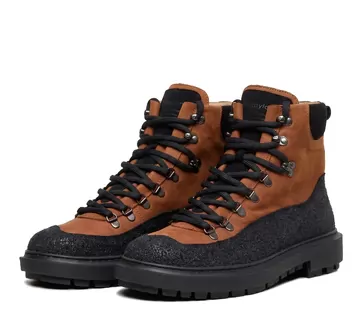
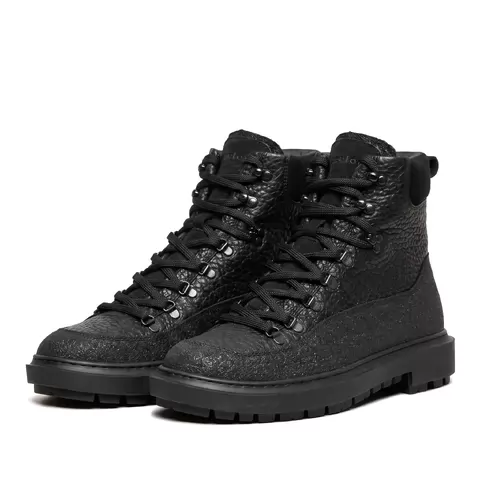 LeatherMen's leather boots Armor-11Winterfrost 500: insulation between the upper and the lining; rated from +5 to −15 °C; sole: chunky€120View
Choose the size the same way for both: measure your foot in the evening in a warm sock (see “How to measure your foot at home”) and check it against the size chart on the model's page. Sheepskin-specific tips are in “Sheepskin boot sizing”.
Browse women's sheepskin boots, women's boots, men's sheepskin boots and men's winter boots. We ship worldwide free of charge, with delivery in 5–10 business days (7–12 to the US, Canada, Israel, New Zealand, Georgia and Montenegro).
All winter styles for her are in Women’s winter shoes, for him — in Men’s winter shoes.
FAQ
Which is warmer, sheepskin boots or leather boots?
Usually sheepskin boots. The sheepskin warms the whole shaft and the insole is covered with fur. Babylon's Frost-74 and Frost-84 product pages state comfort from +5 to −20 °C. Leather boots depend on the lining: Armor-11 with Winterfrost 500 insulation are rated +5 to −15 °C, while the nubuck Glori-14 are lined with thick natural fur.
Can I wear sheepskin boots in the rain?
In a short light shower, yes, if the upper has been treated with a water-repellent spray and the pair is dried at room temperature afterwards. For downpours, puddles and slush, wear leather boots instead: sheepskin soaks up water and can be left with marks once it dries. Our sheepskin boot care guide covers this in detail.
What is better for slush and road salt?
Leather boots with a protected base. On Armor-11 the base of the sole is coated with liquid rubber, and the leather upper keeps out water, snow and slush. Salt can be removed from sheepskin and nubuck too, but it takes longer: a brush, a dedicated cleaner and drying away from the radiator.
Which slips less on ice?
Boots with a chunky sole and a deep tread, like Armor-11: the product page says the foot stays steady even on slippery surfaces. Frost sheepskin boots have a lighter EVA or TPE sole with 3.5 cm of height inside. It keeps your foot away from the cold ground, but on ice a boot tread is more reliable. That said, our factory technologist says Frost, UG-1 and MARY do not slip on wet paving or ice, and MARY grips best.
Are sheepskin boots good for driving?
Yes. The Frost-74 and Frost-84 product pages say so directly: a comfortable height, easy both behind the wheel and on a walk around town. The light sole and soft shaft do not get in the way of the pedals. If you will walk a long way on ice after parking, though, a deep-tread boot gives better footing.
Should I buy sheepskin boots or winter boots a size up?
No. Try either pair on in the evening, in the socks you will wear with them. Measure your foot length and check it against the size chart on that specific model's page: almost every Babylon pair is made on its own last, so sizing can differ from one model to another.
Together with Nataliia Nikitska, he founded Babylon in Kharkiv in 1997 as a wholesale leather footwear manufacturer; since 2015 the brand has sold directly, in its showrooms and online. Today its family-owned factory has 25 craftspeople and 2 technologists and makes 5,000–10,000 pairs a month. All articles by this author
Sources and notes
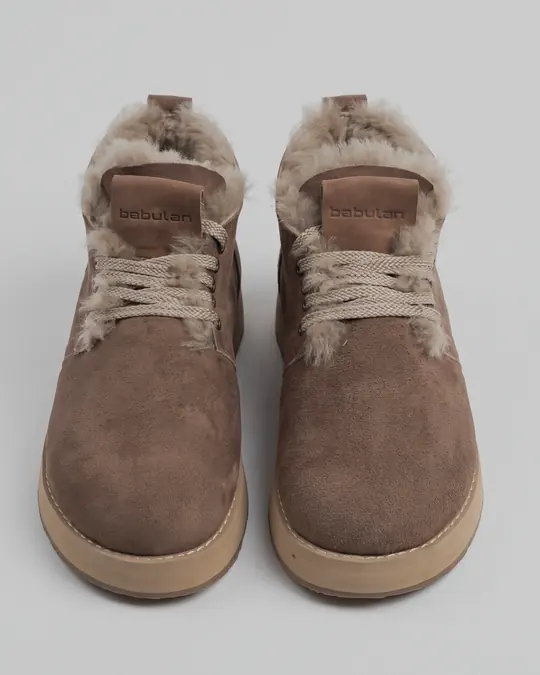 How to choose
Best sheepskin boots under $200: how to compare them honestly
Two pairs of sheepskin boots can look alike in photos and still differ in the hide, the fleece, the sole and what happens when they need repair. Here is a checklist you can run on any product page, and an honest comparison of the kinds of makers selling them.
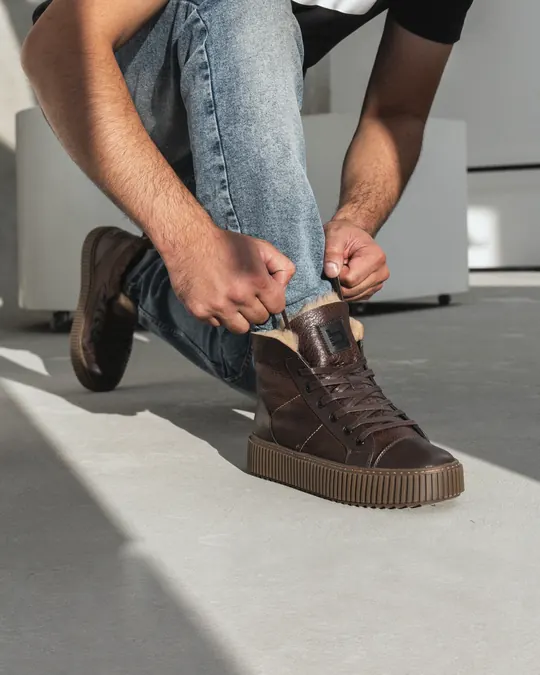 How to choose
Do men wear sheepskin boots? How to choose a pair and style it
Men's sheepskin boots are practical warm footwear for a city winter, not a women's trend. Here is how they differ, how to pick the material and height, and how to style them, using Babylon models as examples.
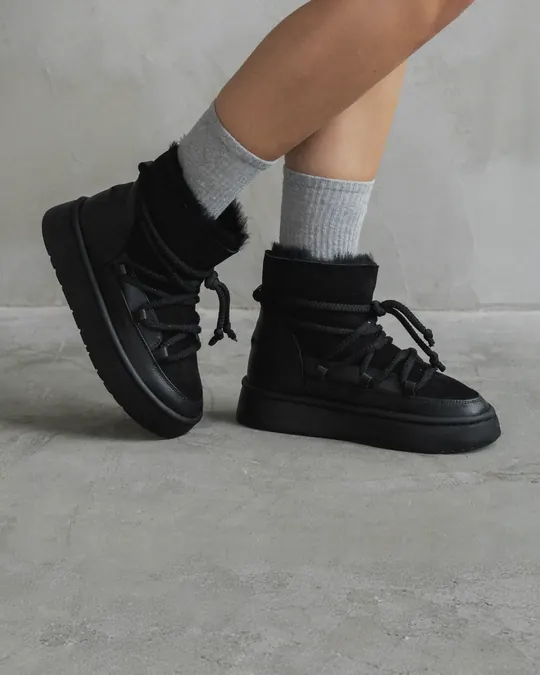 How to choose
Platform soles on sheepskin boots: choosing height, sole and size
A platform lifts your foot above cold pavement and slush, but it adds weight and needs care on ice. Here is how to choose the height, sole, upper and size, using Babylon women's boots as examples.