


Best sheepskin boots under $200: how to compare them honestly
Two pairs of sheepskin boots can look alike in photos and still differ in the hide, the fleece, the sole and what happens when they need repair. Here is a checklist you can run on any product page, and an honest comparison of the kinds of makers selling them.

In short
The best sheepskin boots for the money are one-piece double-face sheepskin with dense fleece that covers the insole, a sole with tread that suits your winter, neat seams, a size chart in centimetres and clear return terms. Australian, British and Scandinavian makers, mass-market brands and factory-direct makers such as Babylon each do some of this better. Babylon's women's and men's pairs are under $200 including shipping; import duties are extra where they apply.
Disclosure. This guide is written by Babylon, a shoe factory that makes some of the boots discussed. We list other makers where they fit a need better, and every fact about them was checked on their own websites in October 2026.
What makes a good pair of sheepskin boots?
A good pair is built from one-piece double-face sheepskin or a solid leather upper with real sheepskin inside, has dense fleece that also covers the insole, sits on a sole that suits your winter, and is sold with a size chart in centimetres and clear return terms. Brand and price matter less than these points.
If you are not yet sure what “sheepskin”, “shearling” and “shearling-lined” mean on a label, start with our explainer “Shearling vs sheepskin boots”. To check that a pair is real sheepskin at all, see “Genuine sheepskin boots: how to tell real sheepskin from a fake”. This guide assumes you are comparing pairs that are already genuine.
What should you check before you buy?
Run these nine checks on any product page, or in your hands once a pair arrives. Most can be answered from the composition, two or three photos and the shop's terms.
- Construction. Double-face (also sold as twin-face) means the leather face and the wool are a single hide. A “sheepskin-lined” boot has a separate lining stitched inside; a “wool-blend” or “faux” lining is not sheepskin.
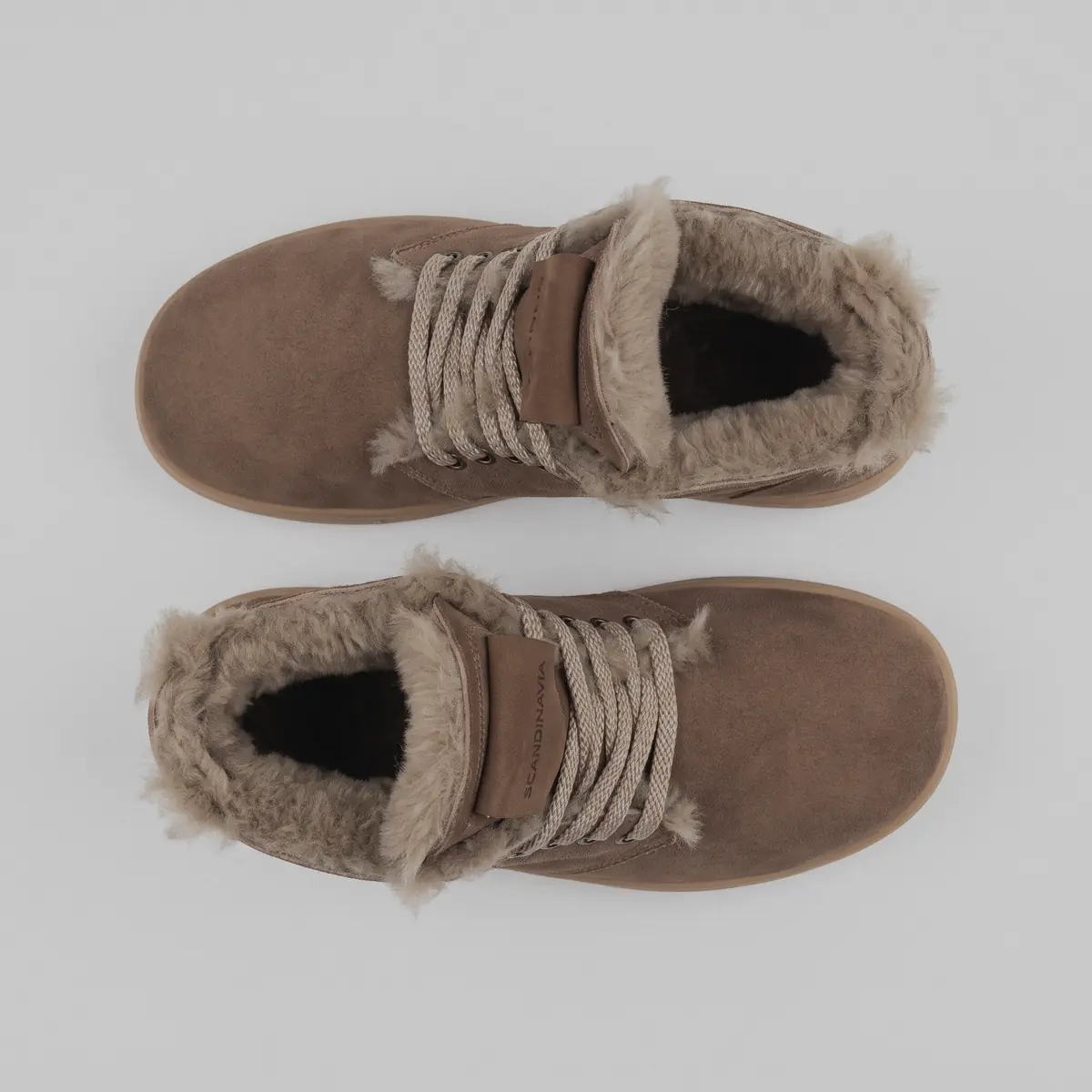
- Fleece density. Look at a top view or a folded collar. Dense fleece stands evenly and hides the skin at its roots.
- Insole. A fur-covered insole adds warmth from below. A plain textile footbed is cooler.
- Skin thickness. Pinch the shaft: a good hide feels supple but not papery and springs back. Thin skins crease and stretch out faster.
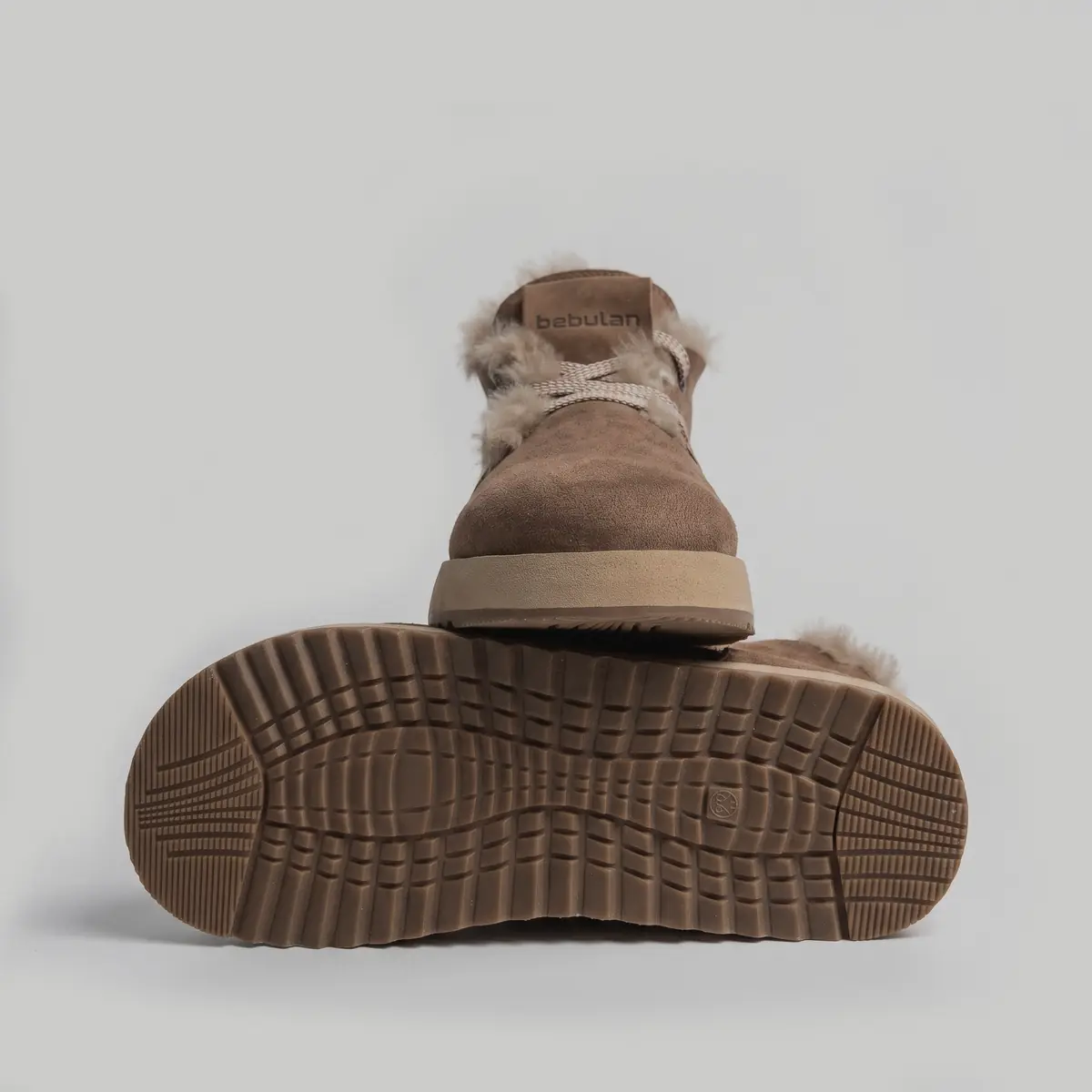
- Sole material and height. EVA is light and cushioned; rubber compounds such as TPE grip better on snow. Read the sole height if it is given, and look at the tread.
- Repair. Ask whether the sole can be reglued or replaced and whether the maker offers repairs. Many moulded soles are glued on for good.
- Seams. Stitches should be even, with no loose threads at the heel and toe, where boots wear first.
- Shaft height. Short pairs are easier to get on and suit trousers worn over the top; mid and tall shafts keep snow out but are harder to dry.
- Size and terms. Look for foot length in centimetres for that exact model, a returns period, a warranty, delivery time and who pays import duties.
How do the main types of sheepskin boot makers compare?
Each kind of maker is strong at something different: Australian and British workshops at local hides and repairs, Scandinavian brands at leather boots with sheepskin linings, mass-market brands at low prices and wide availability, and factory-direct makers at one-piece sheepskin for less money. The table shows one verified example of each.
| Maker type | Example | What the maker states | Good for | Check before buying |
|---|---|---|---|---|
| Australian sheepskin factory | Mortels Sheepskin Factory, New South Wales | Making sheepskin boots since 1958 at Thornton; Classic Mid: Australian sheepskin upper and innersole, EVA sole, replaceable innersoles, shaft about 25.8 cm | Classic pull-on shape, dry cold, indoors and out | Delivery time and import charges to your country |
| British workshop | Celtic & Co., Cornwall | Handmaking sheepskin boots and slippers in Cornwall since 1990, in its Newquay workshop; in-house resole service | Buyers who want a pair that can be resoled | Current prices and delivery outside the UK |
| Scandinavian brand | Shepherd of Sweden | Family-owned since 1982, based in Svenljunga, manufactured in Europe; women's boots with sheepskin lining | Leather and suede boots with a sheepskin lining | Which models are lined with sheepskin and which with wool |
| Mass-market brand | Bearpaw | Shorty: cow suede upper, wool-blend lining and footbed, blown rubber outsole, rain and stain repellent; listed at $79.99 on the maker's site (October 2026) | A low price for mild winters and everyday wear | The lining is a wool blend, not sheepskin |
| Factory-direct maker | Babylon | Double-face sheepskin, stitched and lasted by hand at its family-owned factory; women's pairs here EU 36–41, men's up to EU 45 | One-piece sheepskin under $200 including shipping | Ships from outside the EU; import duties extra where they apply; 5–10 business days (7–12 to the US, Canada, Israel, New Zealand, Georgia and Montenegro) |
We did not include prices we could not confirm on a maker's own page.
What do you typically get under $100, $100–200 and above $200?
Price follows three things: the hide (one-piece sheepskin costs more than suede with a lining), where the boot is made (labour in Australia, the UK or Scandinavia costs more), and how many hands the pair passes through before you (brand, distributor, shop). These are market patterns, not rules.
- Under $100. Mostly suede or leather with a wool-blend or synthetic lining, or short sheepskin styles in sales. Fine for mild, dry winters and short walks. Check the lining line carefully.
- $100–200. One-piece double-face sheepskin starts to appear here, from factory-direct makers and from brands' simpler styles. Expect natural fleece, a fur-covered insole on better pairs, and moulded rubber or EVA soles.
- Above $200. Boots made in high-wage countries, taller shafts, made-to-order pairs, premium finishes and repair services. You often pay for local production and a shorter supply chain as much as for the material.
Shipping and import charges can move a pair from one tier to another, so compare the delivered price, not the shelf price.
One-piece sheepskin or a lined boot: pros and cons
Double-face sheepskin is the warmest and lightest natural option for dry cold; a leather or suede boot with a lining is tougher in wet weather and easier to wipe clean. Neither is better everywhere.
Double-face sheepskin. Pros: one layer of hide and wool, light for its warmth, wool handles foot moisture, no lining to slip or peel. Cons: the leather face needs a water-repellent spray, deep slush soaks it, and it should never dry on a radiator.
Leather or suede with sheepskin inside. Pros: a firmer upper, smooth leather wipes clean, more structure for long walks. Cons: two layers make it heavier, and the seam between upper and lining is one more place to wear.
Suede with a wool-blend or synthetic lining. Pros: lower price, lighter care. Cons: less warmth for the weight, and synthetic pile holds moisture in the sock.
How to keep any of these going through the season is covered in “How to care for sheepskin boots”.
Who should buy what?
Buy by your winter and your priorities, not by the label. A short checklist:
- Dry frost, city walking, a light boot wanted: double-face sheepskin with an EVA or light sole.
- Packed snow and long walks: double-face or leather with sheepskin inside, on a treaded rubber or TPE sole, laced for a firmer hold.
- Wet, mild winters: smooth leather with a sheepskin lining, or a treated suede boot you are happy to replace sooner.
- You want one pair for ten years: a maker that offers resoling, such as Celtic & Co., and a budget above the middle tier.
- You want locally made boots: a maker in your own region, which also avoids import charges.
- You want one-piece sheepskin under $200: a factory-direct maker, accepting longer delivery and possible import charges.
Where does Babylon fit, and where doesn't it?
Babylon fits buyers who want one-piece double-face sheepskin with natural fleece for less than most brands charge, and who can wait a week or two. It does not fit buyers who need boots tomorrow, want to try them on in a shop, or need a resole service.
Babylon is a footwear factory founded in 1997. Every pair is stitched and lasted by hand at our family-owned factory in Kharkiv, Ukraine; we buy leather and fur in Spain and Turkey, and the soles are made to order for us. What the product pages state for the six pairs below:
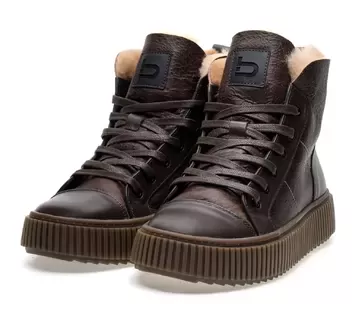
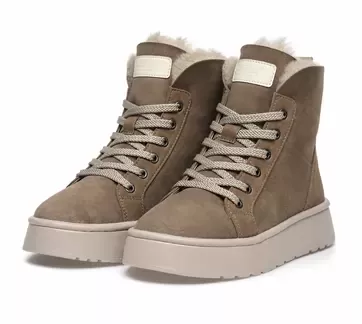
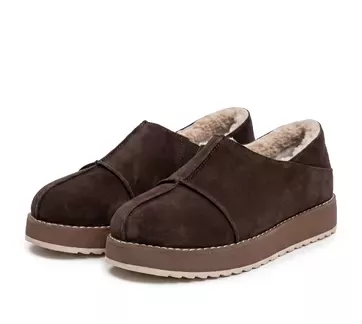
- Frost-74 and Frost-71, women's: double-face genuine leather (sheepskin), dense thick sheepskin inside, fur-covered insole, EVA sole, sole height inside 3.5 cm; down to −20 °C.
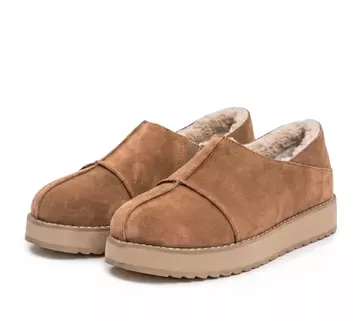
- UG-1-41, women's: natural double-face sheepskin, thick dense fur, lightweight sole, braided laces; down to −20 °C.
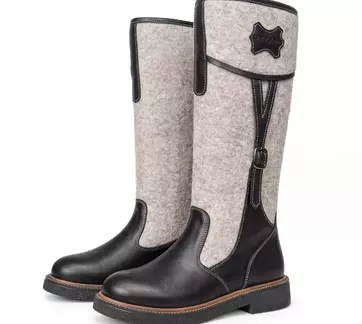
- Short-34, men's: double-face sheepskin with dense thick fur, shock-absorbing microporous rubber sole, anatomical last; comfortable from +5 to −20 °C.
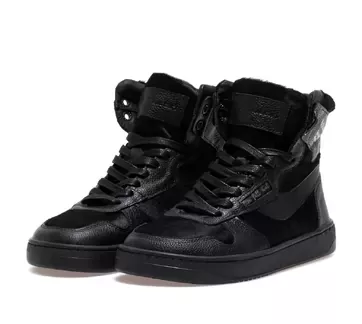
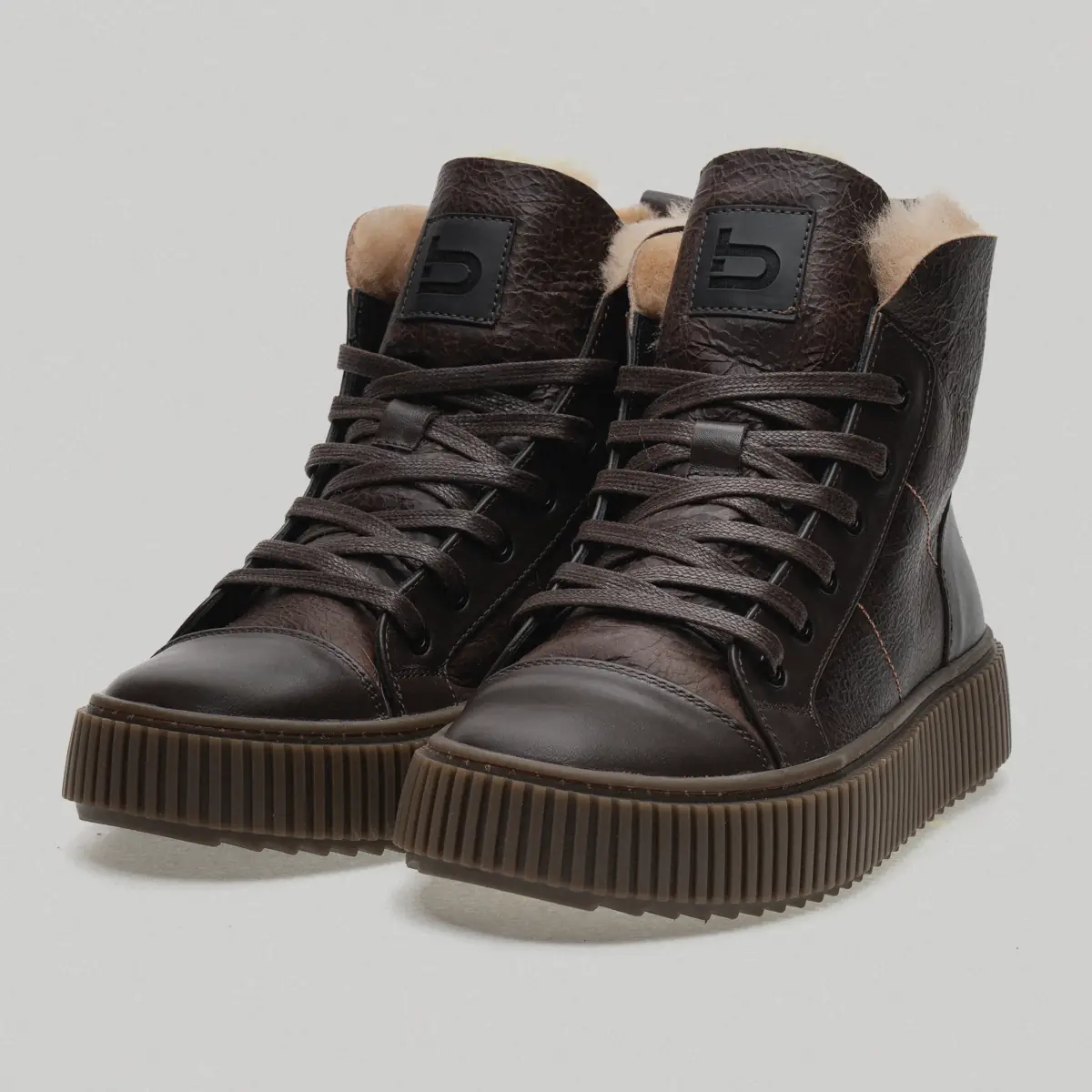
- Frost-84, men's: double-face genuine leather (sheepskin), fur-covered insole, TPE sole; from +5 to −20 °C.
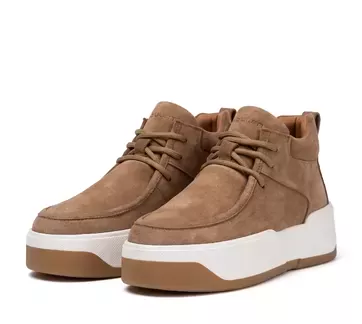
- UGM-1-11, men's: double-face genuine leather (sheepskin), fur-covered insole, TPE sole 3.5 cm high at the middle with a tread pattern; down to −20 °C.
 LeatherWomen's sheepskin boots, down to −20 °C Frost-74Heel counter and decorative tongue insert: genuine leather; inside: dense; insole: fur-covered€115View
 LeatherWomen's sheepskin boots, down to −20 °C UG-1-41Inside: thick; sole: lightweight; temperature: down to −20 °C€133View
 LeatherWomen's sheepskin boots, down to −20 °C Frost-71Heel counter and decorative tongue insert: genuine leather; inside: dense; insole: fur-covered€115View
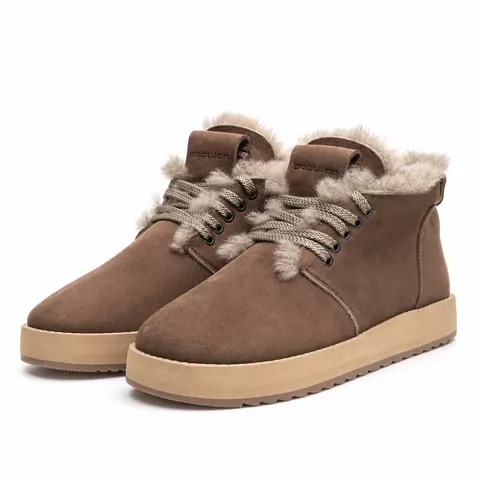 LeatherMen's sheepskin boots, down to −20 °C Short-34Inside: natural sheepskin; temperature range: comfortable from +5 to −20 °C; sole: shock-absorbing micropor…€118View
 LeatherMen's sheepskin boots, down to −20 °C Frost-84Heel counter and decorative tongue insert: genuine leather; inside: dense; insole: fur-covered€115View
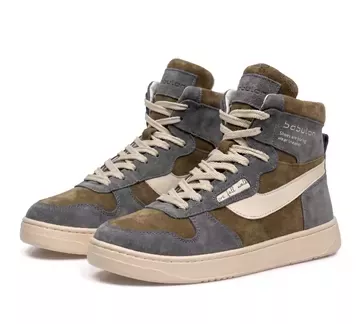
 NubuckMen's sheepskin boots, down to −20 °C UGM-1-11Heel counter and bottom trim: smooth leather with a nubuck insert; inside: natural dense; insole: fur-covered€133View
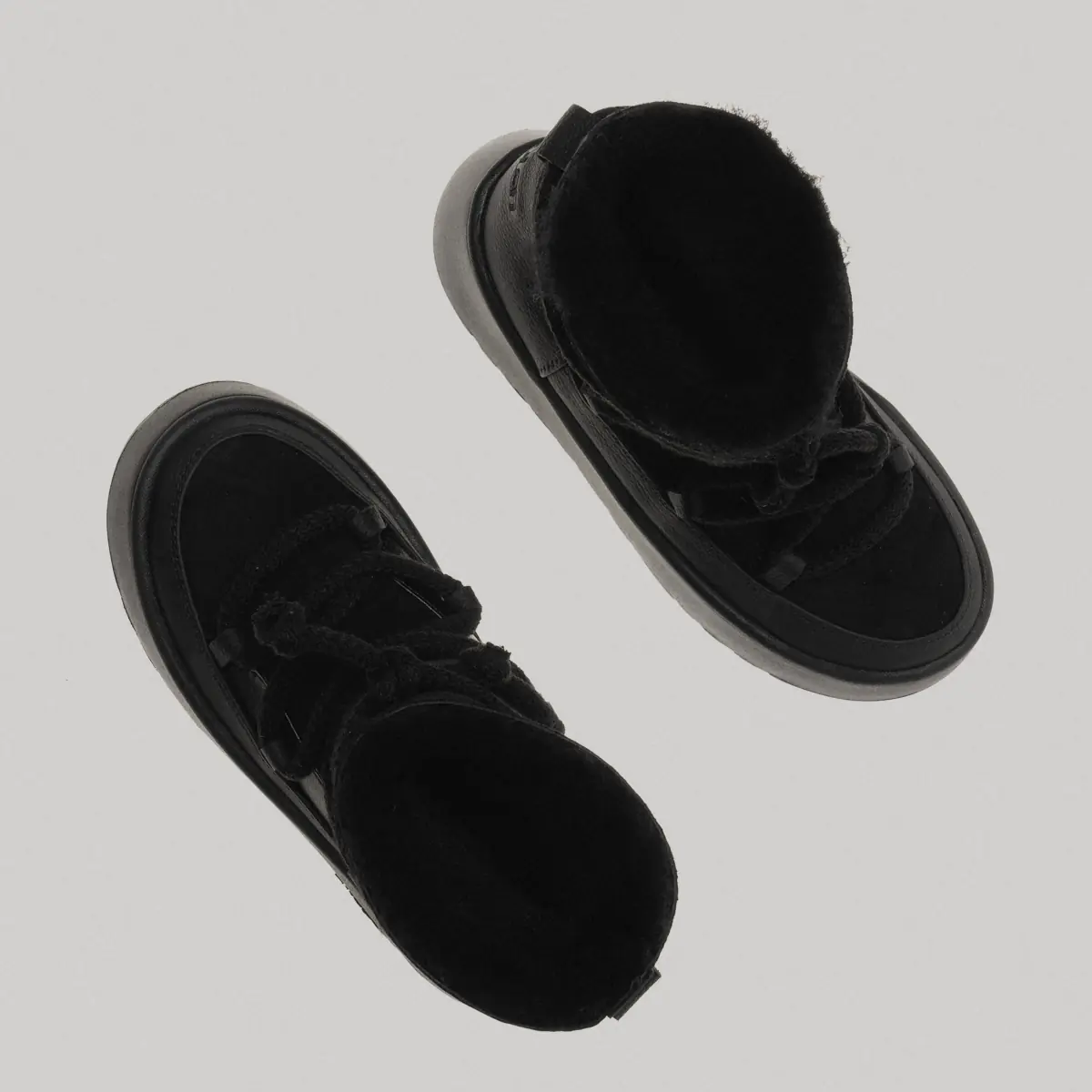
The honest minuses: we ship from outside the EU, so VAT or duty in your country may be charged on arrival (see shipping and duties); delivery usually takes 5–10 business days (7–12 to the US, Canada, Israel, New Zealand, Georgia and Montenegro); we have no shops abroad, so trying on means using the 30-day return window, and return postage for a non-defective pair is on you (international returns). Our pages do not list a resole service. Size runs differ by model, so measure your foot and compare it with that model's table; our EU, US and UK size guide explains the conversion. If your foot is wide or has a high instep, a catalogue model can be adapted to foot width or instep height; ask our manager.
Browse all women's sheepskin boots and men's sheepskin boots.
FAQ
Are double-face sheepskin boots worth paying more for than lined suede boots?
For real cold, usually yes. In double-face sheepskin the leather face and the wool are one hide, so nothing can shift or peel, and natural wool handles foot moisture well. A suede boot with a wool-blend or synthetic lining is lighter on the wallet and fine for mild days, but read the lining line before you compare prices.
How can I judge fleece density from photos?
Look for a close-up of the collar folded down or a top view into the boot. Dense fleece stands up evenly and hides the skin at the roots; thin fleece parts and shows the backing. Check that the insole is covered with fur too, because much of the cold comes from the ground.
Can sheepskin boots be resoled?
Some can. Celtic & Co. offers an in-house resole service at its Cornwall workshop, and Mortels sells replaceable innersoles for its Classic Mid. Many moulded soles are glued on and are not designed to be replaced. If a long life matters to you, ask the maker about repairs before you buy rather than after.
Which sole is better for sheepskin boots, EVA or rubber?
EVA is very light and cushions well, which suits city walking and dry cold. Rubber compounds such as TPE or microporous rubber are heavier but usually grip better on packed snow, especially with a deep tread. Sole height matters too: a thicker sole keeps more distance between your foot and frozen ground.
Who pays import duties when I order boots from abroad?
Usually the buyer, unless the shop states that duties are included. At Babylon the euro price includes shipping, while VAT or duty in your country, where it applies, is paid to the carrier on arrival. Our shipping and duties page lists the current rules for the EU, the UK, the US and Canada.
Should men and women look for different things in sheepskin boots?
The checks are the same: one-piece hide, dense fleece, a sole that suits your winter and a size chosen by foot length. Men's pairs often come with lacing, tougher rubber soles and wider lasts, while women's styles more often use light EVA soles. The Babylon women's pairs in this guide come in EU 36–41 and the men's up to EU 45.
Together with Nataliia Nikitska, he founded Babylon in Kharkiv in 1997 as a wholesale leather footwear manufacturer; since 2015 the brand has sold directly, in its showrooms and online. Today its family-owned factory has 25 craftspeople and 2 technologists and makes 5,000–10,000 pairs a month. All articles by this author
Sources and notes
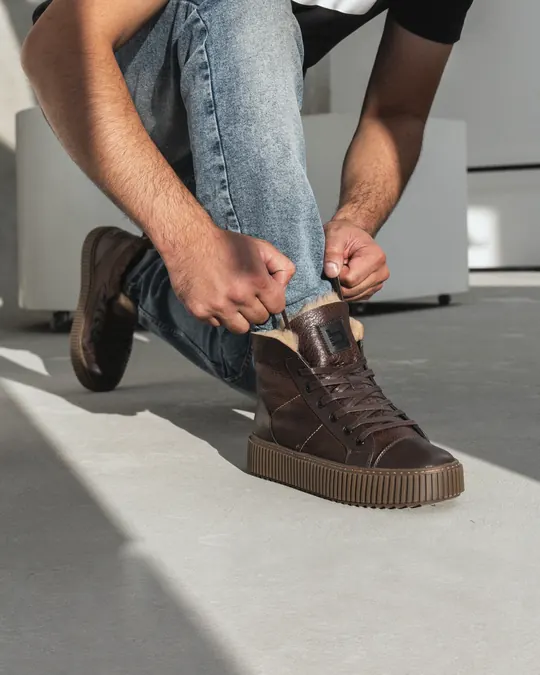 How to choose
Do men wear sheepskin boots? How to choose a pair and style it
Men's sheepskin boots are practical warm footwear for a city winter, not a women's trend. Here is how they differ, how to pick the material and height, and how to style them, using Babylon models as examples.
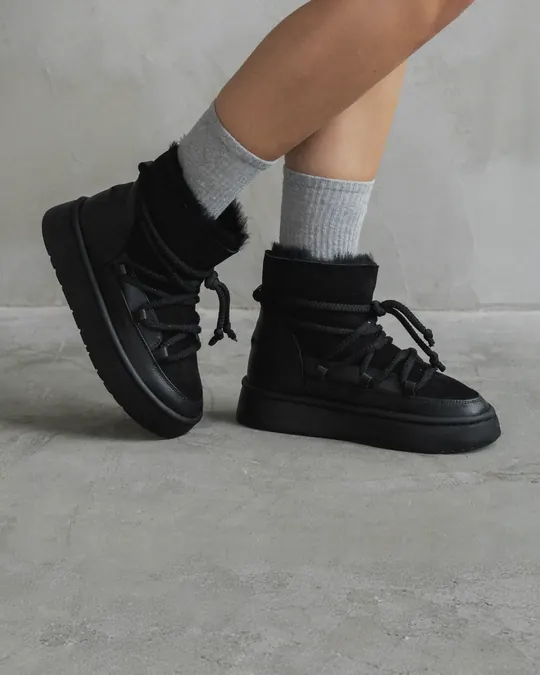 How to choose
Platform soles on sheepskin boots: choosing height, sole and size
A platform lifts your foot above cold pavement and slush, but it adds weight and needs care on ice. Here is how to choose the height, sole, upper and size, using Babylon women's boots as examples.
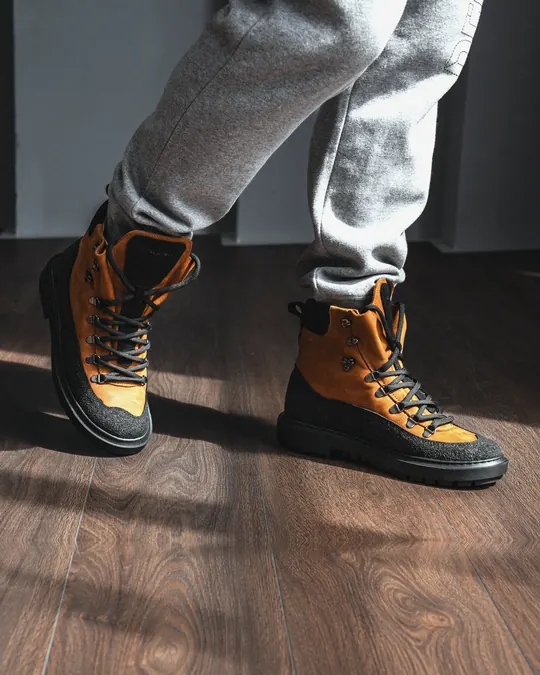 How to choose
 leather boots for winter: a men's guide
Men's leather winter boots come down to five things: upper, lining, sole, height with lacing, and size. We go through each one using Babylon's Armor and Washington models.