


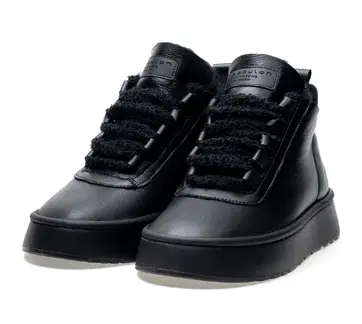
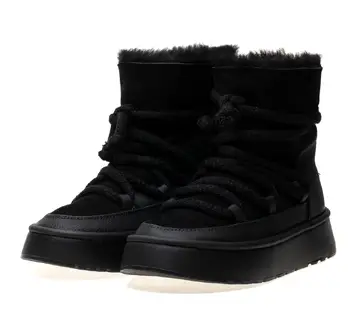
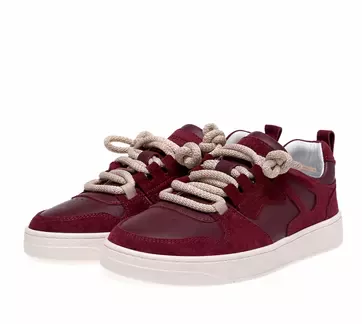
Winter Care for Leather Boots: Black and Coloured Pairs
In winter, smooth leather boots need four simple steps: waterproofing before the first snow, a wipe after every walk, cream once a week and careful drying. Here is what to do with black, brown and textured pairs.

In short
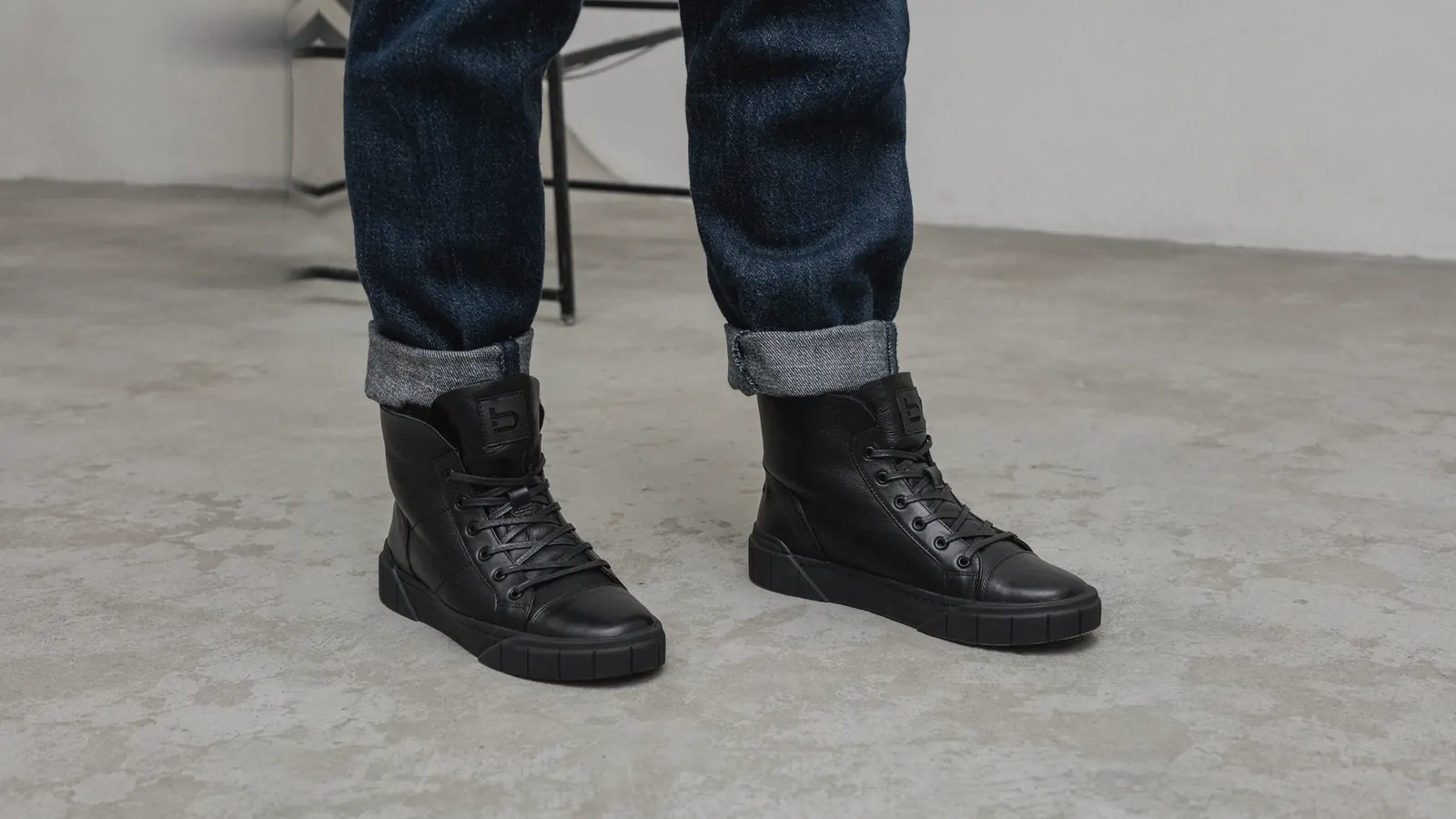
Care for leather boots in winter with a simple routine: a water-repellent spray before first wear, a damp then dry cloth after every walk, a coloured or neutral cream once a week and, if needed, wax for extra protection. Dry wet boots naturally, never on a radiator. The product pages of Babylon's leather boots give the same advice — Babylon is a Kharkiv factory that has been making shoes by hand since 1997.
How do you care for leather boots in winter? The short routine
Winter care for smooth leather comes down to four things: waterproof the pair before the first snow, remove dirt and salt after every walk, apply cream once a week and only ever dry boots naturally.
| When | What to do | With what |
|---|---|---|
| Before first wear | Waterproof the upper | Water-repellent spray for smooth leather |
| After every walk | Remove dirt and salt, wipe dry | Soft damp cloth, then a dry one |
| If they get wet | Dry them | Paper inside, room temperature |
| Once a week | Clean, condition, buff | Coloured or neutral cream, brush |
| Every 2–3 weeks | Extra protection for toe and lower part | Thin layer of wax polish |
| Once a month | Renew the waterproofing | The same spray |
What should you do with new leather boots before wearing them?
Treat a new pair with a water-repellent product at home, a day before the first snow. Apply 2 thin coats 15–20 minutes apart and let them dry.
The Armor and Washington product pages put it plainly: “Treat leather shoes with water-repellent agents to protect them from moisture and stains. This is especially important during the rainy and snowy seasons.” Spray from 20–30 cm away, avoiding the laces and sole: rain and melting snow will then bead up instead of soaking in.
Waterproofing is protection, not a one-off job. In rainy and snowy weather, treat a leather pair with a water-repellent product regularly, and let a wet pair dry naturally — no radiator, no hair dryer.
How do you clean leather boots after a walk?
Every day after coming in, wipe the boots with a soft damp cloth, then a dry one. Dried-on salt and dirt damage leather faster than anything else.
The product page advises: “Remove dust and dirt with a soft, damp cloth or leather brush. For a deeper clean, use special leather cleaners.” If you use saddle soap or a foam cleaner, always follow with cream: cleaners strip oils from the surface.
Salt. Remove salt straight away, before the marks dry: wipe with a damp cloth, rinse it, wipe again and dry the leather. Older white marks usually fade after 2–3 such wipes; apply cream only after that.
Drying. If the boots get wet, stuff them with paper and leave them at room temperature. Babylon's product pages warn: “Do not dry them on a radiator or with a hair dryer to avoid damaging the leather.” For more on drying leather, nubuck and sheepskin, see “How to dry shoes in winter”.
Which shoe cream should you choose: coloured or neutral?
For boots you wear daily, keep two products: a cream that matches the leather colour, to refresh it and cover scuffs, and a neutral one for conditioning, seams and lighter details.
Leather shoe care products come in three types:
- Cream polish (tube or jar) — oils, wax and water. Conditions best; ideal for weekly care.
- Wax polish (flat tin) — more wax, less conditioning; adds shine and a protective film.
- Liquid polish with a sponge — quick shine, but experts warn that regular use can dry out leather.
Coloured cream contains pigment, so it restores colour and hides fine scratches. Neutral cream only conditions and protects, without changing the shade — handy when unsure of the tone or on multi-coloured boots. Babylon's product pages explain why it matters: “To prevent leather from drying out and cracking, regularly treat your shoes with special leather creams or lotions.”
Apply a thin layer to clean, dry leather in small circles, leave for 10–15 minutes, then buff with a natural-bristle brush.
How do you restore black boots and fix scuffs on the toe?
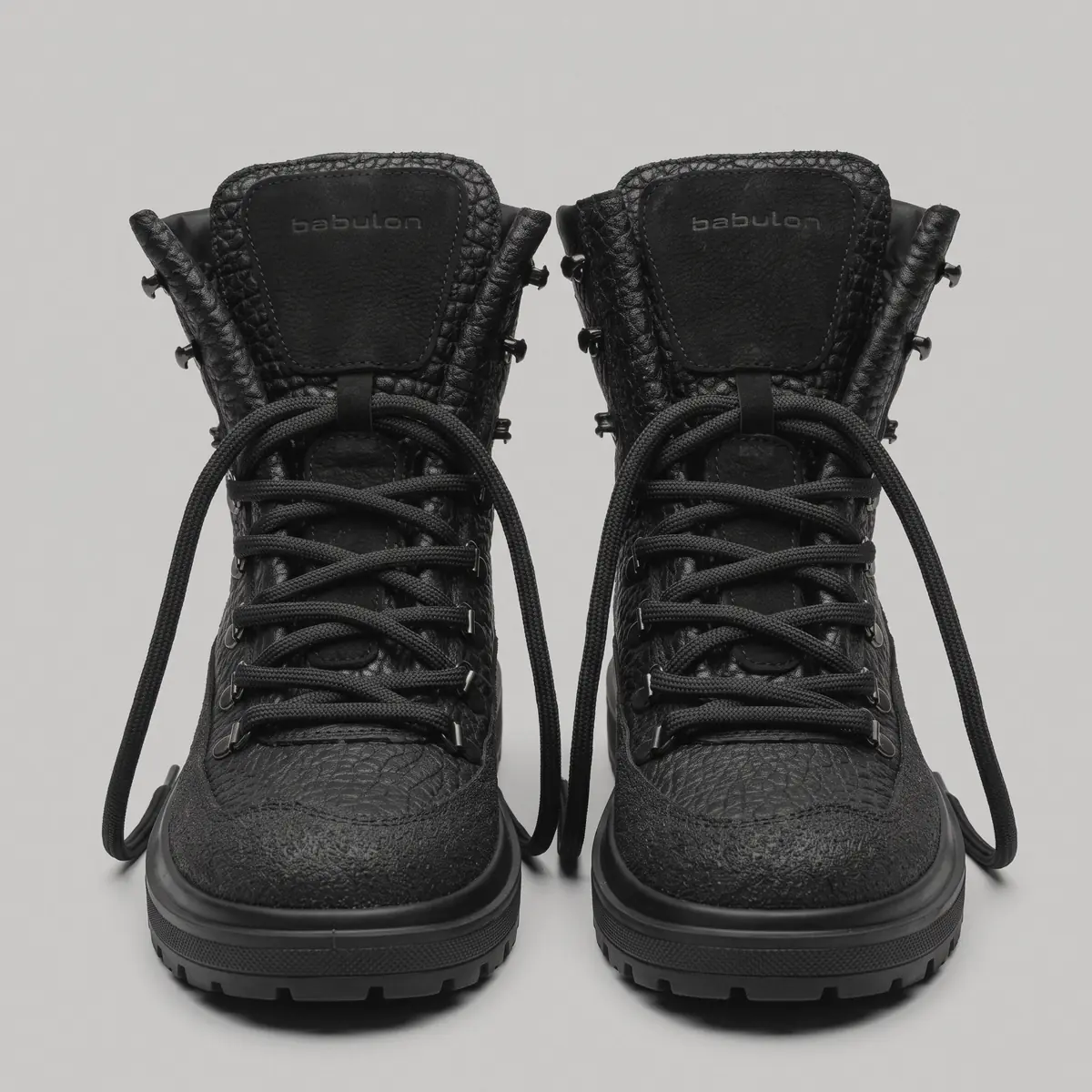
Black boots need black cream: it brings back a deep colour and covers light scuffs. Fill toe scratches in 2–3 thin, buffed layers.
- Clean the toe with a damp cloth and let it dry.
- Work black cream into the scuff with a cloth wrapped around your finger — it fills the scratch better.
- After 10 minutes, buff and repeat if the light mark still shows.
- Finish with a thin layer of wax polish to protect the toe.
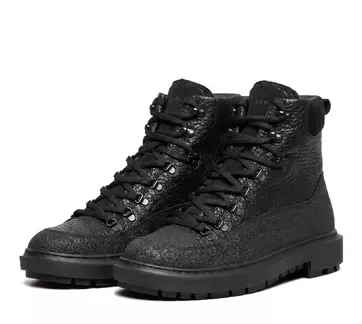
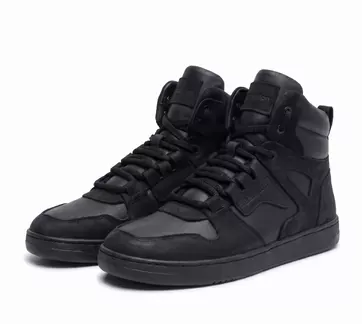
Cream makes a deep scratch less visible but cannot remove it. Black Washington-41 boots have an all-leather upper, so this routine works for the toe too. On black Armor-11, the lower part near the sole has a rubber coating, which needs different care — see below.
How do you care for brown and coloured leather boots?
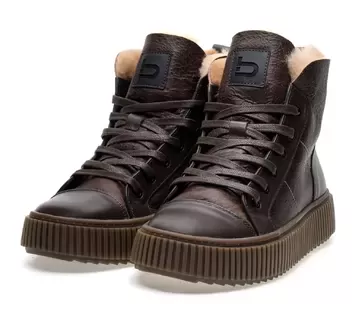
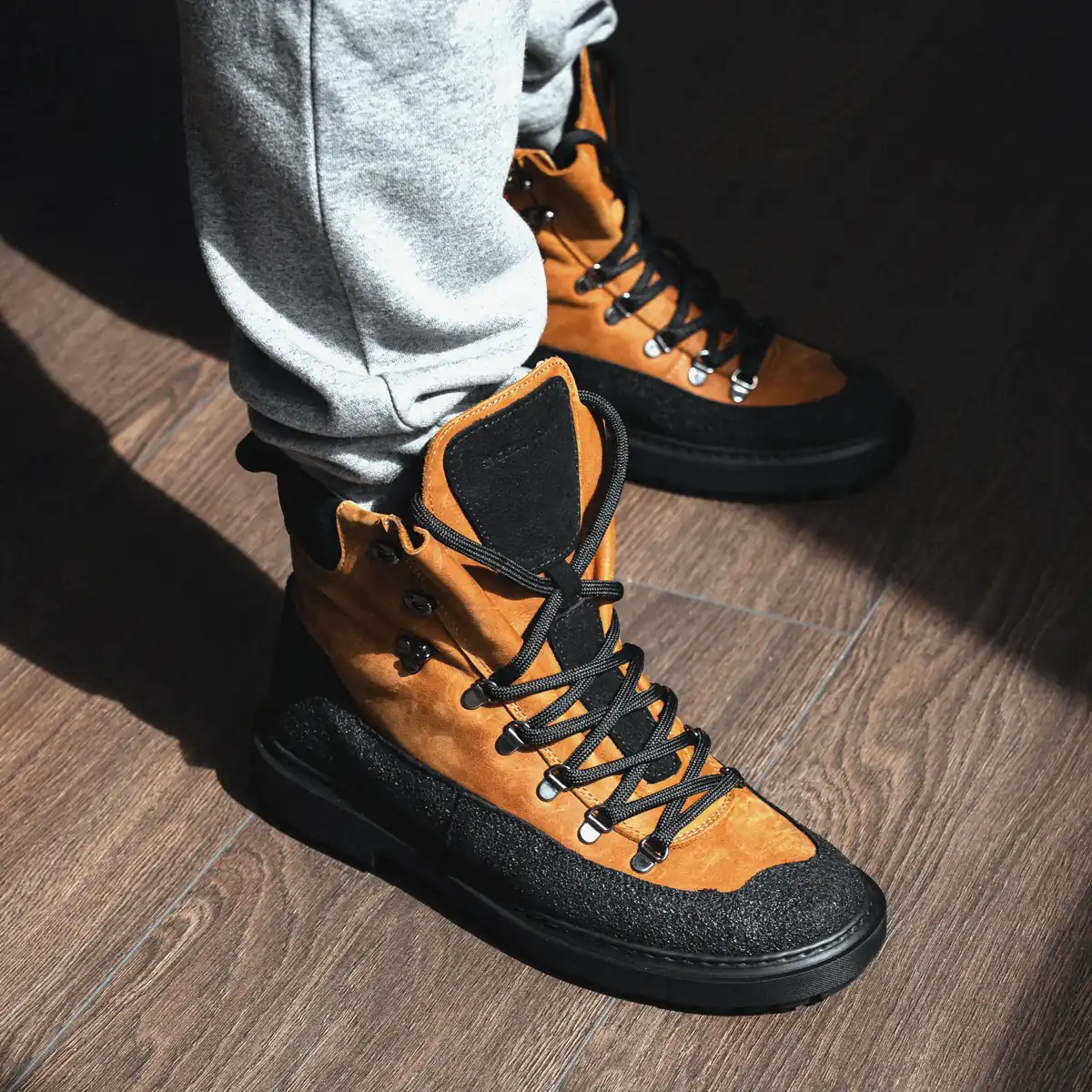
Treat brown, green or other coloured leather with cream in the same shade or half a shade lighter — a darker cream will gradually darken the boot. If unsure, use neutral.
- Patch test first. Try every new product on the tongue or heel counter. Matte leather can darken under cream or wax.
- Thin layers. On lighter leather, excess cream leaves blotches. Two thin coats beat one thick one.
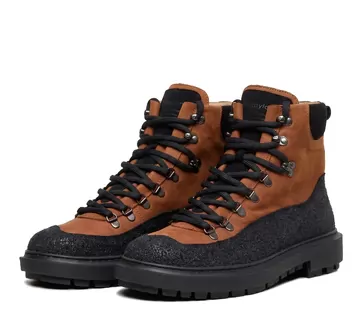
- Two-tone pairs. On brown Armor-24, cream only the leather upper and simply wipe the black coating below.
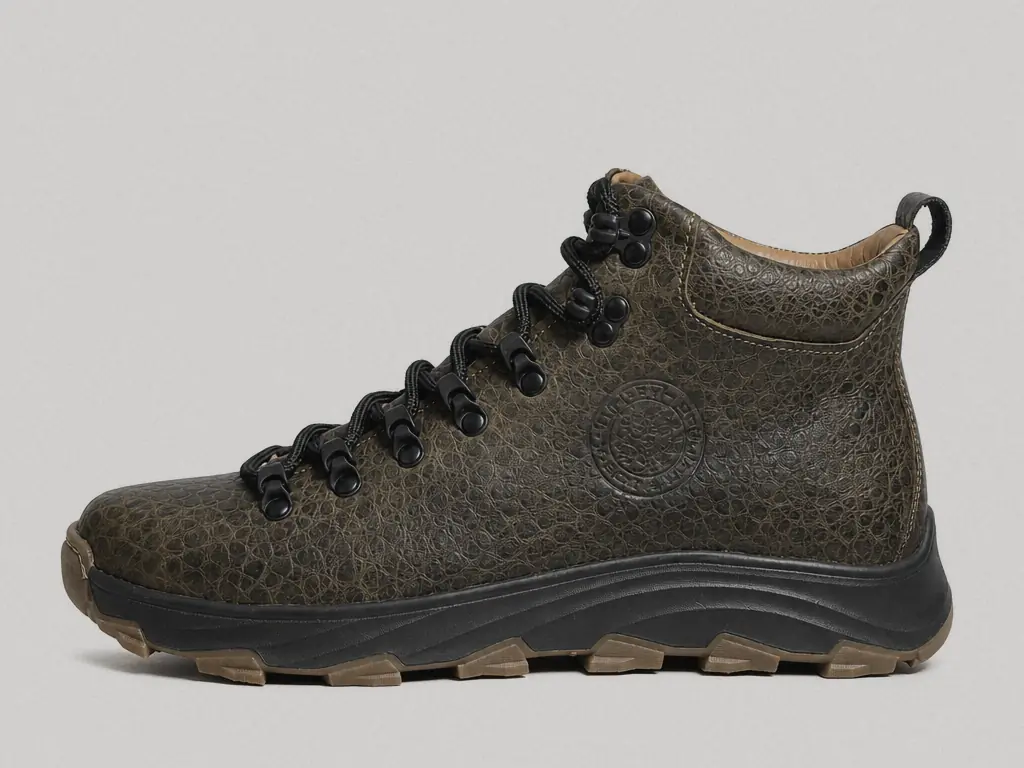
- Green leather, as on Washington-48: neutral cream or an exact colour match.
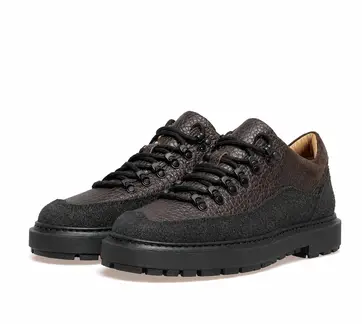
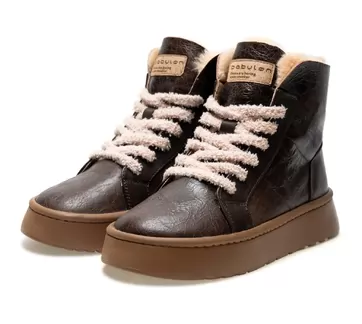
Textured leather. On leather with a raised grain, apply cream with a soft brush rather than a cloth, so it gets into the hollows instead of drying there as pale specks.
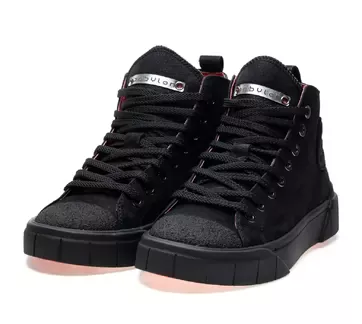
Nubuck and suede, used in some of Babylon's women's boots, need no cream or wax — see “Nubuck and suede care”.
Why use wax, and how in winter?
Wax is a winter shield: it leaves a thin film that snow and slush run off. Apply it over cream on the toe, welt and lower part of the boot every 2–3 weeks.
Wax barely conditions leather, so it complements cream rather than replacing it. Use very little, let it set for 5–10 minutes and buff. Skip the flex points where leather creases: thick wax can crack there.
How do you care for the rubber coating near the sole?
A rubber coating needs no cream: a wipe with a damp cloth is enough. That is what the Armor product pages advise for it.
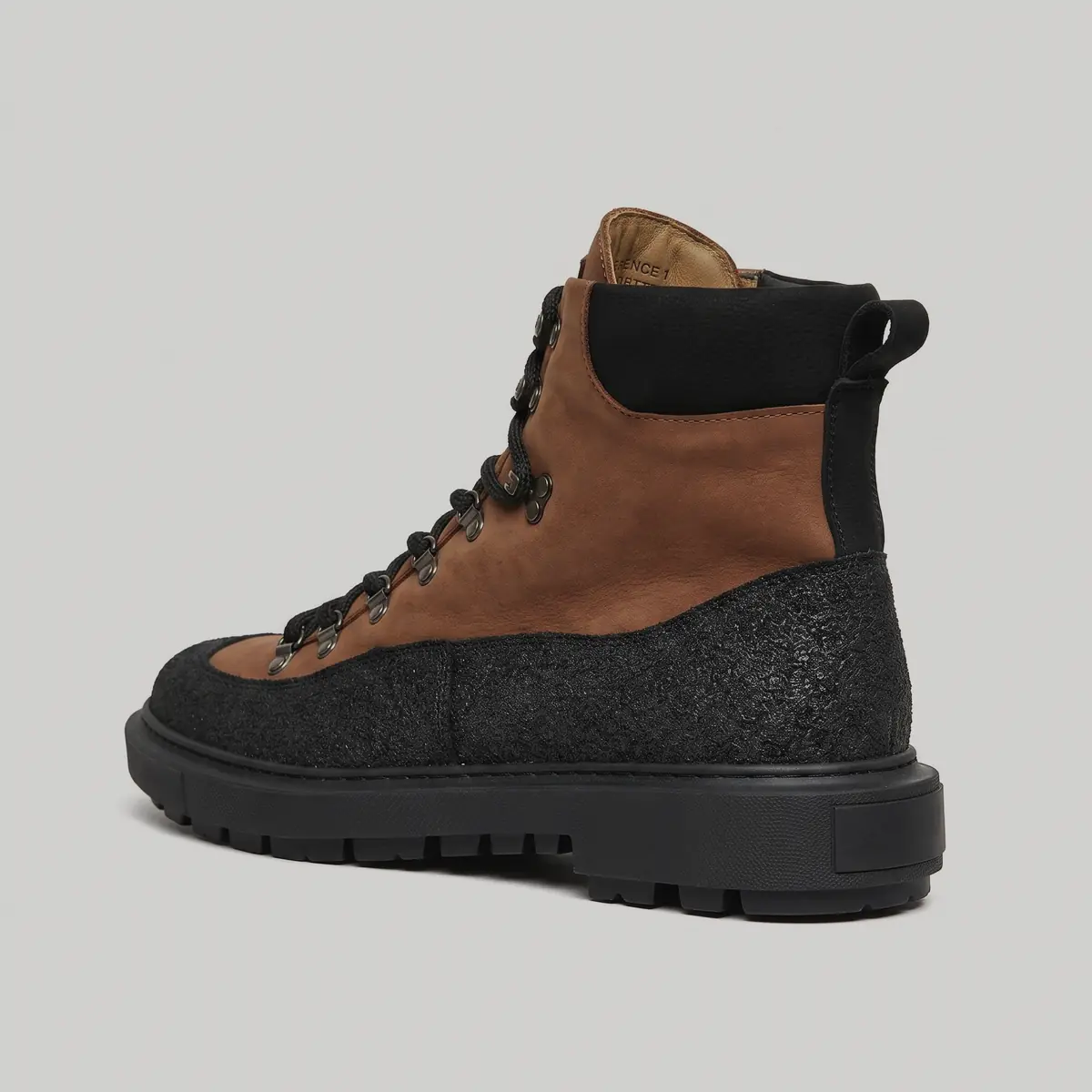
Armor boots have a liquid rubber coating around the base of the sole, a Babylon technique that, according to the product page, protects the boot from moisture, dirt and damage. Keep cream and wax off it: they do not absorb into rubber and only attract dust.
What should you never do with leather boots in winter?
- Dry them on a radiator, heater or with a hair dryer — the leather loses its shape.
- Apply cream to wet or dirty leather — it seals in dirt and salt.
- Use nubuck products on smooth leather, or the other way round.
- Put a wet pair in a closed box or bag.
We cover white leather separately in “How to clean white leather sneakers”. How to tell genuine leather from faux leather, and why each needs different care, is explained in “Genuine leather vs faux leather”.
Which Babylon leather boots are made for winter?
Babylon makes men's genuine leather winter boots in two lines, handmade at its family-owned factory in Kharkiv.
- Armor — chunky sole with deep tread, rubber coating around the base, a choice of lining: breathable Respira leather or Winterfrost 500 insulation (from +5 to −15 °C). Colours: black Armor-11, brown Armor-24.
- Washington — everyday boots with Italian metal hardware, Respira lining and a high treaded sole; a fur-lined version is also available. Colours: black Washington-41, green Washington-48.
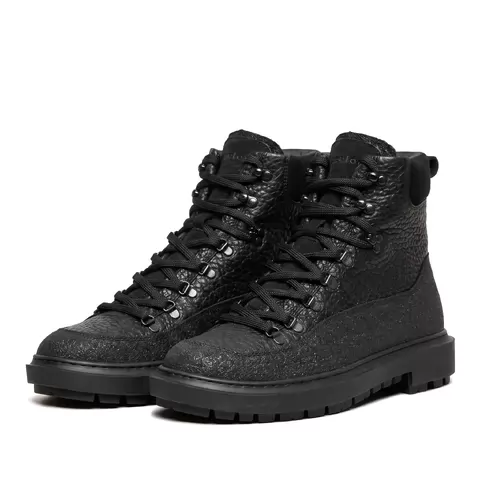 LeatherMen's leather boots Armor-11Winterfrost 500: insulation between the upper and the lining; rated from +5 to −15 °C; sole: chunky€120View
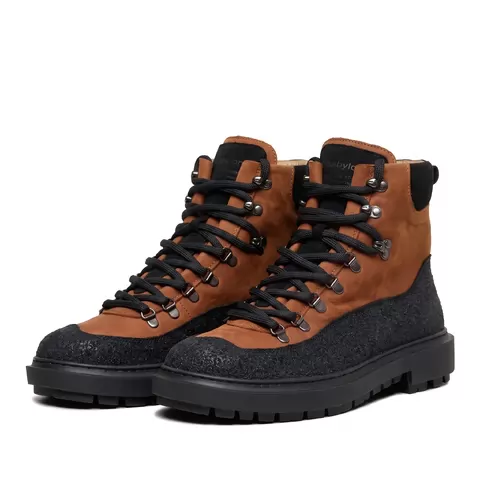 LeatherMen's leather boots Armor-24Winterfrost 500: insulation between the upper and the lining; rated from +5 to −15 °C; sole: chunky€120View
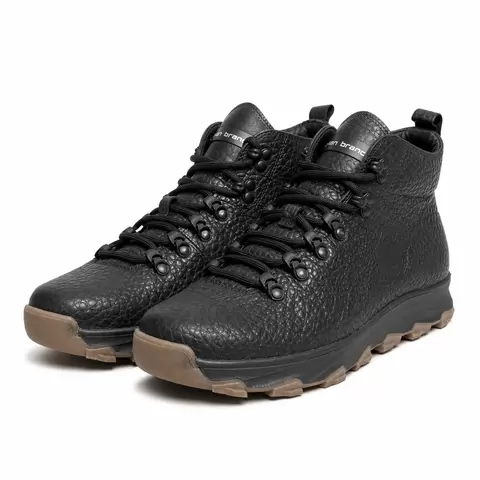 LeatherMen's leather boots Washington-41Hardware: Italian metal; lining: Respira — Italian lining leather; insole: soft foam rubber covered with le…€109View
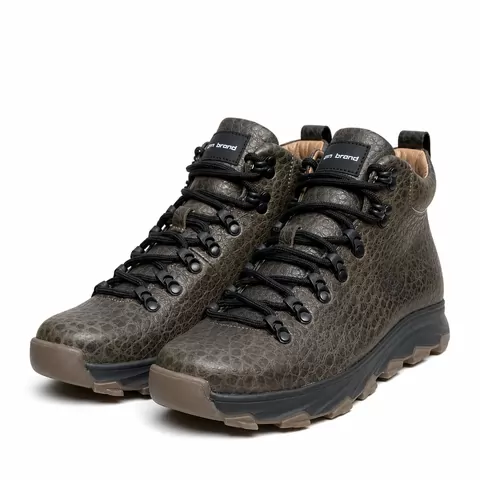 LeatherMen's leather boots Washington-48Hardware: Italian metal; lining: Respira — Italian lining leather; insole: soft foam rubber covered with le…€109View
Browse all models in “Men's winter boots” and “Women's boots”. How to choose a winter pair by upper, lining and sole is covered in “Men's winter boots: how to choose a leather pair”.
Women’s nubuck boots with fur and other warm styles are in Women’s winter shoes, men’s — in Men’s winter shoes.
FAQ
How often should I apply cream to leather boots in winter?
If you wear your boots every day, apply cream once a week and whenever the leather looks dry or whitish after a walk. Use it only on clean, dry leather in a thin layer, let it soak in and buff with a brush. More often is not better: excess cream collects dust and clogs the surface.
Can I apply cream right after coming in from the street?
No. First remove dirt and salt with a damp cloth, then let the boots dry completely at room temperature, stuffed with paper. Cream will not absorb into wet leather; it only seals moisture and dirt underneath. Apply it the next morning or in the evening, once the pair is fully dry.
Is neutral cream fine for black boots?
It works for routine conditioning, but it will not hide scuffs because it contains no pigment. To bring back a deep black and cover light scratches on the toe, you need black cream. Neutral cream is a handy second product for seams, light-coloured details and days when the pair simply needs nourishment.
What is the difference between shoe wax and shoe cream?
Cream polish is an emulsion of water, oils and wax, so it conditions the leather and absorbs easily. Wax polish barely conditions but leaves a protective film that repels water better and adds shine. In winter, combine them: cream first, then a thin layer of wax on the toe and the lower part of the boot.
How do I care for the rubber coating on Armor boots?
Armor boots have a liquid rubber coating around the base of the sole, a Babylon technique. According to the product page, simply wiping it with a damp cloth is enough to clean it. Do not apply cream or wax to the coating: they are made for leather and will only leave a sticky layer on rubber.
Can leather boots be dried on a radiator?
No. The product pages of Babylon's leather boots say clearly: do not dry shoes on a radiator or with a hair dryer, so the leather keeps its shape. Stuff a wet pair with paper and leave it at room temperature, away from direct sunlight and heat sources. We cover quick and safe drying in a separate guide.
Works at Babylon's family-owned factory in Kharkiv, Ukraine. The factory employs 25 craftspeople and 2 technologists; leather and fur come from Spain and Turkey, soles are made to order, and every pair is made by hand. All articles by this author
Sources and notes
- Shoe polish — Wikipedia
- Leather conditioner — Wikipedia
- Leather — Wikipedia
- Saddle soap — Wikipedia
- Care recommendations — Care tab on the Armor-11, Armor-24, Washington-41 and Washington-48 product pages (as of 06.10.2026).
 Materials & care
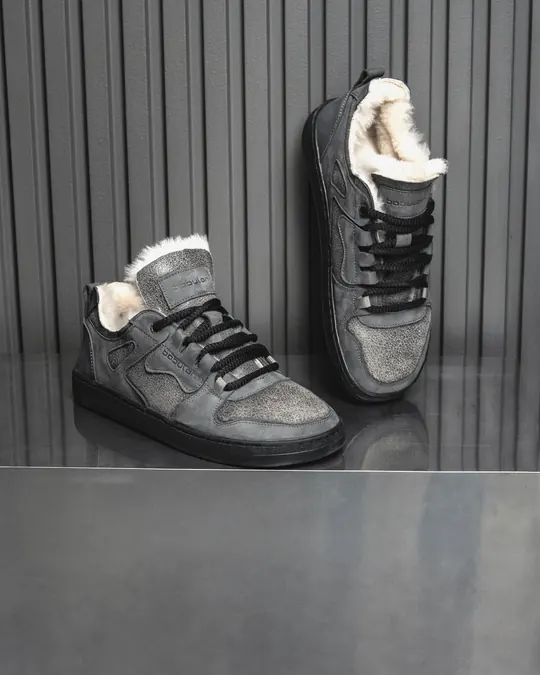
How to dry shoes in winter: leather, nubuck, suede, sheepskin
Wet winter shoes dry in a day or two if you stuff them with paper and keep them away from the radiator. Here is why heat harms leather, how to dry nubuck, suede and sheepskin, and what Babylon’s product pages advise.
 Materials & care
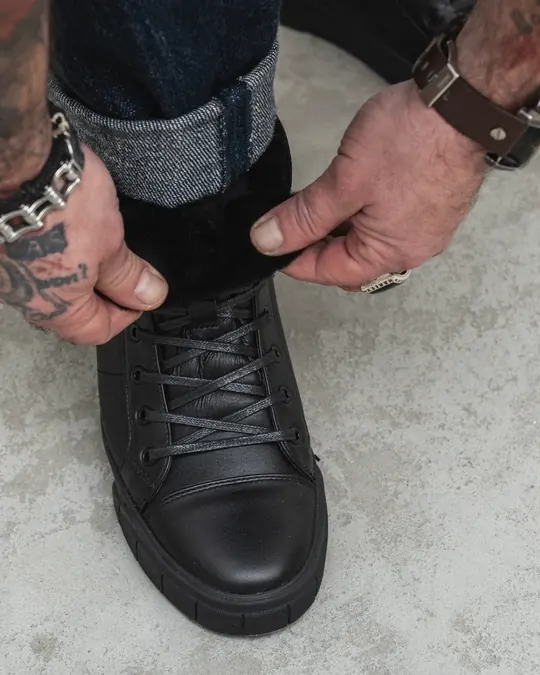
How to store shoes between seasons: summer pairs for winter, winter boots for summer
In October, summer sneakers, sandals and loafers go into storage and winter boots come back out. Here is how to prepare a pair for a few months in a box so it comes out in spring looking the way it did in autumn.
 Materials & care
Shearling vs sheepskin boots: what's the difference and which is warmer
Shearling and sheepskin are often used as if they were the same thing, but on a product page they can describe very different boots. Here is what each word means, what really keeps a pair warm and how to read the composition before you buy.