





Shearling vs sheepskin boots: what's the difference and which is warmer
Shearling and sheepskin are often used as if they were the same thing, but on a product page they can describe very different boots. Here is what each word means, what really keeps a pair warm and how to read the composition before you buy.

In short
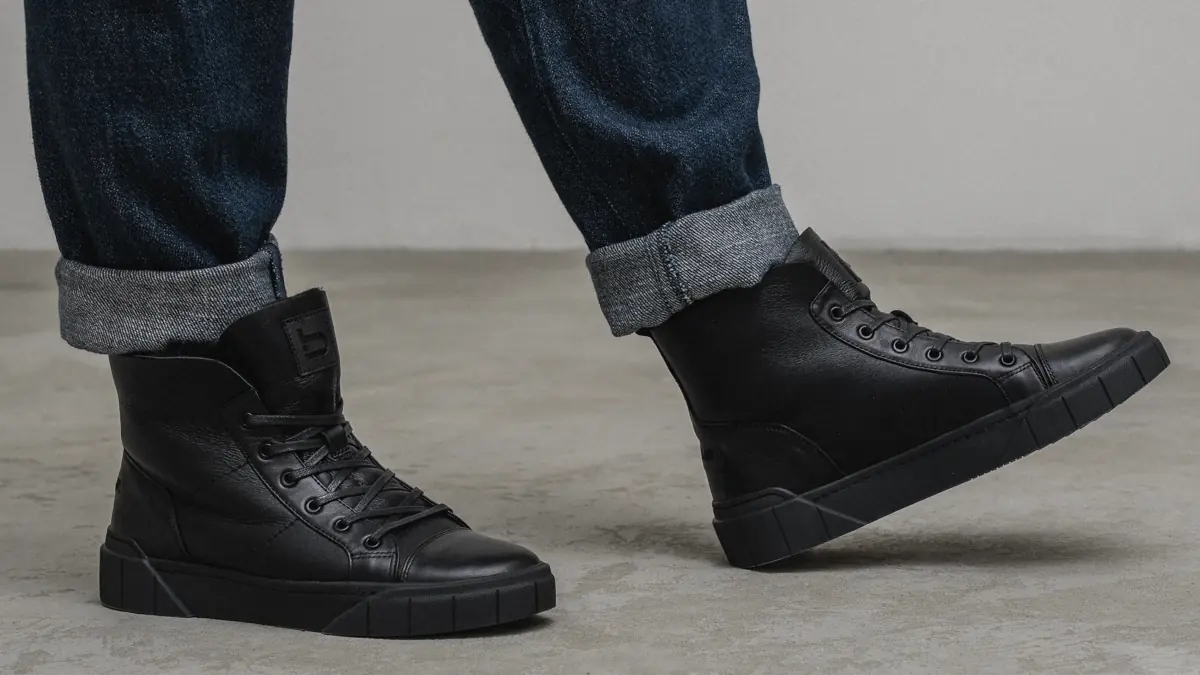
Sheepskin is a sheep hide tanned with the wool left on; shearling is a sheepskin with short, even wool. Warmth depends on the construction, the density of the fleece, a fur-covered insole and the sole, not on the word in the name. Double-face boots are light, with no seam between leather and wool, shearling-lined leather is the easiest to wipe clean, and faux fur handles moisture worse. Babylon lists the upper, lining and temperature of each model.
What is the difference between shearling and sheepskin?
Sheepskin is the hide of a sheep tanned with the wool still attached. Shearling is a kind of sheepskin: a hide from a recently shorn sheep or lamb, with short, even wool on one side and a suede-like surface on the other. Every shearling is sheepskin, but the word usually signals a softer, more uniform fleece.
In shops the two words are often swapped, and they are also used for different constructions. “Sheepskin boots” usually means double-face sheepskin, where the leather outside and the wool inside are one piece. “Shearling-lined boots” usually means a leather or nubuck boot with a separate fleece lining stitched inside. And some catalogues write “faux shearling” or “sherpa” for synthetic pile on a fabric backing. That is why the composition tells you more than the product name.
If you want to check that a pair is real sheepskin rather than an imitation, we cover the quick tests in “Genuine sheepskin boots: how to tell real sheepskin from a fake”. Here we look at what the different constructions mean for warmth, weight and care.
How are warm winter boots built?
Most warm boots use one of four constructions: double-face sheepskin, a leather or nubuck upper with natural fur inside, a natural upper with faux fur, or wool felt. They differ in weight, in how they cope with wet weather and in how you clean them.
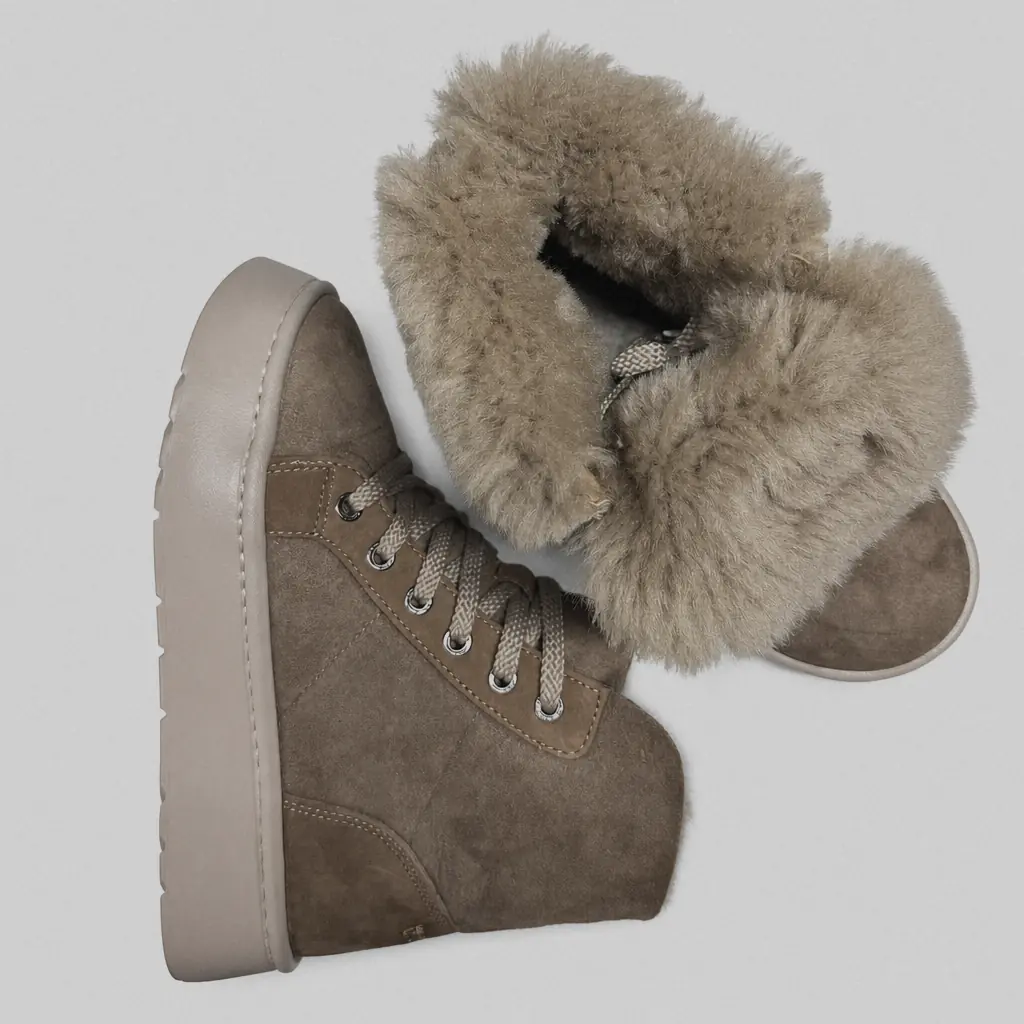
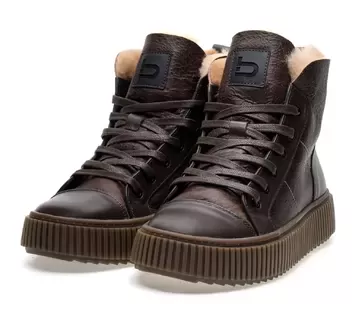
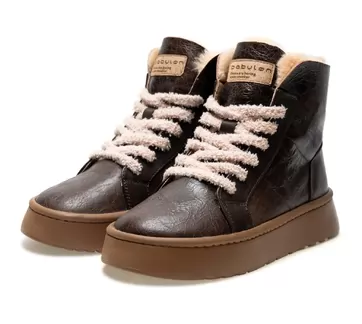
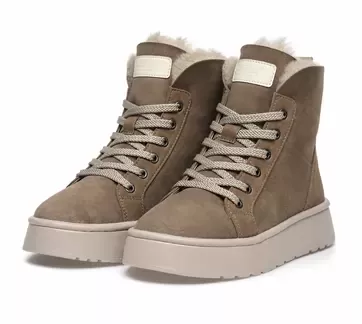
- Double-face sheepskin. One hide does both jobs: the outside is finished as leather, smooth or napped, and the wool stays inside. There is no seam between upper and lining, so nothing can slide or peel. Frost-14, Frost-71 and Frost-94 are built this way: their pages list double-face genuine leather (sheepskin) outside, dense, thick sheepskin fur inside and a fur-covered insole.
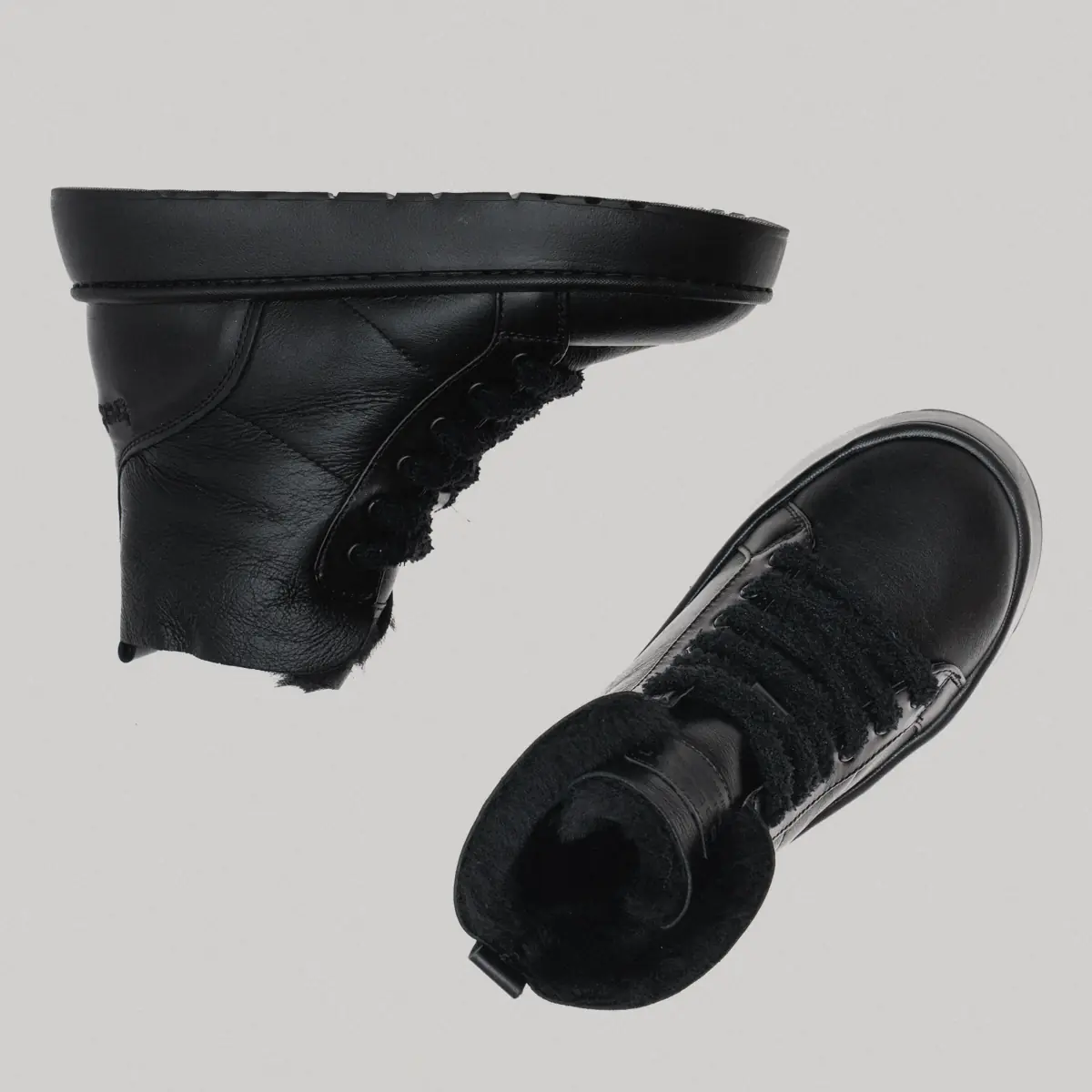
- Leather or nubuck with natural fur inside. Two materials joined by stitching. Frost-11 has a genuine leather upper with natural sheepskin inside, a classic shearling-lined boot. Glori-29 and MARY-91 combine genuine nubuck with natural fur; their pages do not name the animal, so we do not call them sheepskin.
- Natural upper with faux fur. 1654-74 is genuine nubuck lined with faux fur, and the composition says so openly. It is a winter sneaker for the city rather than a boot for hard frost.
- Felt. Wool fibres matted and pressed together without weaving. Cloud-64 pairs an Italian felt shaft with a genuine leather base and Italian wool insulation on a backing layer.
Which is warmer: shearling or sheepskin?
Neither word on its own tells you which pair is warmer. Warmth depends on how dense the fleece is, whether the insole is covered with fur, how thick the sole is and whether the boot leaves room for air around your toes. A double-face boot and a well-made shearling-lined leather boot can be rated for the same frost.
Babylon's product pages show this clearly. The double-face Frost-71 and the leather Frost-11 with sheepskin inside are both listed “down to −20 °C”, and so is MARY-91, nubuck with natural fur. Frost-14 states “from +5 to −20 °C”. The material changes how a boot behaves, not just the number on the page.
What actually keeps feet warm:
- Still air. Wool fibres are naturally crimped, so fleece is bulky and holds air, and still air conducts heat poorly. Denser fleece holds more of it.
- Moisture. Feet sweat even in frost. Wool draws perspiration into the fibres and can take up roughly a third of its own weight in moisture before it feels wet, so the air layer stays drier for longer. Synthetic pile absorbs very little, and the moisture stays in the sock.
- Cold from below. Much of the heat is lost into the ground. The Frost pages credit “a fur-covered insole and the height of the sole” for keeping it at bay.
- Fit. A boot that squeezes the foot flattens the fleece. Leave space for the socks you will actually wear.
How do the constructions compare?
The short version: double-face is the lightest natural option, shearling-lined smooth leather is the easiest to keep clean, nubuck with fur is soft but needs more protection, and faux fur is the least effective at handling moisture. The table compares them on the points buyers ask about most.
| Construction | Outside / inside | Weight | Wet snow | Everyday care | Babylon example |
|---|---|---|---|---|---|
| Double-face sheepskin | Same hide: leather face / wool | Light, one layer | Water-repellent spray, avoid soaking | Soft brush or dry cloth | Frost-71, down to −20 °C; Frost-14, +5 to −20 °C |
| Leather + sheepskin lining | Smooth leather / separate sheepskin | Heavier, two layers | Wipes clean with a damp cloth | Damp cloth, leather cream | Frost-11, down to −20 °C |
| Nubuck + natural fur | Nubuck / natural fur | Medium | Nubuck spray before wear | Nubuck brush, cleaned dry | MARY-91, down to −20 °C; Glori-29, not stated |
| Nubuck + faux fur | Nubuck / synthetic pile | Light | Nubuck spray before wear | Nubuck brush; pile can mat | 1654-74, not stated |
| Felt + leather base | Felt and leather / wool insulation | Light | Water-repellent spray if needed | Dry brushing, no radiators | Cloud-64, not stated |
Weight is a comparison between constructions, not a measurement of these pairs.
How do you read a boot's composition?
Read three lines: the upper, the lining (or “inside”) and the insole. Together they tell you the construction in a few seconds, whatever the boot is called.
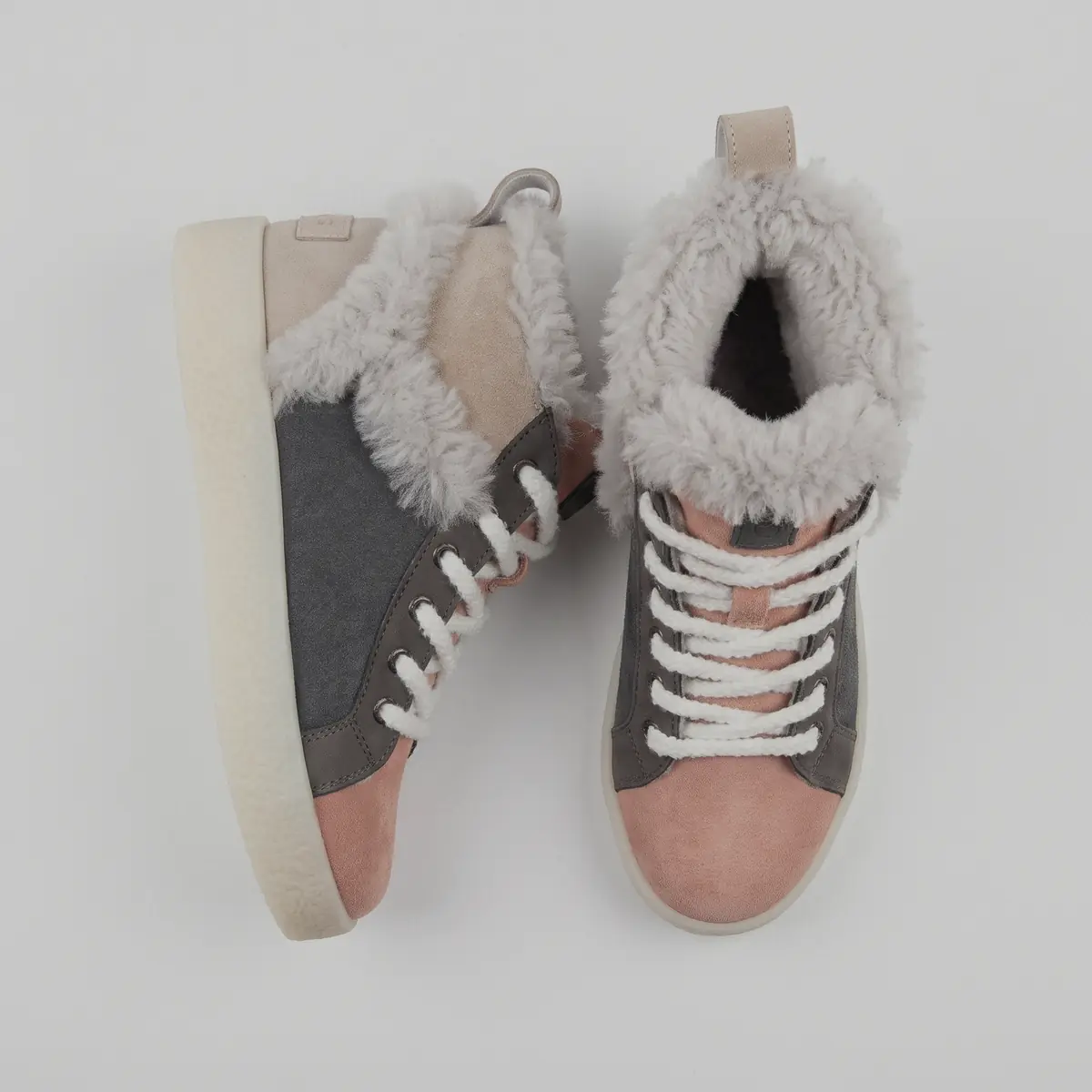
- “Double-face” or “twin-face” sheepskin in the upper line: leather and wool are one piece.
- Upper: leather or nubuck; inside: sheepskin: a shearling-lined boot.
- “Natural fur” or “genuine fur”: animal fur, but not necessarily sheep. Ask the seller if it matters to you.
- “Faux fur”, “faux shearling”, “sherpa”: a synthetic lining.
- Insole: “fur-covered”: extra warmth from below; a plain textile insole is cooler.
- Temperature: trust only a range the seller states for that exact model.
Which is lighter and easier to care for?
Double-face sheepskin is usually lighter, because one hide replaces an upper plus a lining; the UG-1-41 page sums it up as “leather and fur in one layer — warmth without extra weight”. Shearling-lined smooth leather is the easiest to keep clean, since dirt and salt come off with a damp cloth.
What the care sections of the product pages say:
- Smooth leather with sheepskin (Frost-11): remove dirt with a damp cloth, treat with a black leather and nubuck cream, and use a water-repellent treatment against moisture, salt and sand.
- Double-face (Frost-14, Frost-71): brush off dirt with a soft brush or dry cloth after each use, use a suede or leather cleaner on stubborn marks, and apply water-repellent spray before the first wear and then periodically.
- Nubuck with fur (Glori-29, MARY-91): a nubuck brush or eraser, nubuck foam for deeper stains, and a water-repellent nubuck spray. The MARY-91 page adds: do not wash the shoes or dry them near heaters.
- All of them: if they get wet, stuff them with paper and dry them at room temperature, never on a radiator.
The full routine, including the fleece inside and summer storage, is in “How to care for sheepskin boots”. If you are choosing between napped finishes, see “Nubuck vs suede”.
Which Babylon boots use each construction?
Babylon makes all six models below at its family-owned factory in Kharkiv, Ukraine, where it has produced footwear since 1997. The leather and fur are bought in Spain and Turkey, the soles are made to order for Babylon, and every pair is stitched and lasted by hand.
- Frost-14, men's: double-face sheepskin, fur-covered insole, TPE sole; +5 to −20 °C.
- Frost-71, women's: double-face sheepskin with genuine leather heel counter and tongue insert, EVA sole; down to −20 °C.
- Frost-11, men's: genuine leather upper, natural sheepskin inside, TPE sole; down to −20 °C.
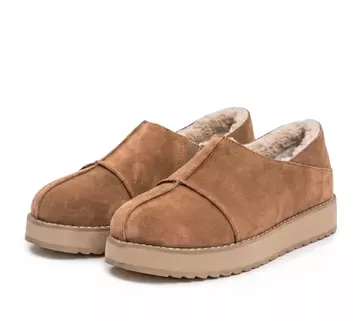
- MARY-91, women's slip-ons: genuine nubuck, natural fur lining, hand-assembled; down to −20 °C.
- Glori-29, women's: genuine nubuck, thick genuine fur, TPE sole.
- 1654-74, women's winter sneakers: genuine nubuck, faux fur, TPE sole.
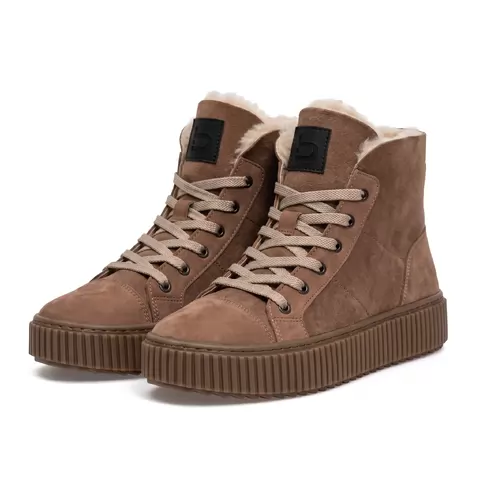 LeatherMen's sheepskin boots, down to −20 °C Frost-14Heel counter and decorative tongue insert: genuine leather; inside: dense; insole: fur-covered€115View
 LeatherWomen's sheepskin boots, down to −20 °C Frost-71Heel counter and decorative tongue insert: genuine leather; inside: dense; insole: fur-covered€115View
 LeatherMen's sheepskin-lined leather boots, down to −20 °C Frost-11Inside: natural dense; insole: fur-covered; sole: TPE (thermoplastic elastomer)€115View
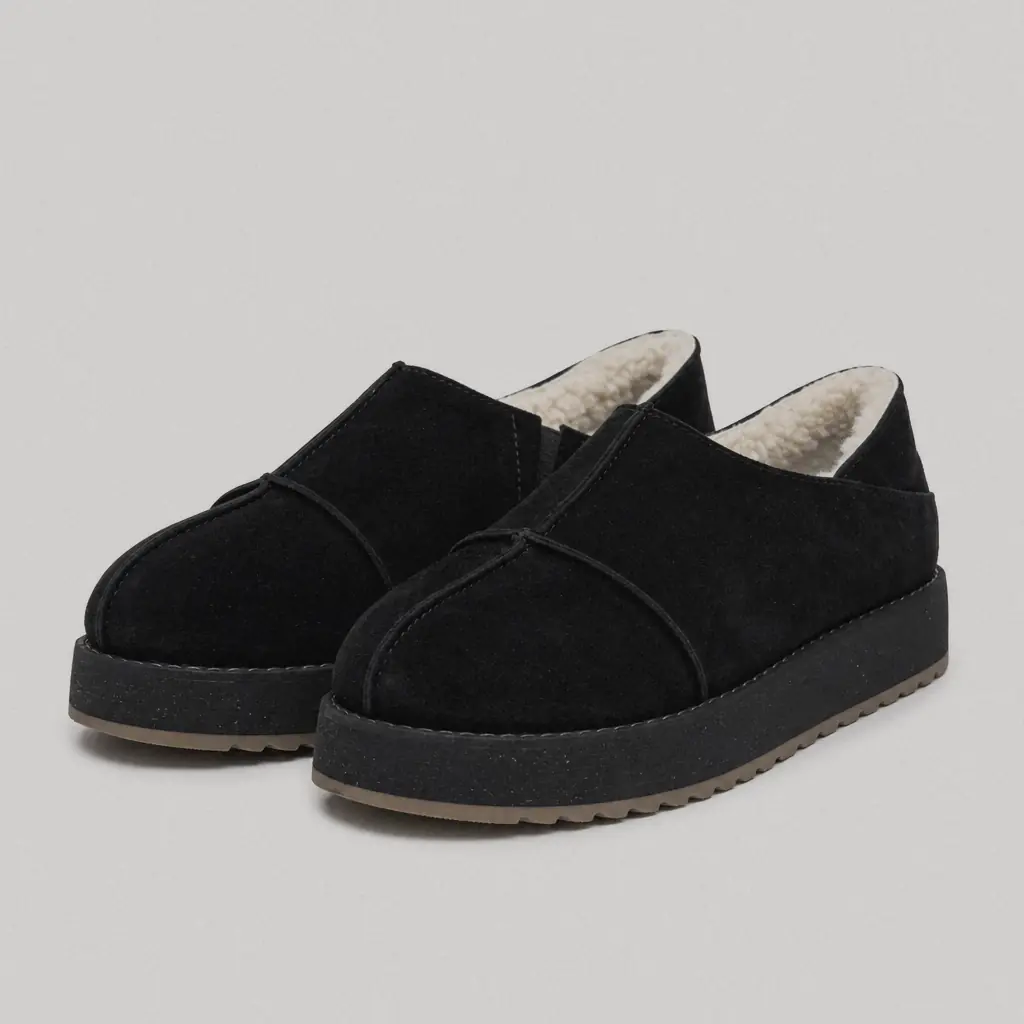
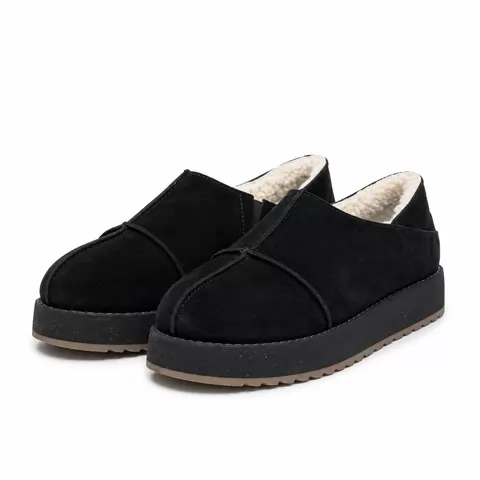 NubuckWomen's fur-lined nubuck boots, down to −20 °C MARY-91Lining: natural fur; style: slip-ons; sole: light€115View
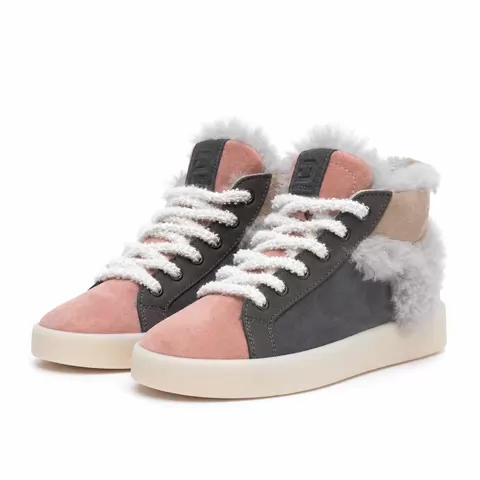 NubuckWomen's fur-lined winter nubuck boots Glori-29Lining: thick genuine fur; sole: thermoplastic elastomer (TPE)€107View
 NubuckWomen's faux-fur-lined winter nubuck sneakers 1654-74Lining: faux fur; sole: TPE (thermoplastic elastomer); design: original€105View
To choose a size, measure your foot and compare it with the table on the page of that exact model; our guide “How to measure your foot at home” shows how. Prices on the English site include worldwide shipping, delivery usually takes 5–10 business days (7–12 to the US, Canada, Israel, New Zealand, Georgia and Montenegro), and a size made to order takes up to 3 business days to make. Browse sheepskin boots for women and men, leather sheepskin boots and all winter footwear.
FAQ
Is shearling real fur?
Genuine shearling is a natural sheep hide tanned with its wool left on, so yes, it is a real animal material. The word is also borrowed for synthetic linings sold as faux shearling or sherpa, which are polyester pile on a fabric backing. Read the lining line of the composition: it should say sheepskin, natural fur or faux fur.
Are double-face sheepskin boots warmer than leather boots with a fur lining?
Not automatically. Both can be rated for the same frost: on Babylon's pages the double-face Frost-71 and the leather Frost-11 with sheepskin inside are both listed down to −20 °C. Fleece density, a fur-covered insole, sole thickness and a fit that leaves room for air matter more than the construction itself.
What does shearling-lined mean on a label?
Usually it means the outer upper is leather, nubuck or suede, and a separate layer of sheepskin is stitched inside. Some brands use the same phrase for synthetic pile, so check that the composition names sheepskin or natural fur. A double-face boot is different: the leather and the wool are one hide, with no seam between them.
Can sheepskin boots be worn in slush?
Light snow is fine once the upper has been treated with a water-repellent spray, which Babylon's pages recommend before first wear and periodically after. Deep slush and puddles soak natural leather and fleece. Smooth leather such as Frost-11 tolerates wet days better because dirt and salt wipe off with a damp cloth.
Do sheepskin boots make your feet sweat?
Less than synthetic linings. Wool draws perspiration into its fibres and can hold a large share of its own weight in moisture before it feels wet, so the air layer around the foot stays drier. Feet can still overheat indoors, so take boots off once inside and let the fleece air out after each wear.
Should I size up for sheepskin boots?
Do not size up by habit. Measure your foot in the evening, in the socks you will wear, and compare the length in centimetres with the size table on that exact model's page. Babylon makes most models on their own last, so every product page has its own table of foot lengths.
Works at Babylon's family-owned factory in Kharkiv, Ukraine. The factory employs 25 craftspeople and 2 technologists; leather and fur come from Spain and Turkey, soles are made to order, and every pair is made by hand. All articles by this author
Sources and notes
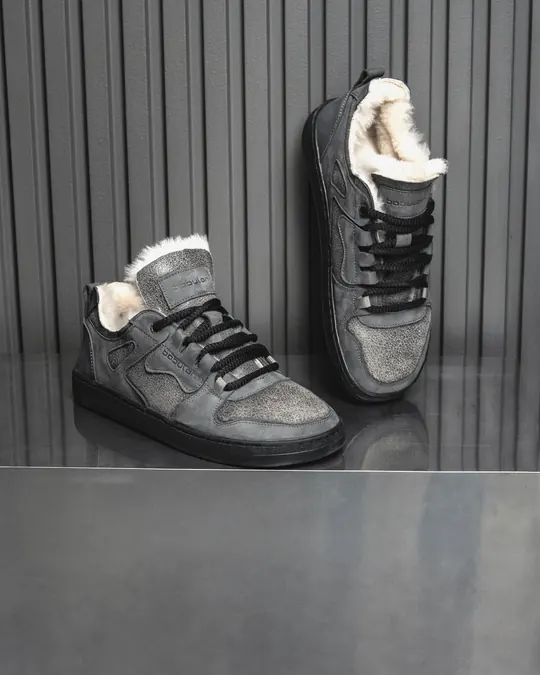 Materials & care
How to store shoes between seasons: summer pairs for winter, winter boots for summer
In October, summer sneakers, sandals and loafers go into storage and winter boots come back out. Here is how to prepare a pair for a few months in a box so it comes out in spring looking the way it did in autumn.
 Materials & care
Genuine leather or faux leather: how to tell them apart and what to choose for shoes
Faux leather, often sold as “eco leather” or “vegan leather”, is not a kind of leather but a fabric with a polymer coating. Here is how to tell it apart from genuine leather on a shoe, how they differ in wear, and when each makes sense — with Babylon models as examples.
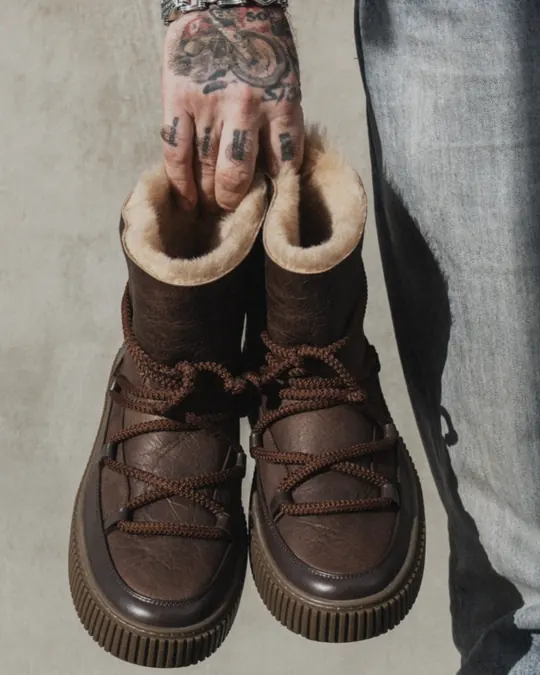 Materials & care
Genuine sheepskin boots: how to tell real sheepskin from a fake
Real sheepskin boots are made from a hide where the fleece and the leather are one piece. Here is how to check that in a few minutes, what the material list should say, and how Babylon's sheepskin and nubuck boots differ.