






Salt and de-icers: how to protect and clean leather shoes
White tide marks on boots are road salt that soaked into the leather and dried. Here is how to prepare a pair for winter, remove salt after a walk and clean smooth leather, nubuck, soles and stitching.

In short
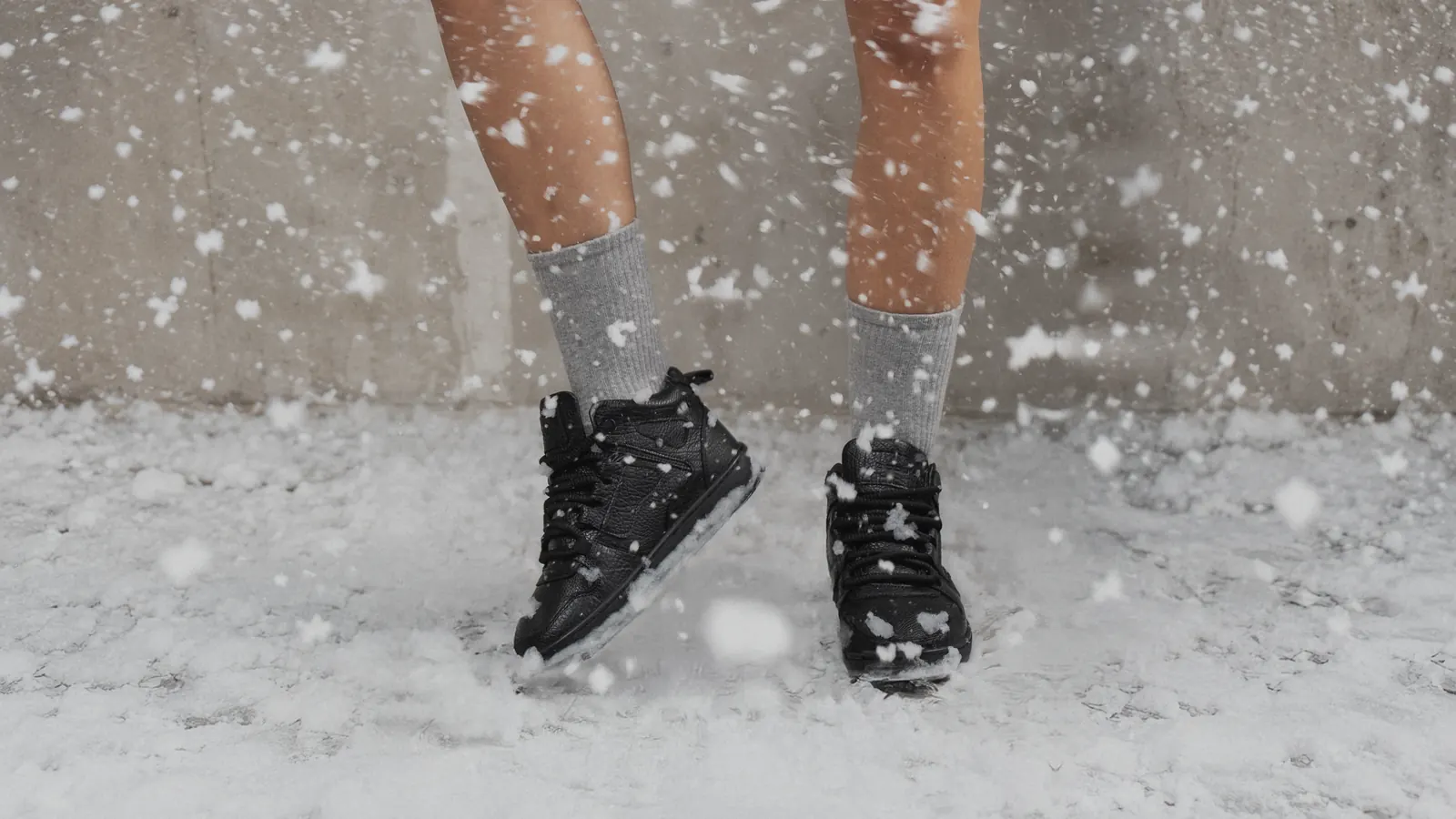
White stains on shoes come from de-icing salt such as sodium or calcium chloride: it soaks into the leather and crystallises as the water evaporates. Protect the pair with water repellent and polish before winter, wipe salt off daily with a damp cloth, treat old marks on smooth leather with diluted vinegar and clean nubuck dry. So advise the product pages of Babylon, a Ukrainian leather footwear brand with a family-owned Kharkiv factory since 1997.
Why does salt show up on shoes?
White tide marks are salt from de-icing products. Wet snow dissolves it, the solution soaks into the pores of the leather, and as the pair dries the water evaporates and the salt crystallises on the surface as a white line. It usually appears just above the sole and across the toe crease.
Pavements and roads are mostly treated with sodium chloride, ordinary rock salt. For harder frosts, calcium and magnesium chlorides are used because they work at lower temperatures. Calcium chloride is also hygroscopic: it pulls in moisture, so leather next to it dries out faster.
It is the same process that leaves white bloom on brickwork, which is why marks often appear the next day. The longer salt sits on leather, the more oil it draws out, leaving it stiff, pale and prone to cracking at the creases.
How do I protect shoes from road salt before winter?
Treat the pair before you first wear it: a water repellent for any leather, plus cream or wax polish on smooth leather. Snow and salt then soak in less and wipe off more easily.
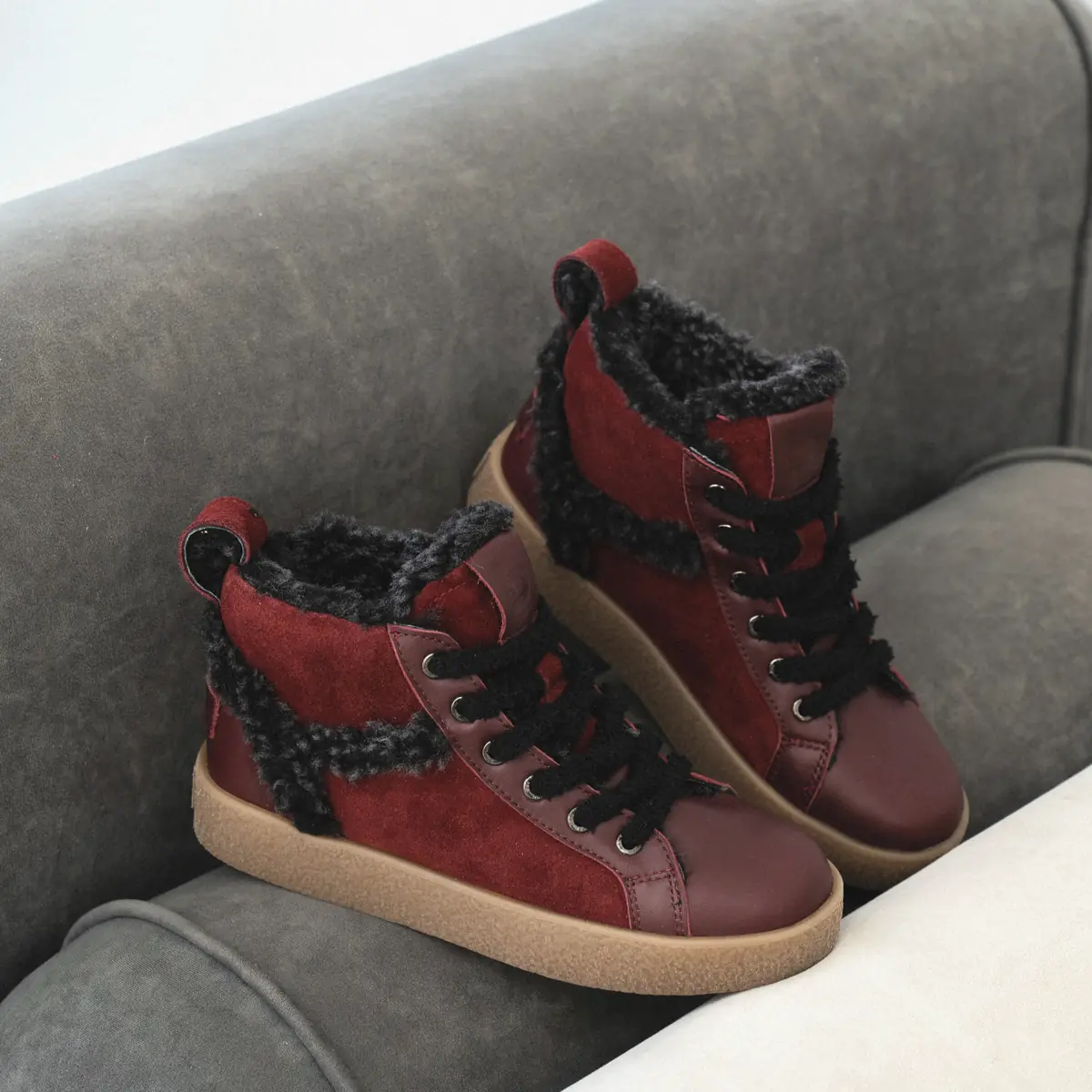
- Smooth leather. Cream in a matching shade or neutral first, then the water repellent once it has dried. Wax-based polish leaves a thin protective film. The Armor-14 boot page says: “Treat leather shoes with water-repellent agents to protect them from moisture and stains. This is especially important during the rainy and snowy seasons.”
- Nubuck and suede. A nubuck or suede spray only, no cream. The Glori-19 page advises: “Before first use and periodically, apply a water-repellent nubuck spray to protect against moisture and stains.”
- When to repeat. After every deep clean and more often in snowy weeks.
Choosing polish for black and coloured leather is covered in our guide to caring for leather boots in winter.
How do I remove salt from shoes after a walk?
Fresh salt comes off in a minute: wipe the upper and welt with a soft damp cloth before it dries, then wipe the pair dry. Do not leave salty shoes until morning, as overnight the solution soaks in deeper and shows as tide marks.
- At the door. Knock off snow and brush away grit.
- Damp cloth. Wipe the lower third and toe crease, rinsing the cloth often.
- Dry off. Wipe dry, stuff with paper and leave at room temperature.
The Armor-14 page says the same: “Remove dust and dirt with a soft, damp cloth or leather brush.” Nubuck is not wiped with a wet cloth; see below.
How do I get white salt stains off smooth leather?
Dried-in marks come off with a weak vinegar solution, which dissolves salt deposits better than plain water. Apply it with a soft cloth, wipe off with clean water, let the shoes dry and condition them. Test it first on a hidden spot, such as the heel counter or tongue.
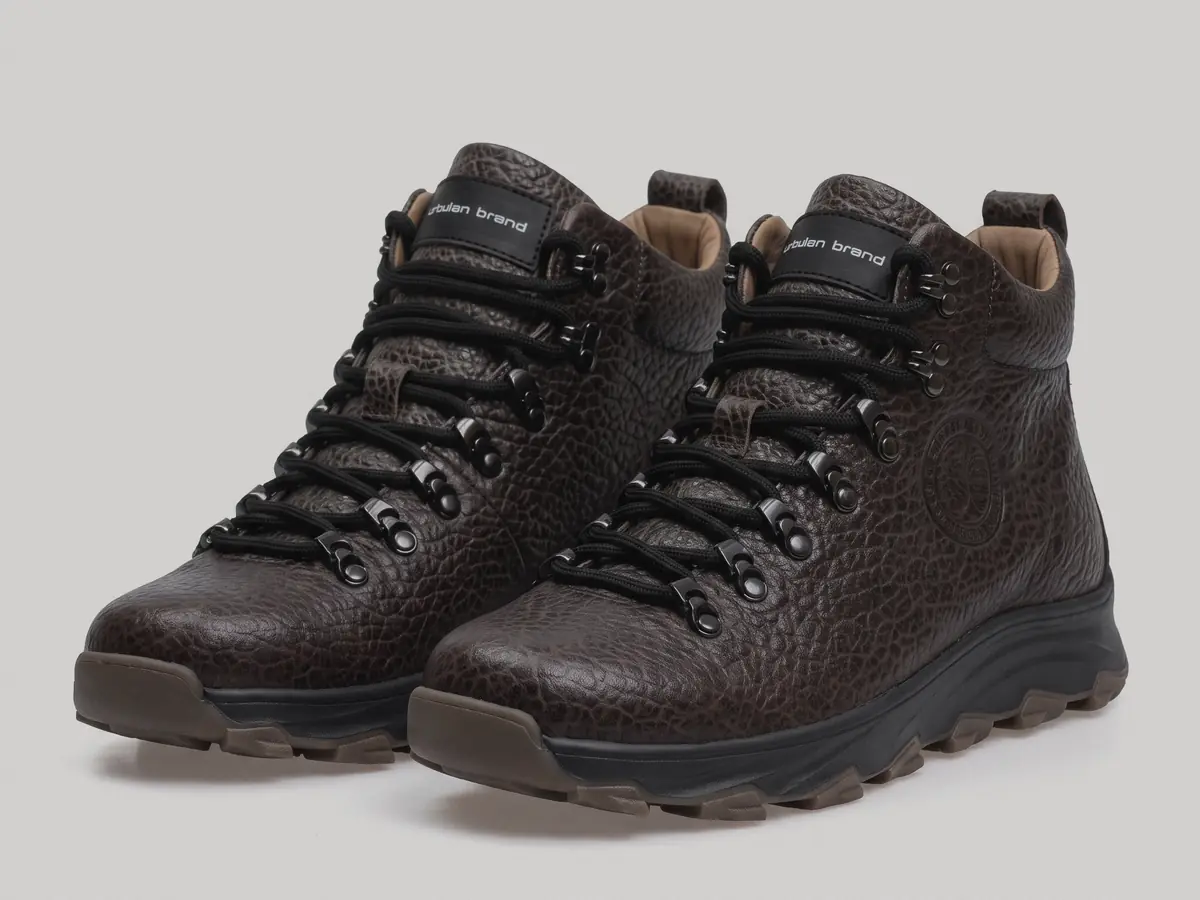
- Let the pair dry at room temperature and brush off loose crystals.
- Dilute the vinegar. British shoemaker John White suggests white vinegar and water in equal parts. Table vinegar in Ukraine is often stronger, so start weaker, with one part vinegar to two parts water.
- Work on the mark with a lightly damp cloth in small circles, from the edge inwards and slightly beyond it, so no new line forms.
- Wipe off the residue with a cloth dampened in clean water, then dry.
- Air-dry, then condition: vinegar, like salt, dries leather out.
For a deeper clean, the Armor-14 page recommends “special leather cleaners”, the safer route for pale or delicate leather.
How do I remove salt from nubuck, suede and sheepskin?
Nubuck and suede are cleaned dry: let the pair dry, brush the nap, rub the salt marks with an eraser and lift what is left with a dedicated foam or spray. Never use water and vinegar on napped leather, as it leaves dark patches and mats the nap.
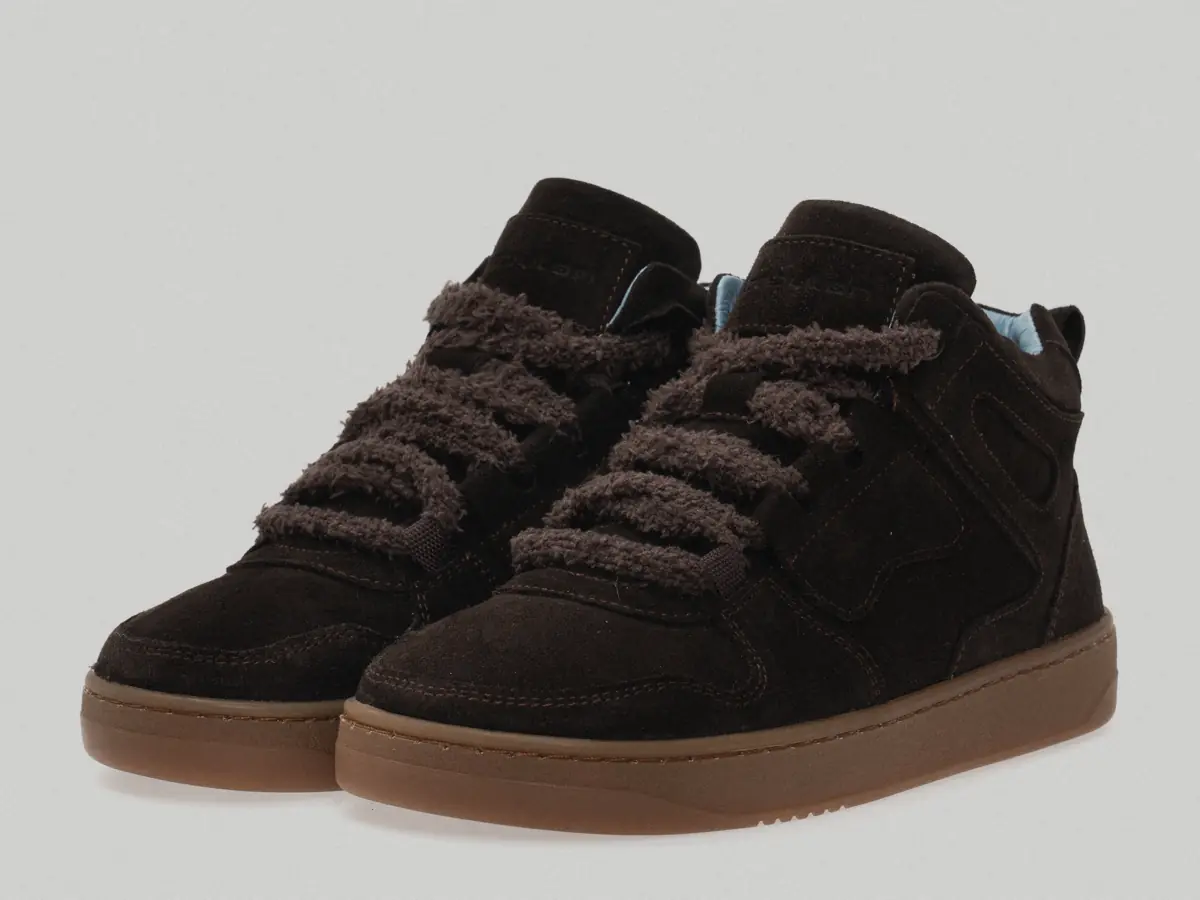
The Glori-19 page sets out the order: “Use a special nubuck brush or an eraser to remove dust and light dirt. For deeper stains, apply a nubuck cleaning foam or spray.” Water marks, grease and mud on nubuck and suede are covered step by step in How to clean nubuck and suede sneakers.
Sheepskin boots have their own rules: salt is removed dry and the fleece inside must not get wet. See “How to remove salt from sheepskin boots?” in How to care for sheepskin boots.
| Material | Every day | Old marks | Avoid |
|---|---|---|---|
| Smooth leather | damp cloth, then dry | weak vinegar solution, leather cleaner, cream | drying on a radiator |
| Nubuck, suede | dry, brush | eraser, nubuck foam or spray | water and vinegar, smooth-leather cream |
| Sheepskin boots | dry, nubuck brush | suede or leather cleaner | washing, soaking the fleece |
| Sole, rubber coating | damp cloth | brush and water | solvents |
How do I clean salt off soles, seams and welts?
Salt lingers where you do not see it: in the seam between upper and sole, in the stitching and in the tread. Clean these with a soft brush dipped in water and wipe dry.
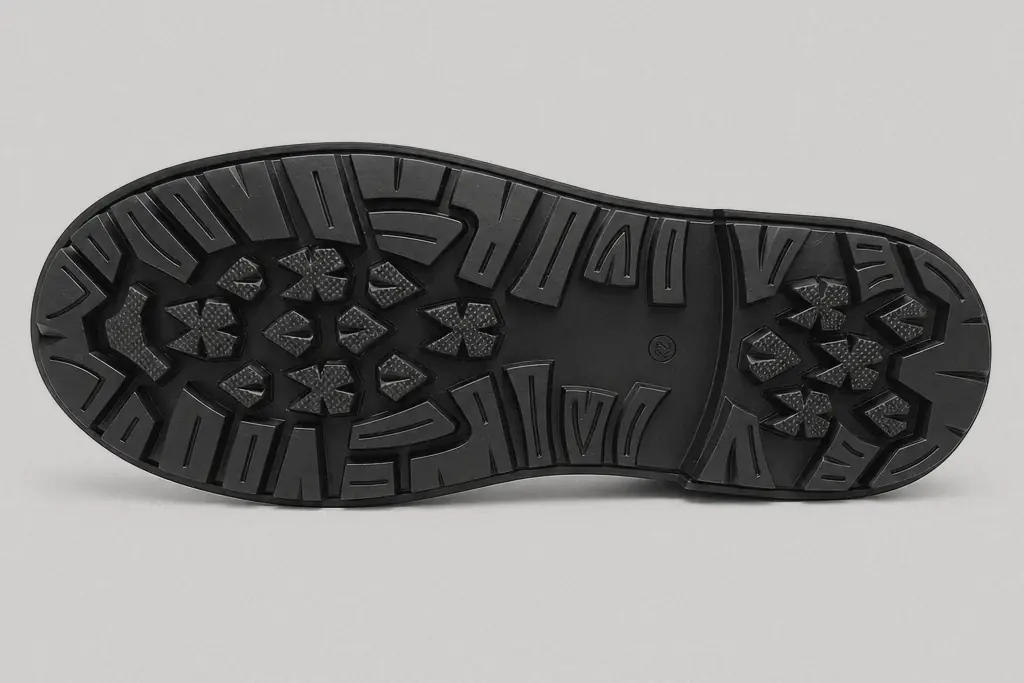
- Welt seam. Run an old toothbrush along the welt, where a paste of salt and grit builds up and wears the thread.
- Tread. Brush it under running water without soaking the upper, then dry.
- Rubber coating. Armor-14 has liquid rubber applied around the base of the sole. Its page says: “To clean the rubber outsole, simply wipe it with a damp cloth.”
How do I dry shoes after cleaning off salt?
Let them dry naturally: stuff with paper, leave at room temperature and wait until the pair is completely dry. No radiator, heater or hair dryer, as leather already dried out by salt warps and cracks with heat.
The Armor-14 page: “If your shoes get wet, let them dry naturally, avoiding direct sunlight and heat sources. Do not dry them on a radiator or with a hair dryer to avoid damaging the leather.” How long it takes and how to speed it up safely is explained in our guide to drying shoes in winter.
Once dry, condition smooth leather and brush and spray nubuck. At the end of winter, clean the salt off before putting shoes away; see How to store shoes between seasons.
What should I avoid when shoes are salty?
- Do not leave salty shoes until the weekend; clean them the same day.
- No radiator, heater or hair dryer.
- No neat vinegar, acetone, washing-up liquid or laundry detergent.
- No cream on wet or salty leather; clean and dry first.
- Do not soak nubuck, suede or sheepskin to “rinse off” salt.
- Never put leather shoes in the washing machine.
Which Babylon winter shoes are easiest to keep salt-free?
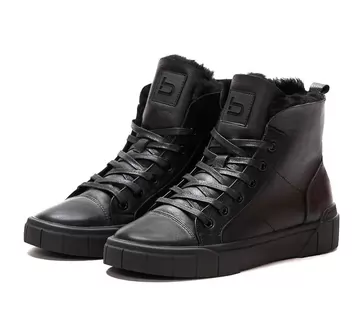
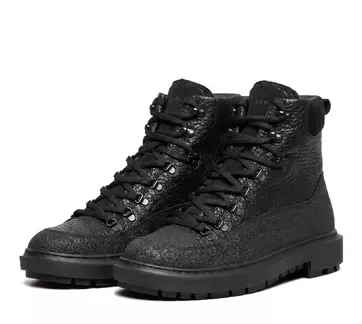
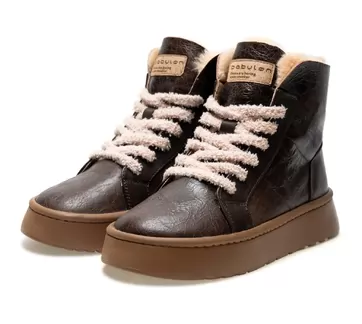
Smooth leather is the easiest: salt wipes off with a damp cloth. Nubuck looks softer but needs a water repellent and dry cleaning. Four Babylon winter models as examples, all genuine leather and handmade at our family-owned factory in Kharkiv:
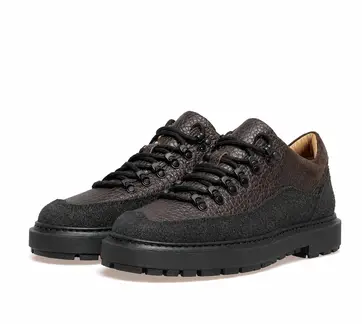
- Armor-14: men's genuine leather boots with a chunky deep-tread sole and liquid rubber around its base; Respira lining or Winterfrost 500 insulation.
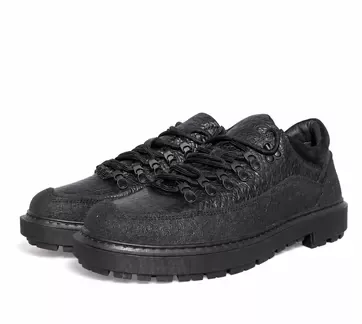
- Washington-24: men's genuine leather boots with a high treaded sole and Respira lining; also available fur-lined.
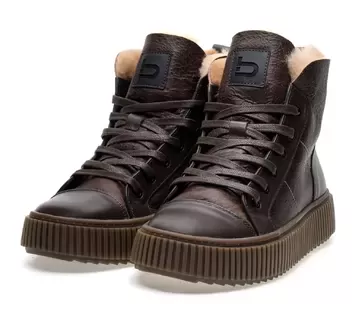
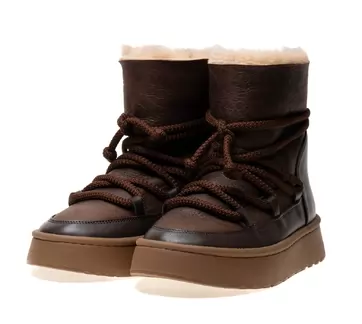
- Glori-19: women's genuine nubuck winter boots with thick genuine fur inside.
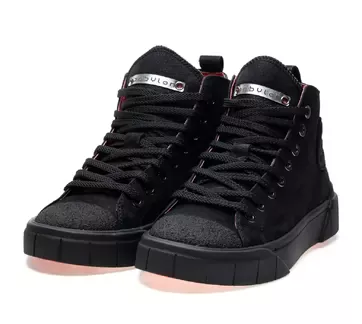
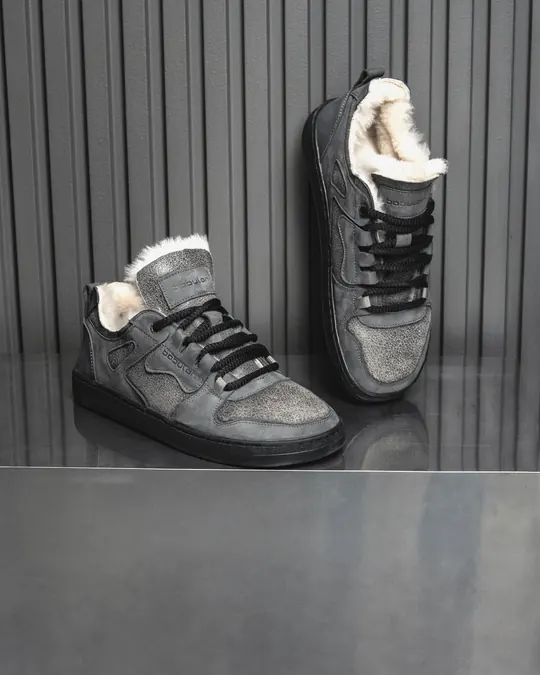
- Space-84-X: women's genuine nubuck sneakers with natural fur and a TPE sole.
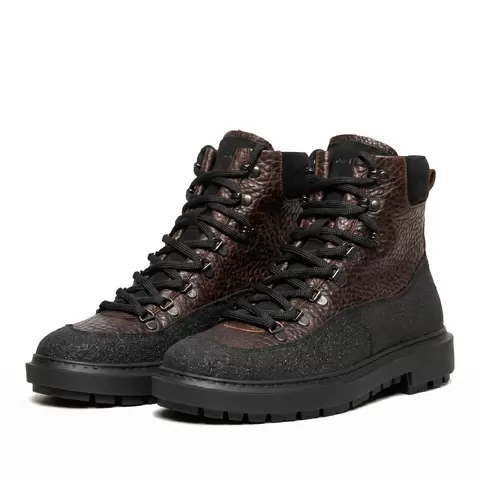 LeatherMen's leather boots Armor-14Winterfrost 500: insulation between the upper and the lining; rated from +5 to −15 °C; sole: chunky€120View
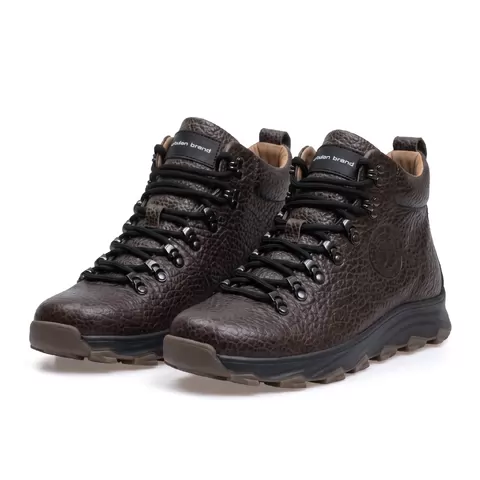 LeatherMen's leather boots Washington-24Hardware: Italian metal; lining: Respira — Italian lining leather; insole: soft foam rubber covered with le…€109View
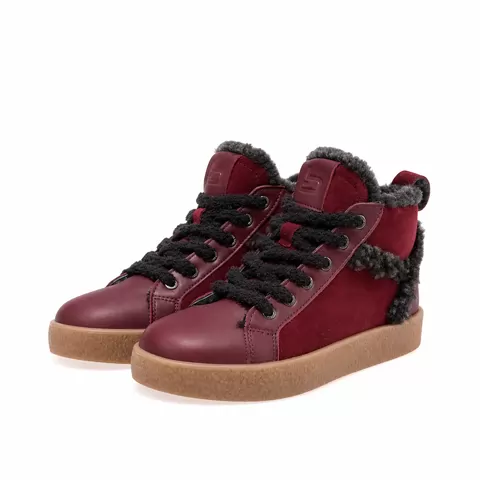 NubuckWomen's fur-lined winter boots in leather and nubuck Glori-19Lining: thick genuine fur; sole: thermoplastic elastomer (TPE)€107View
 NubuckWomen's high-top nubuck sneakers Space-84-XLining options: Respira — Italian lining leather or natural fur (+€7); last: anatomical; sole: TPE€113View
See the full range in winter shoes.
More styles for the cold season are in Women’s winter shoes and Men’s winter shoes.
FAQ
Why do white marks appear on leather shoes in winter?
They are salt from de-icing products. Snow and slush on the pavement dissolve the salt, the solution soaks into the pores of the leather, and when the pair dries the water evaporates and leaves white crystals behind. Marks usually show along the toe crease and just above the sole, where wet snow hits most.
Can I clean leather shoes with vinegar?
Smooth leather, yes, but only with diluted white vinegar and after a patch test somewhere hidden. Apply the solution with a soft cloth, wipe with a clean damp cloth, let the shoes dry and always condition them afterwards, because vinegar dries leather out too. Never use vinegar on nubuck, suede or sheepskin.
How do I protect new boots from road salt?
Before the first wear, treat the pair with a water-repellent spray and let it dry. On smooth leather, add a layer of cream or wax polish, which forms a protective film. Repeat during the season, after every deep clean. That is what the product pages of Babylon winter models such as Armor-14 and Glori-19 recommend.
What if salt has soaked into nubuck?
Let the pair dry at room temperature, brush the nap with a nubuck brush and rub the white marks with a nubuck eraser. Lift whatever remains with a nubuck cleaning foam or spray. Do not use water and vinegar on nubuck, as it leaves dark patches. Finish with a water-repellent spray once the shoes are dry.
How often should I clean salt off my shoes in winter?
After every walk on salted pavements, before the salt dries. A wipe of the upper and welt with a damp cloth, a dry cloth afterwards and natural drying is enough. Fresh salt comes off in a minute, while marks left for several days need a deeper clean and may leave a trace.
Can I dry salty shoes on a radiator?
No. Salt already draws moisture and oils out of leather, and a hot radiator or hair dryer dries it out further, so it can crack and lose its shape. Babylon product pages say to let shoes dry naturally, away from direct sunlight and heat sources, stuffed with paper to hold their shape.
Works at Babylon's family-owned factory in Kharkiv, Ukraine. The factory employs 25 craftspeople and 2 technologists; leather and fur come from Spain and Turkey, soles are made to order, and every pair is made by hand. All articles by this author
Sources and notes
- Care advice: the Care section of Babylon product pages Armor-14 and Glori-19; materials: Washington-24, Space-84-X (as of 06.10.2026).
- Which salts are used for de-icing: “Road salt”, Wikipedia.
- Calcium chloride is hygroscopic and works at lower temperatures: “Calcium chloride”, Wikipedia.
- How salt rises to the surface of porous materials: “Efflorescence”, Wikipedia.
- Vinegar and water solution, patch test, conditioning afterwards: John White Shoes, “Salt stains on leather shoes”.
- Wax and cream as a protective coating for leather: “Shoe polish”, Wikipedia.
 Materials & care
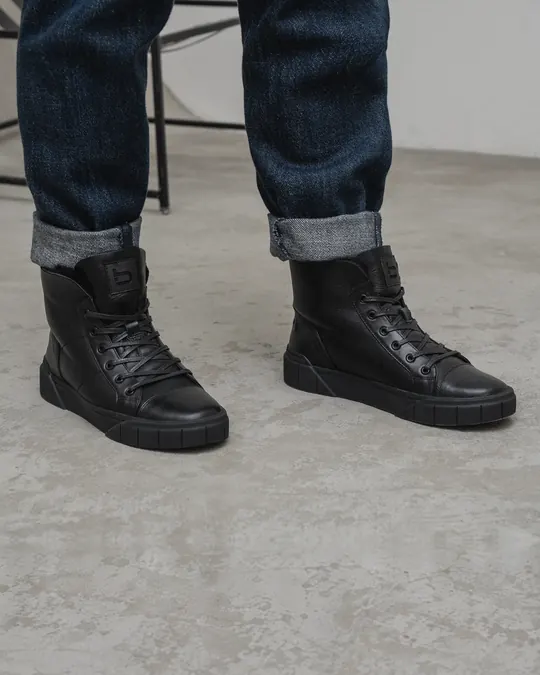
Winter Care for Leather Boots: Black and Coloured Pairs
In winter, smooth leather boots need four simple steps: waterproofing before the first snow, a wipe after every walk, cream once a week and careful drying. Here is what to do with black, brown and textured pairs.
 Materials & care
How to dry shoes in winter: leather, nubuck, suede, sheepskin
Wet winter shoes dry in a day or two if you stuff them with paper and keep them away from the radiator. Here is why heat harms leather, how to dry nubuck, suede and sheepskin, and what Babylon’s product pages advise.
 Materials & care
How to store shoes between seasons: summer pairs for winter, winter boots for summer
In October, summer sneakers, sandals and loafers go into storage and winter boots come back out. Here is how to prepare a pair for a few months in a box so it comes out in spring looking the way it did in autumn.