


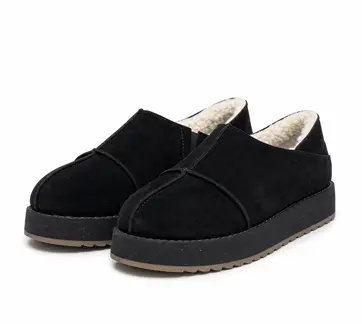
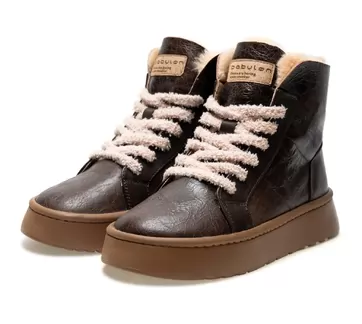
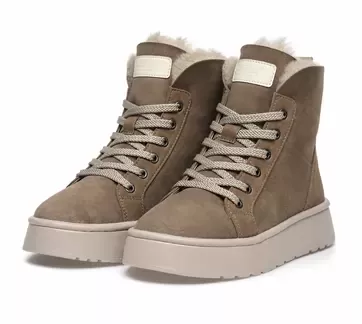
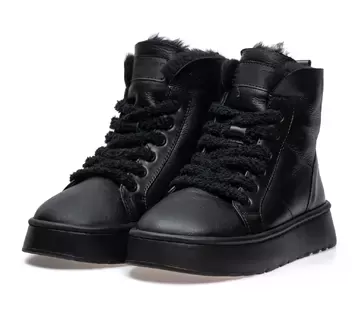
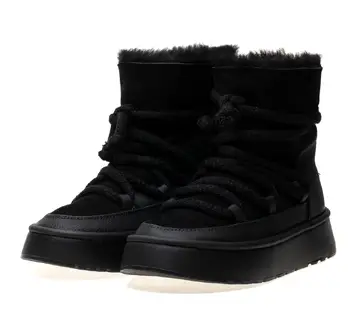

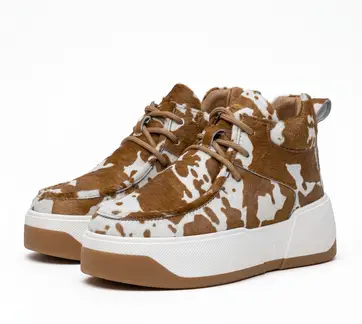
Fur-lined sneakers: are winter sneakers warm enough for −20 °C?
Fur-lined sneakers can keep your feet warm in a real city winter, but how warm depends on what is inside them. Here is an honest breakdown by lining, sole and height, and the point where sneakers stop being the right shoe.

In short
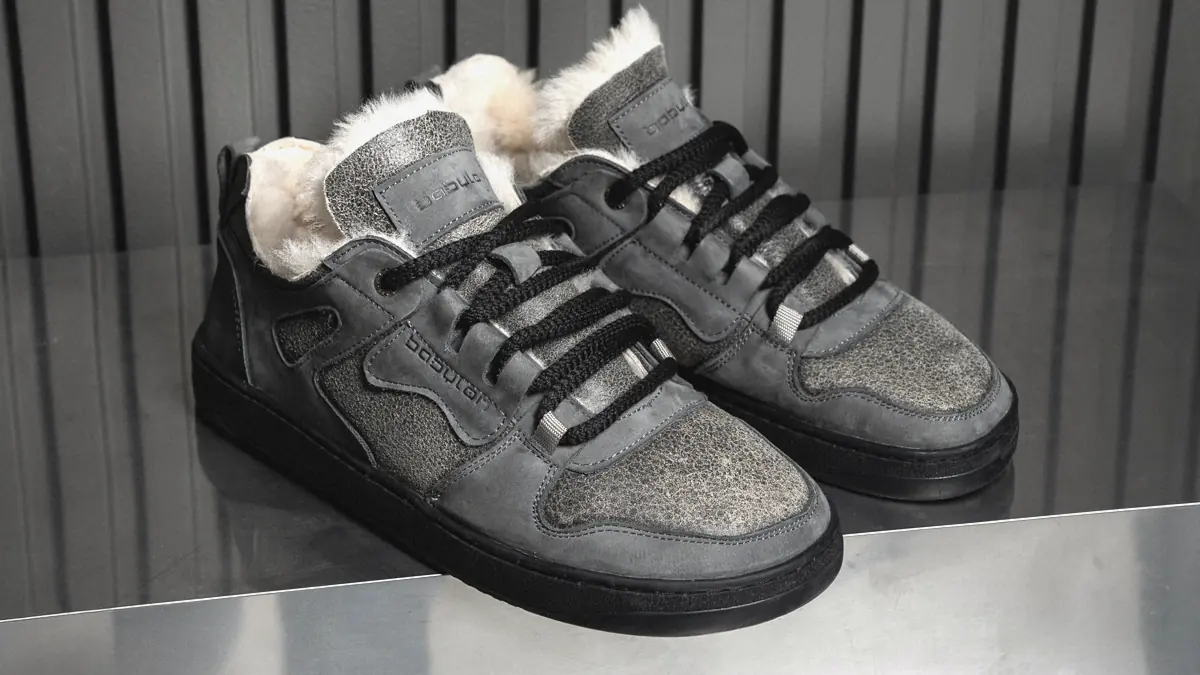
Fur-lined sneakers are warm enough for city winters if the lining matches the weather. Double-face sheepskin is the warmest: Babylon's Space-02-D page rates it from +5 to −20 °C while walking. Natural fur and faux fur linings suit milder frost; their pages give no temperature. Warmth also depends on a thick sole, a fit that does not squeeze the fur, dry feet and wool socks. Deep snow and slush need boots.
Are fur-lined sneakers actually warm?
Yes, if the lining matches the weather. A sneaker lined with double-face sheepskin can keep your feet comfortable in a hard frost while you walk around town; one lined with faux fur is better suited to temperatures around zero and a few degrees below. The outside of the shoe tells you little: what counts is the layer inside, the sole underneath and how well the pair fits.
Most product pages, including ours, give a temperature range only for some models. At Babylon, that range appears on the double-face sheepskin sneakers. For the fur-lined nubuck models the pages describe the lining but give no number, and we do not invent one. This article explains how to judge the rest yourself.
The difference from our earlier piece, “Winter sneakers: can you wear them in winter?”, is the question: not whether sneakers belong in winter at all, but how cold it can get before a given pair stops being enough.
How warm is each type of lining?
Warmth comes mostly from still air trapped inside the lining. Dense natural wool traps the most and keeps working when it takes up some moisture; faux fur traps air too, but is generally less effective. A leather lining on its own is not insulation.
| Lining | What it is | Babylon example | Temperature on the page | Realistic use |
|---|---|---|---|---|
| Double-face sheepskin | Hide and wool in one piece, wool facing in | Space-02-D (men's) | from +5 to −20 °C | City winter, frosty days on foot, driving |
| Natural fur | Natural fur lining sewn inside a nubuck or leather upper | Eclipse-64, Mellow-11 (women's) | not stated | Cold days in town, short spells outdoors |
| Faux fur | Synthetic pile lining | 1654-24 (men's) | not stated | Around zero and mild frost |
| Winterfrost 500 | Synthetic insulation between upper and lining (one of two options) | Alen-12-X (men's) | not stated | Cold-season option for an everyday sneaker |
| Respira | Italian lining leather (the other option) | Alen-12-X, Space-74-X | not stated | Autumn, spring, mild winter days |
“Not stated” means exactly that: the product page gives no figure, so treat these pairs as city footwear for moderate cold.
Why is double-face sheepskin the warmest option?
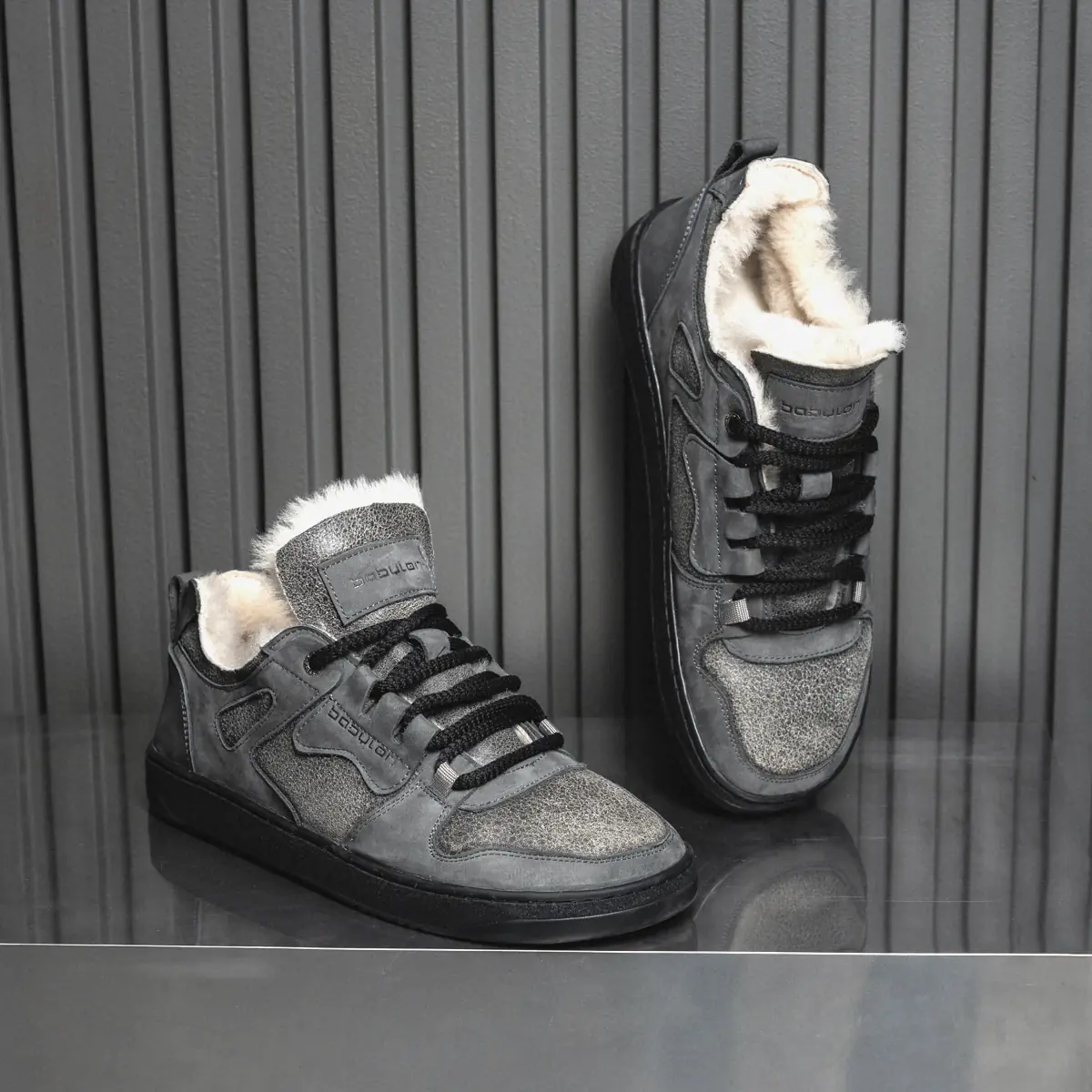
Because the wool is still attached to the hide it grew on. Double-face sheepskin is tanned with the wool left on, so the lining is continuous, dense and has no seams where cold can get through. Wool fibres also absorb water vapour from your foot, so the inside stays drier.
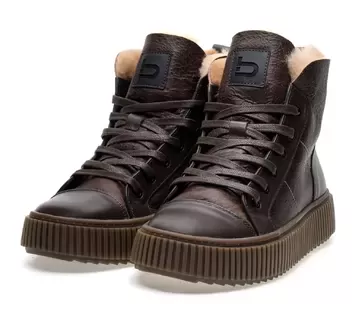
On Space-02-D the composition lists a double-face genuine leather (sheepskin) upper, dense thick sheepskin fur inside, a fur-covered insole and a TPE sole 3.5 cm high at the middle. The page states warmth from +5 to −20 °C and describes a practical height for city walks and for driving.
Two details from that list matter as much as the fur on the sides:
- The fur-covered insole. Your sole presses against the ground with your full body weight, so the insole is where cold arrives first. Fur underfoot keeps a layer of air between you and the ground.
- The sole height. 3.5 cm of TPE (thermoplastic elastomer, a rubber-like material that stays flexible) is more distance from cold asphalt than a typical thin summer sole.
For the wider difference between shearling and sheepskin, see “Shearling vs sheepskin boots”.
Natural fur, faux fur or insulation: what should you choose?
Choose by your coldest regular day. Natural fur suits frosty city days; faux fur suits a climate that hovers around zero; an insulated or leather-lined pair is for people who mostly go from door to car to office.
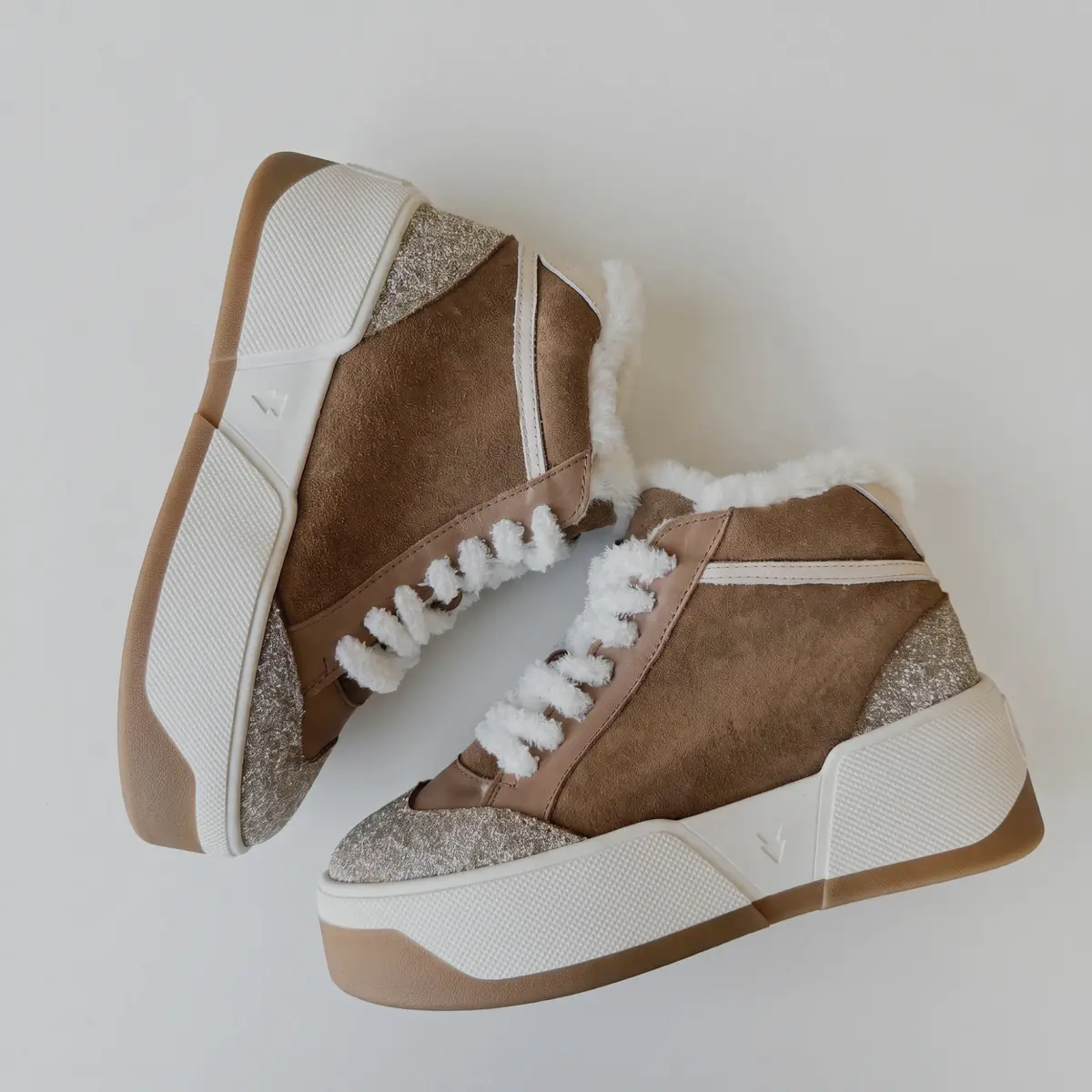
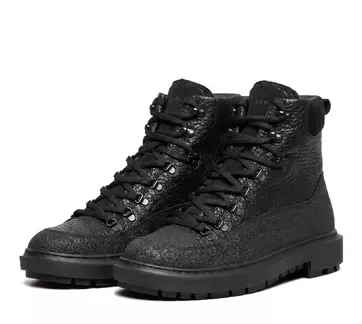
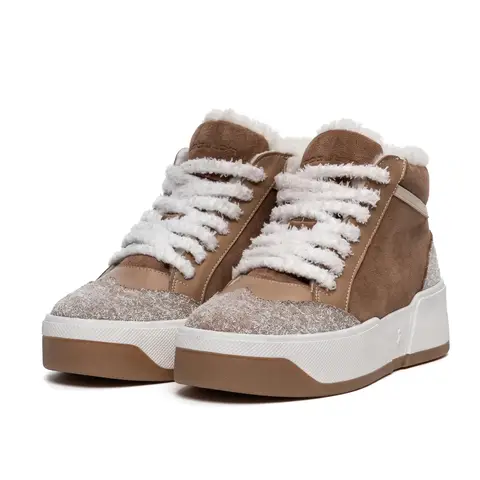
- Natural fur. Eclipse-64 is a women's high-top in genuine nubuck with smooth leather inserts, natural fur inside and a liquid rubber coating on the toe and heel. Mellow-11 is a low-top in premium genuine nubuck with natural fur and an EVA sole; its page promises a soft, steady step.
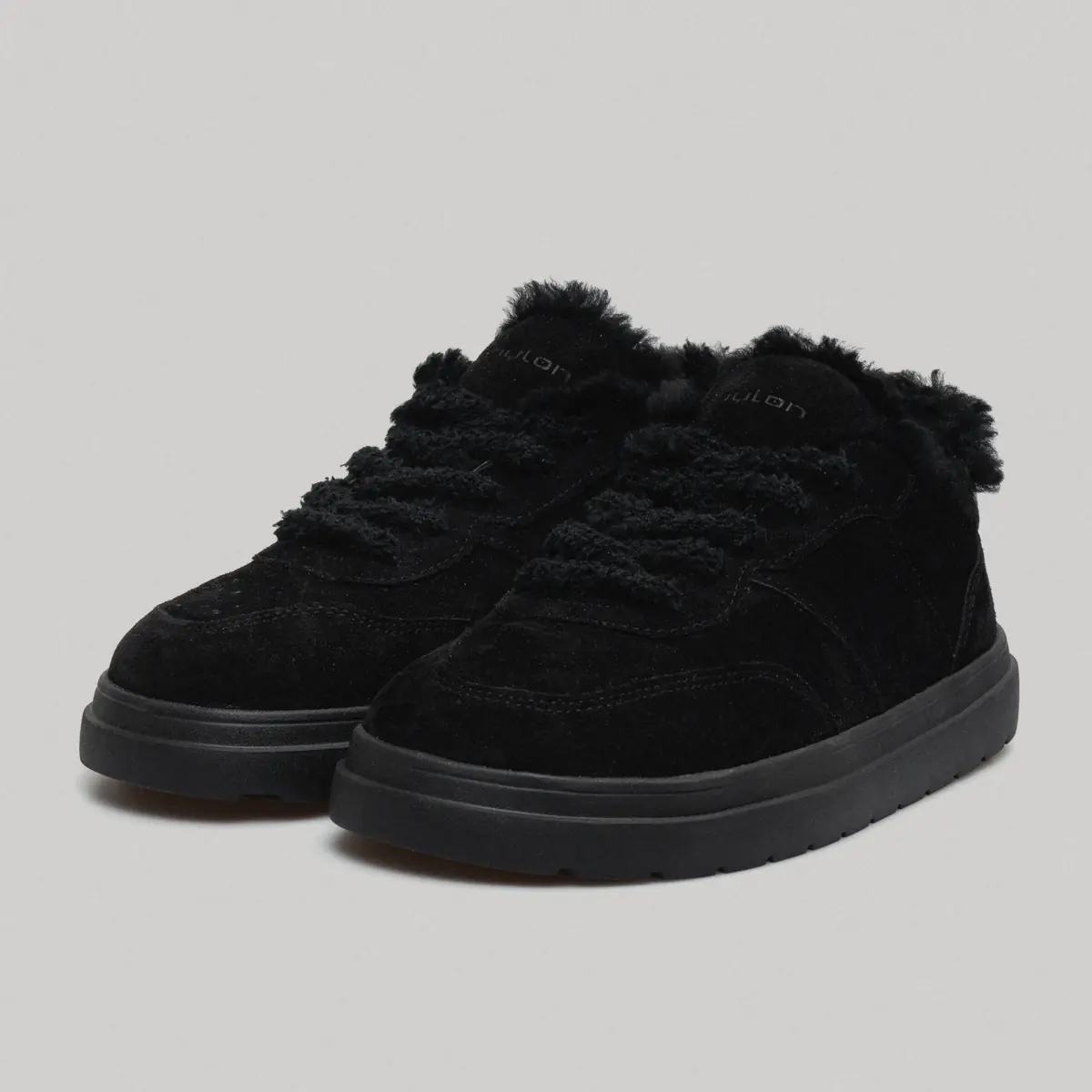
- Faux fur. 1654-24 is a men's nubuck sneaker lined with faux fur. The composition says so plainly, and its TPE sole is described as hard-wearing and cold-resistant.
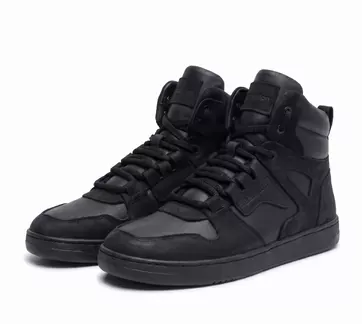
- Insulation or leather. Alen-12-X, a men's high-top in leather and nubuck on an anatomical last shaped for wide feet, lists two lining options: Respira Italian lining leather or Winterfrost 500 insulation. Women's Space-74-X offers Respira or natural fur.
 LeatherMen's winter sheepskin sneakers Space-02-DHeel counter and decorative insert: genuine leather; inside: dense; insole: fur-covered€113View
 NubuckWomen's fur-lined high-tops in nubuck and leather Eclipse-64Inside: natural fur; coating: liquid rubber coating on the toe and heel; laces: fluffy€120View
 NubuckWomen's fur-lined winter nubuck sneakers Mellow-11Lining: natural fur; sole: EVA€105View
 NubuckMen's faux-fur-lined winter nubuck sneakers 1654-24Lining: faux fur; sole: TPE (thermoplastic elastomer); design: original€105View
 NubuckWomen's high-top sneakers in leather and nubuck Space-74-XLining options: Respira — Italian lining leather or natural fur (+€7); last: anatomical; sole: TPE (thermop…€113View
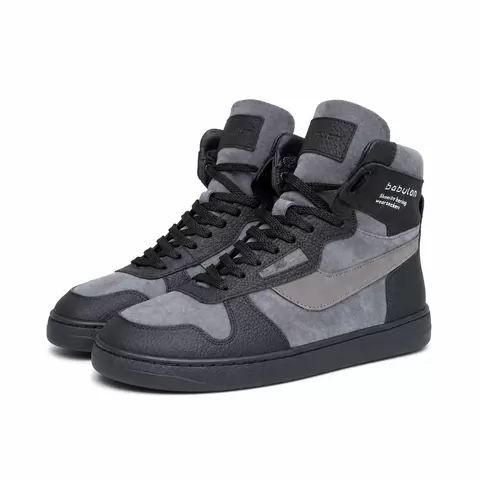 NubuckMen's high-top sneakers in leather and nubuck Alen-12-XLining options: Respira — Italian lining leather or Winterfrost 500 insulation (+€7); sole: flexible; sole…€113View
What else makes a winter sneaker warm?
The lining is half the story. A thick sole, a higher collar, a fit that leaves the fur room to loft, and dry feet all decide whether you feel the cold.
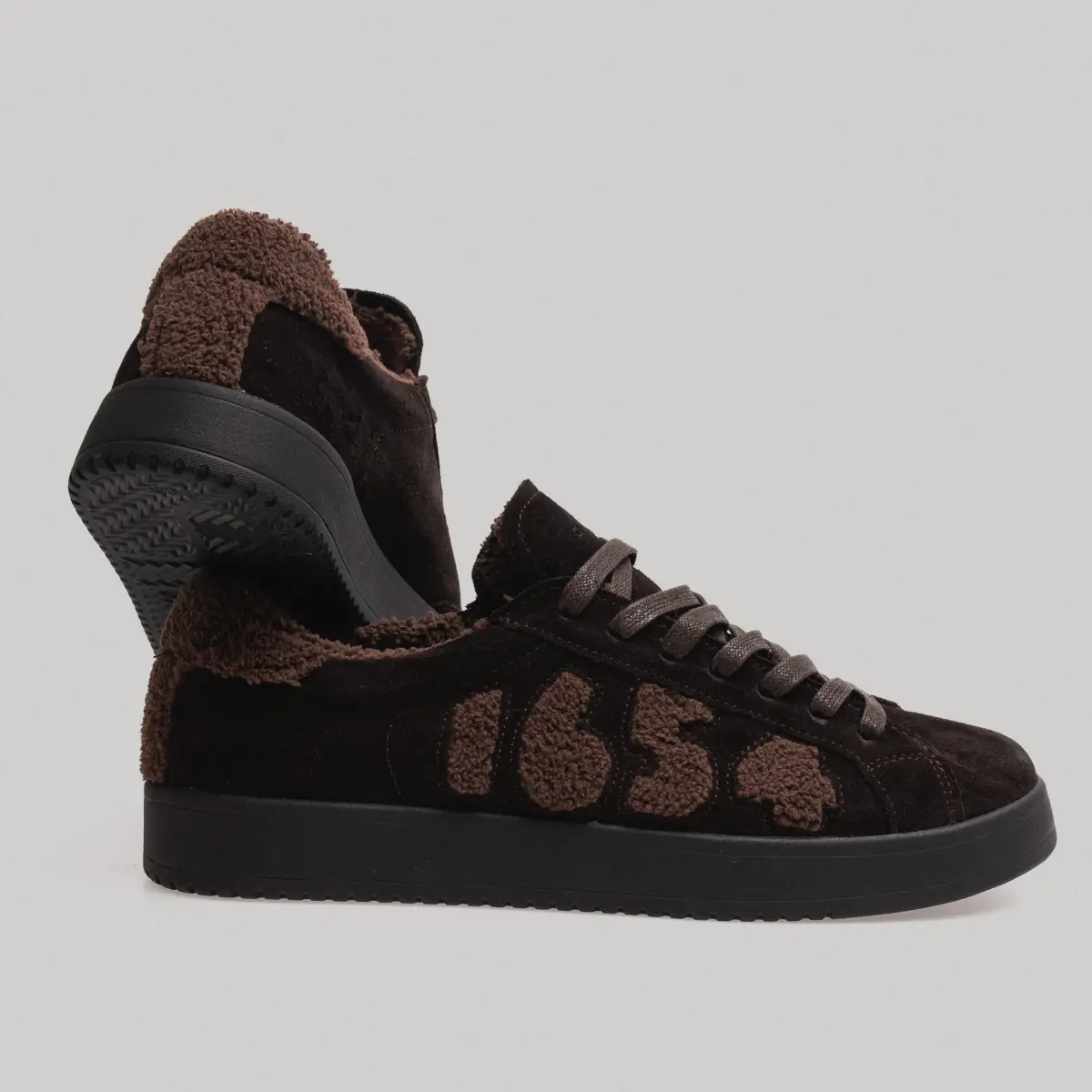
- Sole. Cold travels up by contact. A thicker sole and a fur or felt insole slow that down; a thin, hard sole speeds it up.
- Height. A high-top covers the ankle and keeps out wind and loose snow. Low-tops are lighter and easier with slim trousers, but cold air reaches the leg sooner.
- Fit. Fur only insulates while it is fluffy. If the pair squeezes your foot, the lining is compressed and circulation is poorer, so a tight shoe is a cold shoe.
- Dryness. A damp sock conducts heat away much faster than a dry one. Wet feet get cold well above the lowest temperature on any label.
- Wind. Wind strips warm air from the surface of the shoe. On a windy day, −10 °C can feel colder than the thermometer says.
Where do winter sneakers stop working?
In deep snow, slush, long periods standing still and on ice. In those conditions any sneaker, however well lined, is the wrong tool, and a boot with a higher shaft and a chunkier sole is safer.
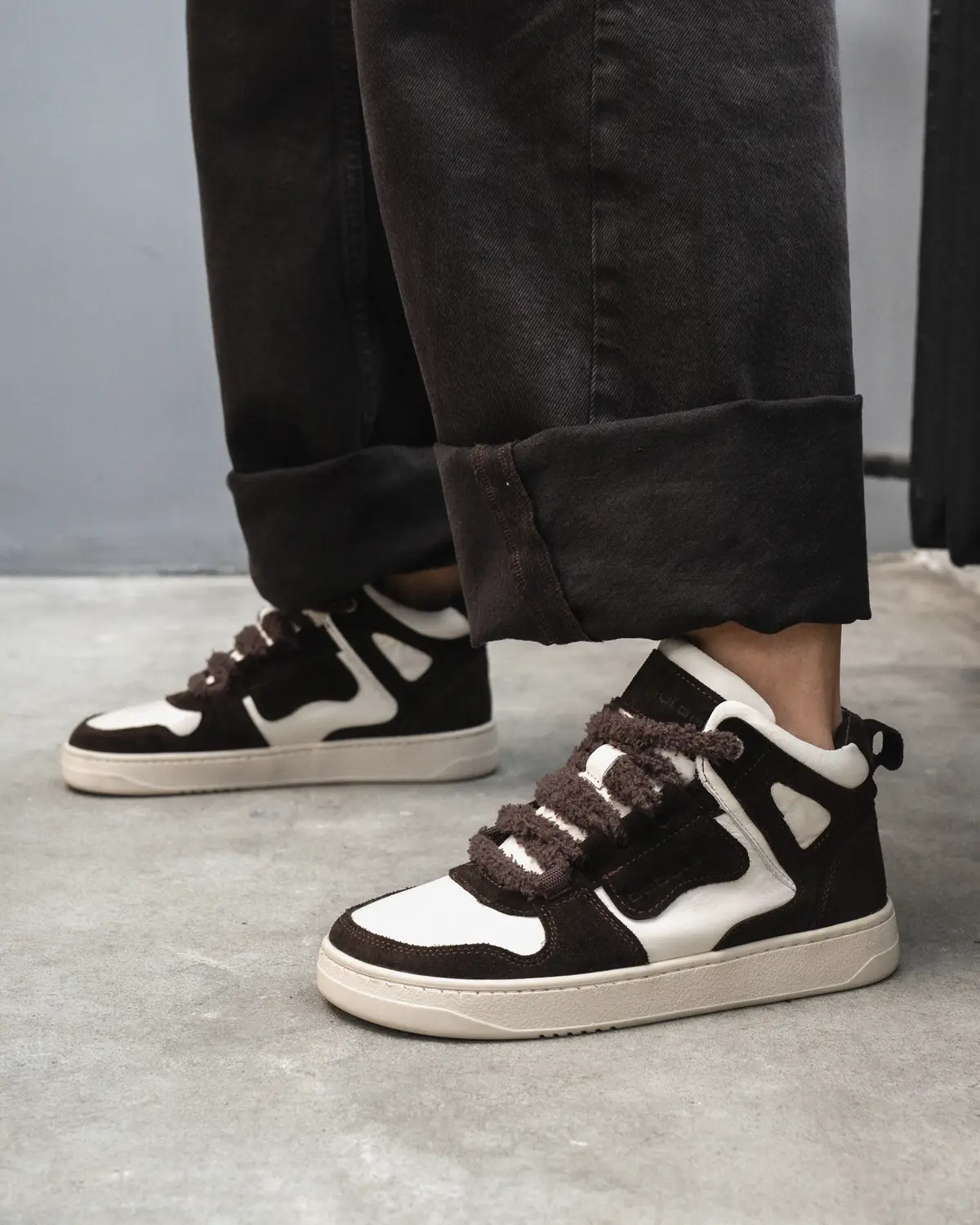
- Deep or fresh heavy snow. It goes over a low collar and melts inside. High-tops buy you a few centimetres, not more.
- Slush and salty puddles. Nubuck darkens when wet and salt leaves marks. Babylon's nubuck care notes recommend a water-repellent spray before the first wear and periodically after that, but treated nubuck is still not a rubber boot.
- Standing still. Temperature ranges assume you are walking. Thirty minutes at a tram stop at −15 °C is harder on your feet than an hour of walking.
- Ice. City sneaker treads are not made for ice. Take care in any footwear.
If your winters regularly involve any of these, look at men's sheepskin boots or women's sheepskin boots instead of a sneaker.
Which socks should you wear with fur-lined sneakers?
Medium-weight wool or wool-blend socks that come above the collar. Wool keeps insulating when it takes up some moisture, while cotton stays damp and cools your foot.
- Avoid very thick socks if they make the pair tight. You lose more warmth from a squeezed lining than you gain from the sock.
- Change socks if your feet sweat on the commute. A dry pair at the office keeps you warm on the way home.
- Measure with the sock on. That is the sock the shoe has to fit.
How do you choose the size of winter sneakers online?
Measure your foot in the evening in your winter sock and compare the length with the size table on that exact model's page. Babylon makes almost every model on its own last, so the tables differ even between models with the same EU size.
For example, size 42 means a foot length of 27.6 cm in the Space-02-D table and 27.5 cm in the 1654-24 table. Women's tables vary too: size 38 is 24 cm on Eclipse-64 and 24.6 cm on Mellow-11. Step-by-step measuring is in “How to measure your foot”.
All Babylon winter sneakers are made by hand at our factory in Kharkiv, Ukraine, which has been running since 1997. Browse women's winter sneakers, men's winter footwear and men's high-top sneakers. In-stock sizes ship today or tomorrow; made-to-order sizes take up to 3 business days to make. Prices on the English site include worldwide shipping, which usually takes 5–10 business days (7–12 to the US, Canada, Israel, New Zealand, Georgia and Montenegro).
FAQ
Can I wear fur-lined sneakers at −20 °C?
Only a pair whose product page states that range, and only while you are moving. At Babylon, the double-face sheepskin Space-02-D is rated from +5 to −20 °C. Waiting at a bus stop for half an hour, wind and wet socks all make you feel the cold sooner, so at the bottom of the range many people switch to boots.
Is shearling warmer than ordinary fur in a sneaker?
Usually, yes. Shearling is sheepskin tanned with the wool left on, so the lining is one continuous layer with no cold seams, and wool holds still air and handles moisture well. A natural fur lining is also warm. Faux fur looks similar, but it is generally less effective as insulation.
Do fur-lined sneakers work in snow?
On cleared pavements and in light fresh snow, yes. A low collar lets deep snow in, and slush soaks into nubuck over time, so for unpaved paths or heavy snowfall a boot with a higher shaft is the practical choice. Treat nubuck with a water-repellent spray before the first wear and repeat it regularly.
Should winter sneakers be a size bigger?
Not by default. Measure your foot in the evening wearing the sock you will use, then compare it with the size table of that exact model. Fur takes up room, so a pair that squeezes compresses the lining and feels colder, while a pair that is too loose lets your heel slip and rub.
What socks are best with fur-lined sneakers?
Medium-weight wool or wool-blend socks that reach above the collar. Wool keeps insulating when it takes up some moisture, whereas cotton stays damp and cools the foot. Avoid very thick socks if they make the fit tight: a squeezed foot has poorer circulation and the fur lining loses its loft.
What is the difference between Winterfrost 500 and a Respira lining?
They are two lining options listed on some Babylon sneaker pages, such as Alen-12-X. Winterfrost 500 is a synthetic insulation for the colder months. Respira is a breathable Italian lining leather, comfortable all year round but not an insulating layer, so it suits autumn, spring and mild winter days.
Works at Babylon's family-owned factory in Kharkiv, Ukraine. The factory employs 25 craftspeople and 2 technologists; leather and fur come from Spain and Turkey, soles are made to order, and every pair is made by hand. All articles by this author
Sources and notes
 How to choose
Sheepskin boots or winter boots: which to choose for winter
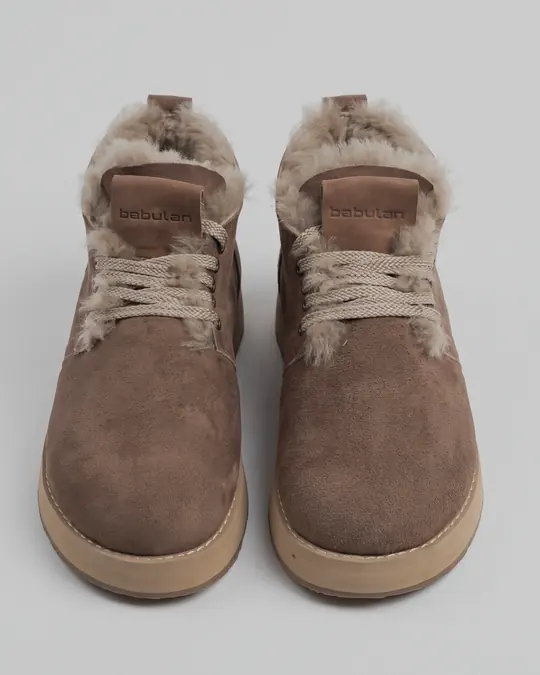
Sheepskin boots are warmer and lighter; leather boots handle slush, salt and ice better. We compare them on nine points using Babylon women's and men's models, with facts taken only from the product pages.
 How to choose
Best sheepskin boots under $200: how to compare them honestly
Two pairs of sheepskin boots can look alike in photos and still differ in the hide, the fleece, the sole and what happens when they need repair. Here is a checklist you can run on any product page, and an honest comparison of the kinds of makers selling them.
 How to choose
Do men wear sheepskin boots? How to choose a pair and style it
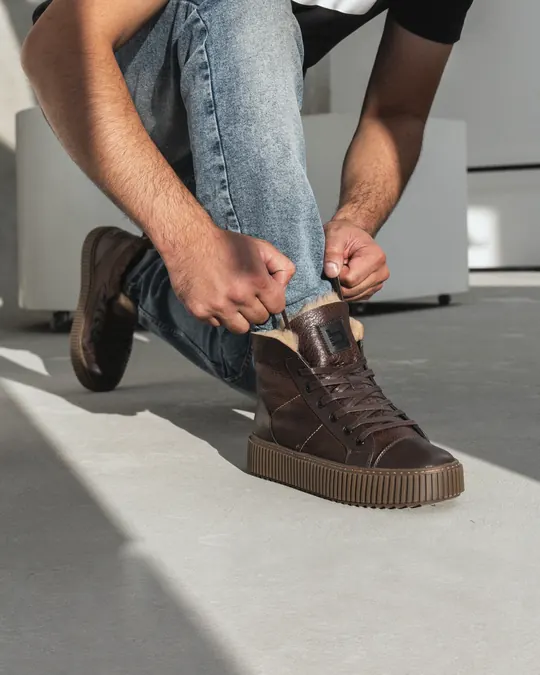
Men's sheepskin boots are practical warm footwear for a city winter, not a women's trend. Here is how they differ, how to pick the material and height, and how to style them, using Babylon models as examples.