



Felt boots today: how wool felt works in a city winter
Felt is one of the oldest winter materials, and it is back in city footwear. Here is what felt actually is, why it keeps feet warm, where it struggles, and how modern felt boots and felt sneakers are built to cope with wet streets.

In short
Felt is a non-woven fabric made by matting and pressing fibres together; wool felt traps air and handles moisture vapour well, so it feels warm and dry. Traditional all-felt boots are made for dry frost and need galoshes in a thaw. Modern city felt boots, such as Babylon's Cloud models, combine an Italian felt shaft with a genuine leather base, wool insulation and a TPE sole. Keep felt dry, brush it and never dry it on a radiator.
What are felt boots made of?
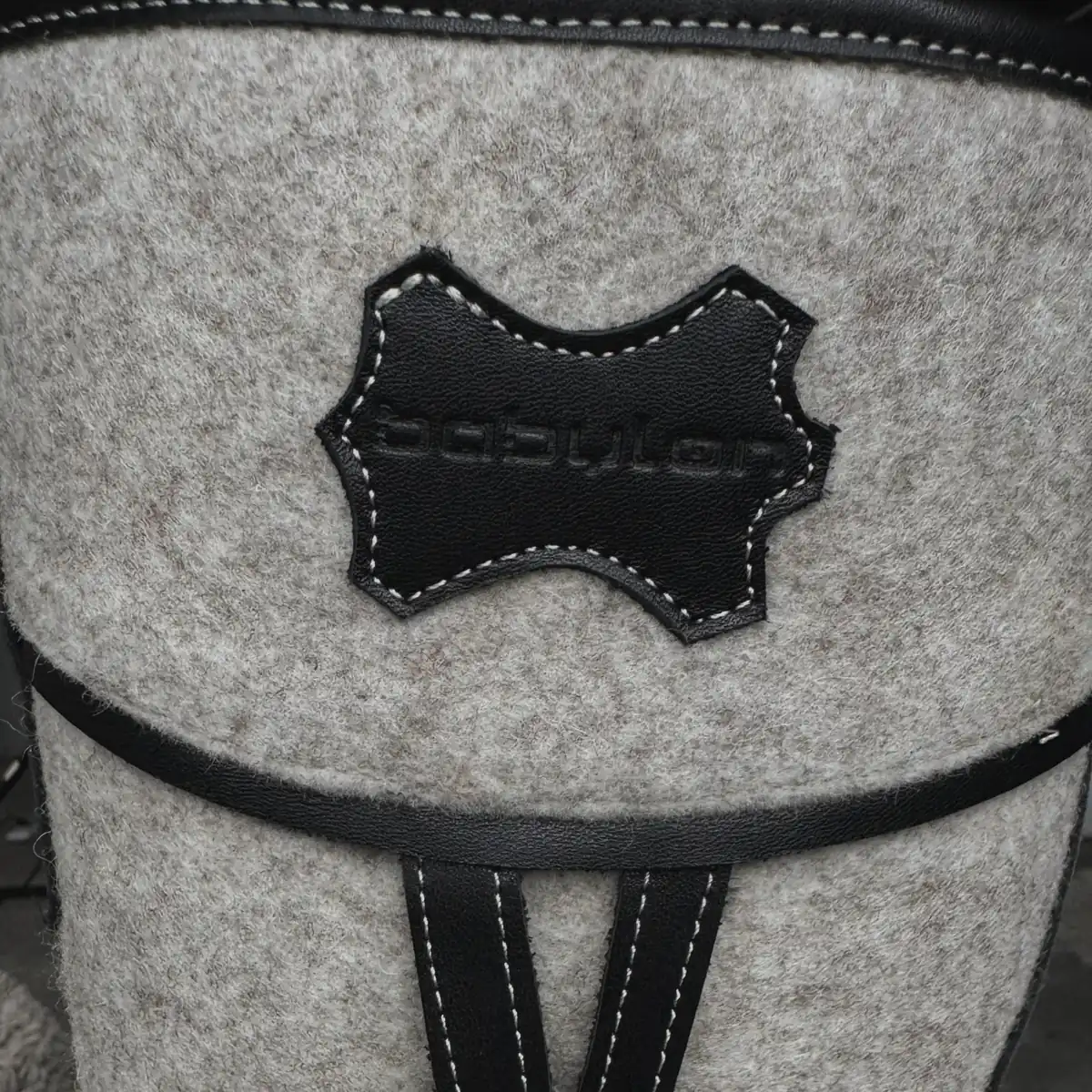
Felt boots are made of felt: a fabric produced by matting, condensing and pressing fibres together, with no weaving or knitting. Wool felts especially well, because the tiny scales on each fibre hook into one another when the wool is wetted, heated and worked. The result is a dense, springy sheet full of trapped air.
That is the key difference from a knitted jumper or a woven coat. There are no threads to unravel and no gaps between yarns, so felt can be cut, stitched and shaped without fraying. Felt can also be made from synthetic fibres such as acrylic, so it is always worth reading the composition on the product page rather than assuming “felt” means pure wool.
In footwear, felt shows up in three forms:
- Traditional felt boots — a whole boot felted from wool in one piece.
- City felt boots — a felt shaft stitched to a leather foot, with a lining and a moulded sole.
- Felt sneakers — a low lace-up shoe with a felt upper on a sneaker sole.
Are felt boots warm?
Yes. Wool felt is warm because it holds a lot of still air, and still air is what slows heat loss. Wool also absorbs moisture vapour from the skin, so feet feel drier than in a sealed synthetic shoe. How warm a particular pair is still depends on the lining, insole, sole and fit.
A few points that matter in daily wear:
- Breathability. Felt lets water vapour pass, so the inside of the boot does not turn clammy on a long day indoors and outdoors.
- Moisture. Wool can absorb almost a third of its own weight in water, according to reference sources. That helps with sweat, but it also means felt gets heavy and slow to dry once it is soaked from outside.
- Thickness. A dense shaft protects the shin and calf from wind, a part of the leg that low shoes leave exposed.
Traditional or modern felt boots: what is the difference?
Traditional all-felt boots are made for dry frost; they are not water-resistant and are usually worn with galoshes when the snow turns wet. Modern city felt boots keep the felt where it insulates best, the shaft, and use leather and a moulded sole where the boot meets wet pavement.
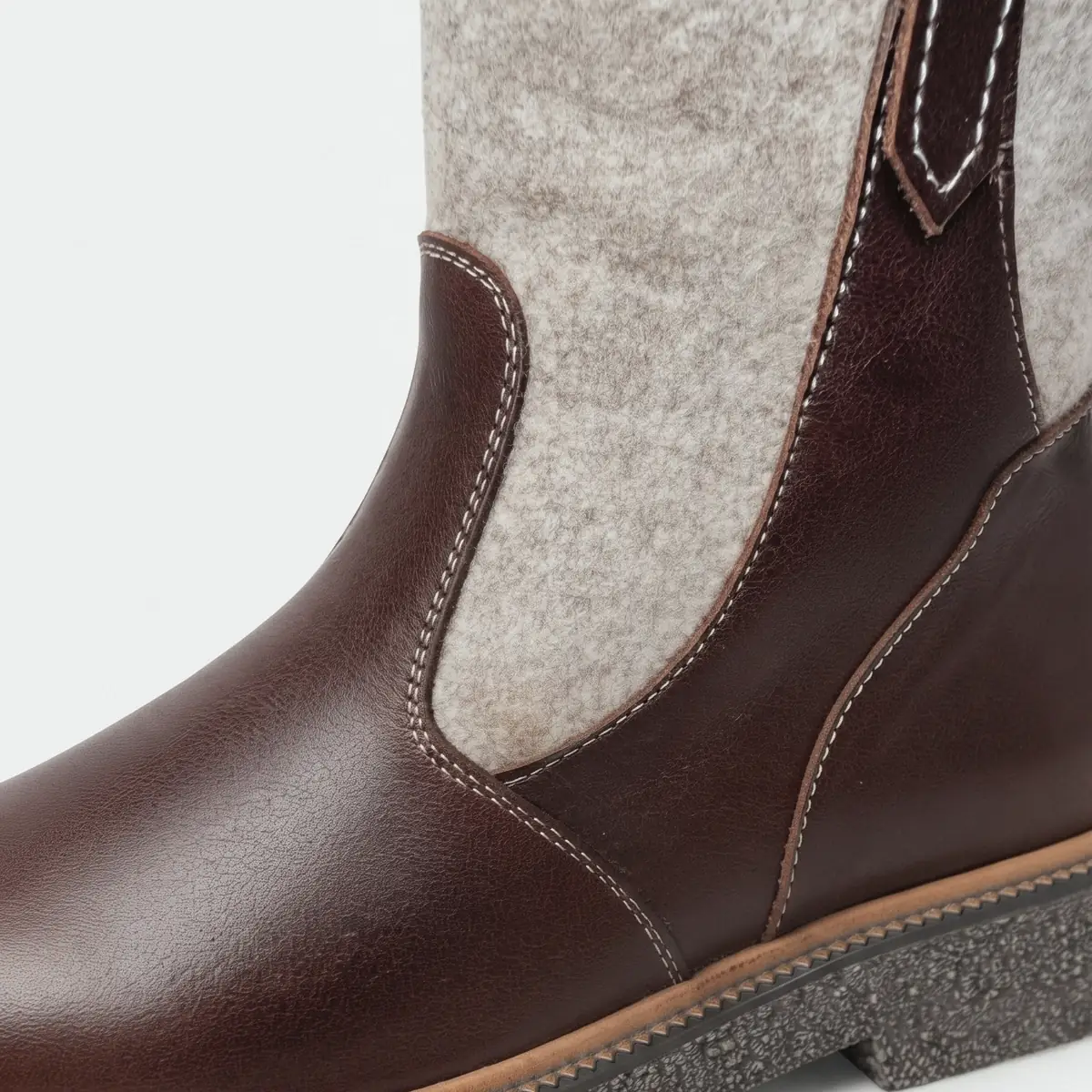
That split explains why the old design struggled in towns. Salted slush soaks into a felt foot within minutes, and the sole wears through on asphalt. Leather at the base sheds water far better, and a thermoplastic elastomer (TPE) sole is flexible and hard-wearing.
| Type | Construction | Best weather | Weak spot | Care |
|---|---|---|---|---|
| Traditional all-felt boots | Whole boot felted from wool; galoshes or a stuck-on sole in wet weather | Dry frost, dry snow | Slush, puddles, salted pavement | Brush; dry slowly, away from heat |
| City felt boots (Cloud) | Italian felt shaft, genuine leather base, Italian wool insulation on a backing layer, TPE sole, inside zip | Cold city days, light wet snow on short walks | Long walks in heavy slush | Brush the felt; damp cloth and smooth-leather cream on the leather |
| Felt sneakers (Alen-V) | Italian felt upper, Italian wool or brushed-cotton inner finish, TPE sole | Cool to cold dry days, office, travel | Deep snow, standing water | Brush; damp cloth with wool-care product for stains |
| Sheepskin boots (for comparison) | Sheepskin with the wool on, or leather with a fur lining | Frost and dry snow | Soaking through in slush | See our sheepskin care guide |
Construction details for Cloud and Alen-V are taken from their product pages. For how sheepskin and shearling compare as warm materials, read “Shearling vs sheepskin boots”.
How are Babylon's felt boots built?
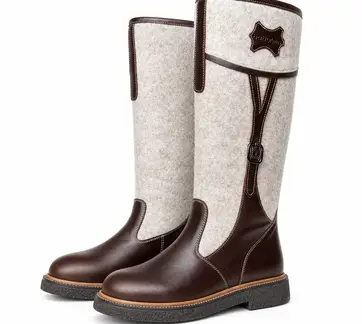
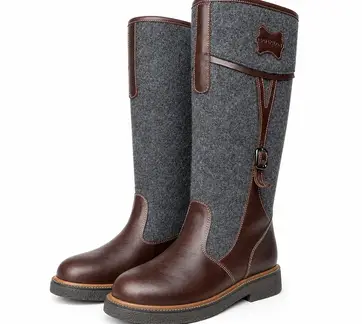
The Cloud boots are tall women's winter boots with an Italian felt shaft above a genuine leather base. Inside is Italian wool insulation on a backing layer, underfoot is a TPE sole, and an inside zip makes them easy to put on. All our felt models, the Cloud boots and the Alen-V sneakers, are collected on one page: felt boots and wool felt sneakers.
What the Cloud product pages list:
- Felt shaft. Italian felt with a mélange texture: deep blue on Cloud-11, light grey on Cloud-64 and Cloud-84, dark grey on Cloud-72.
- Leather base. Smooth black leather on Cloud-11 and Cloud-64, smooth brown leather on Cloud-72 and Cloud-84, plus leather piping along the top of the shaft and a buckled strap.
- Insulation. Italian wool on a backing layer.
- Last. Standard, true to size; the page advises taking your usual size and checking the size chart.
- Sizes. EU 36–41.
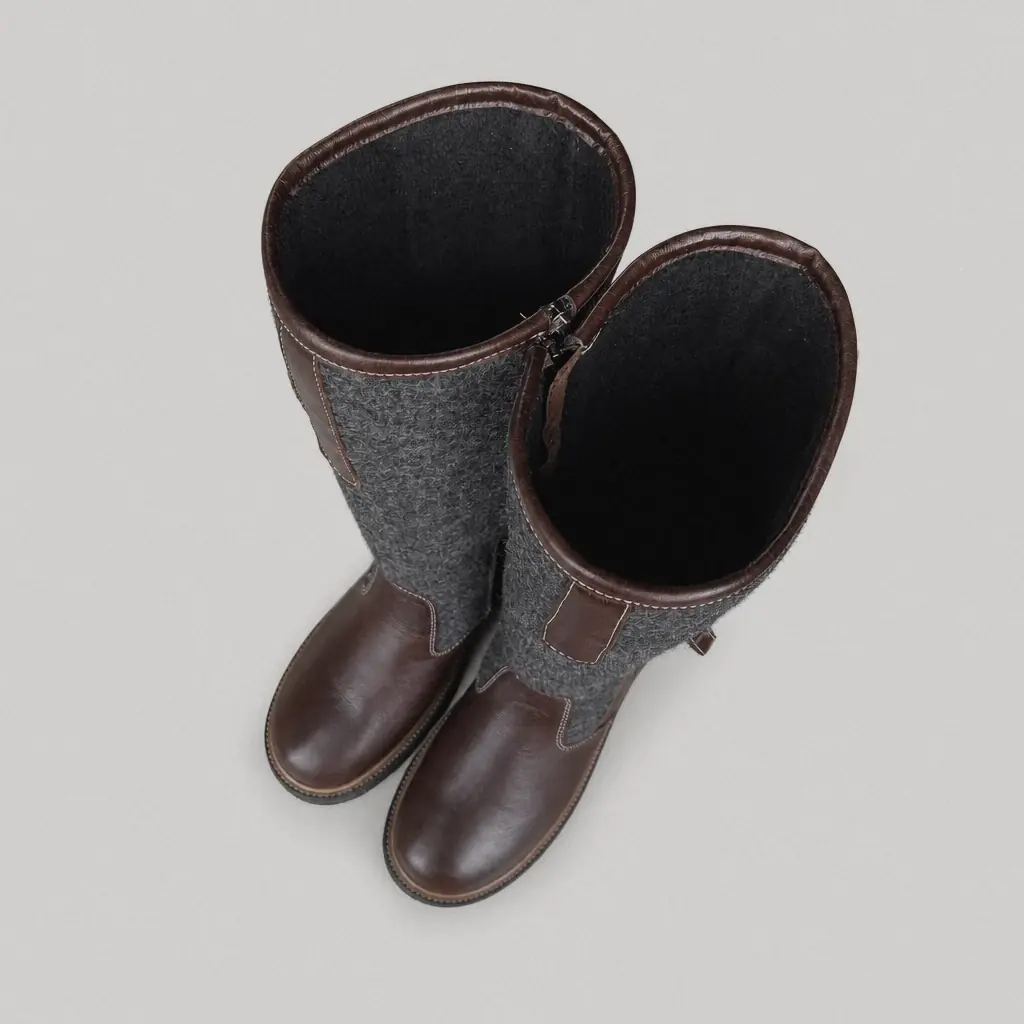
Every pair is made by hand at our factory in Kharkiv, Ukraine, and inspected before it leaves, as the product pages state. Felt and leather are stitched together into one upper, so the join line you see at the ankle is a real seam, not a printed pattern.
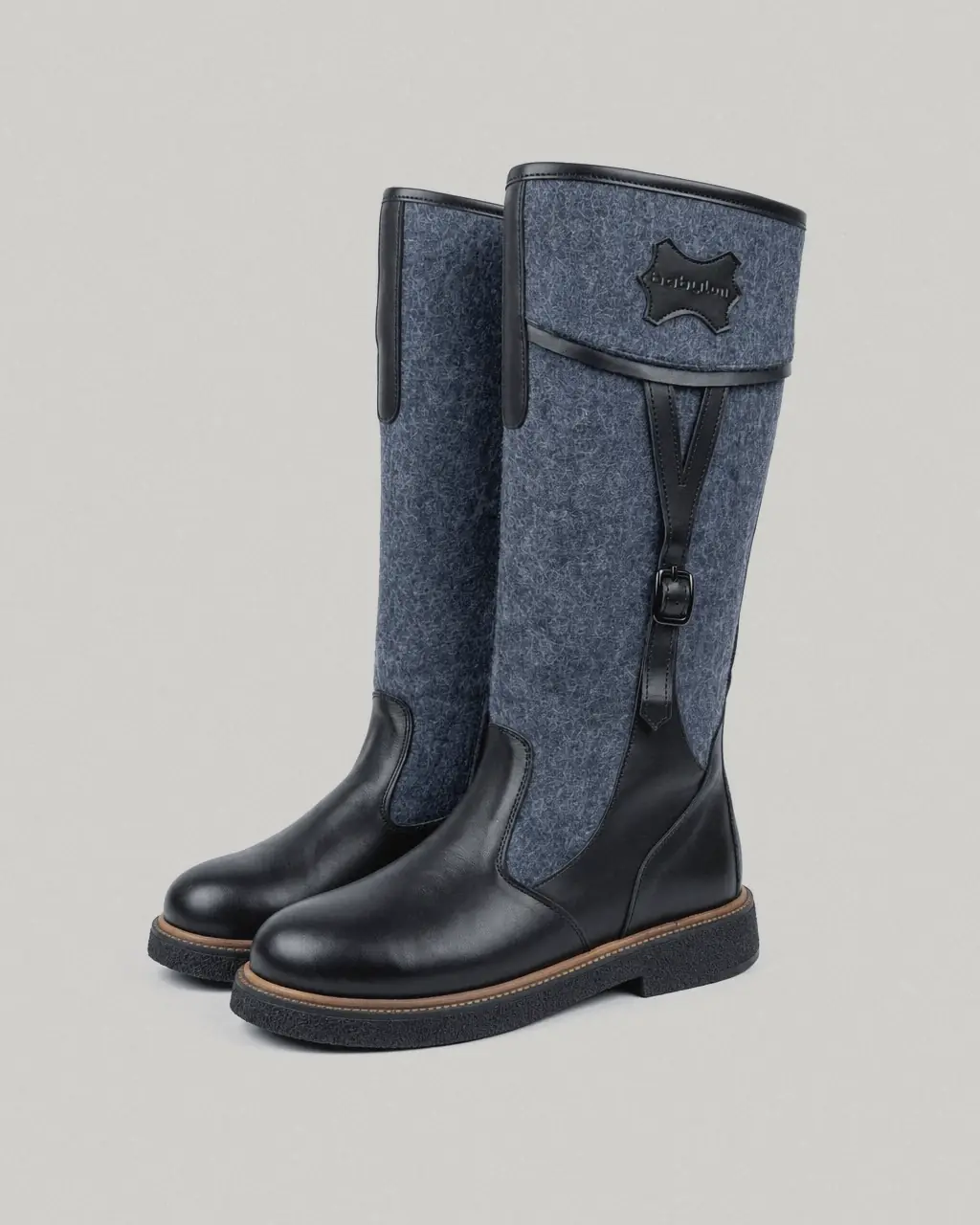
The pages describe a clean silhouette that works with a coat, a puffer jacket or a knitted dress. Light grey felt with brown leather (Cloud-84) reads softer; deep blue with black (Cloud-11) is the most graphic of the four.
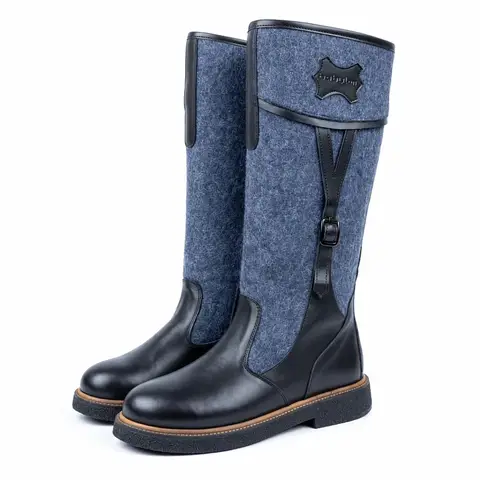 LeatherWomen's winter boots in felt and leather Cloud-63Base: genuine leather; insulation: Italian wool on a backing layer; sole: TPE€132View
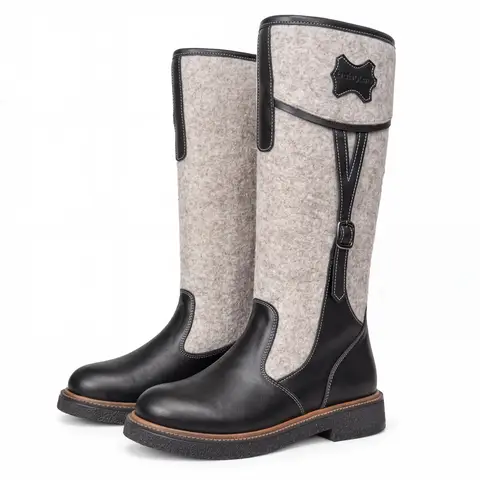 LeatherWomen's winter boots in felt and leather Cloud-64Base: genuine leather; insulation: Italian wool on a backing layer; sole: TPE€132View
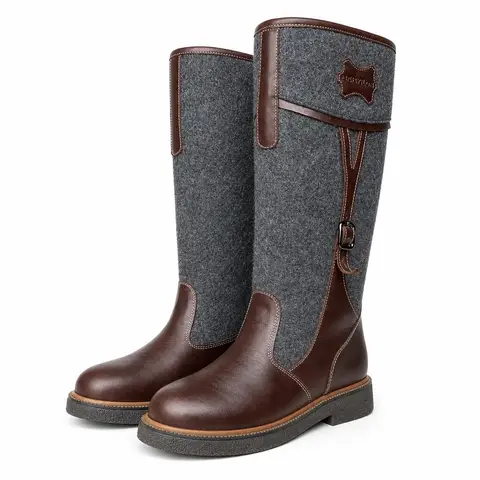 LeatherWomen's winter boots in felt and leather Cloud-72Base: genuine leather; insulation: Italian wool on a backing layer; sole: TPE€132View
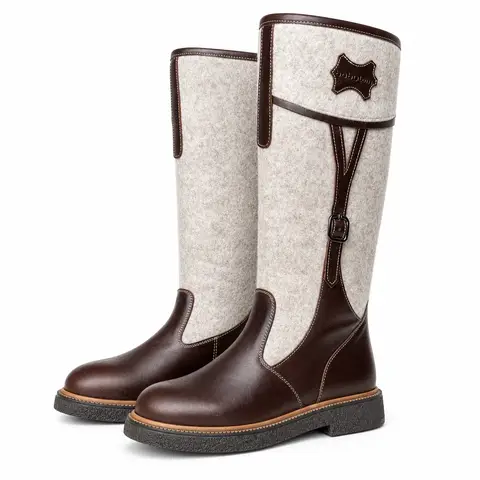 LeatherWomen's winter boots in felt and leather Cloud-84Base: genuine leather; insulation: Italian wool on a backing layer; sole: TPE€132View
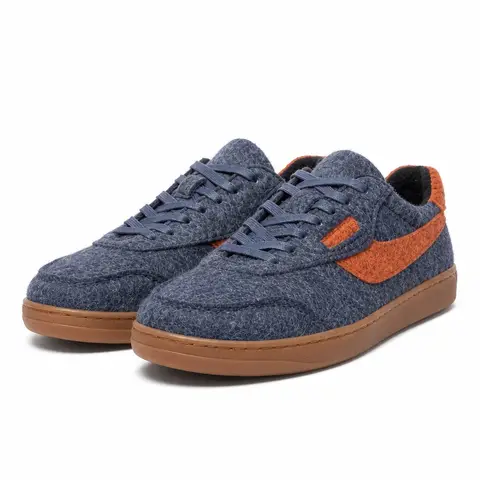 LeatherMen's Italian felt sneakers Alen-V-13Inner finish (your choice): Italian wool on a backing layer or brushed cotton (baika); sole: light brown TP…€103View
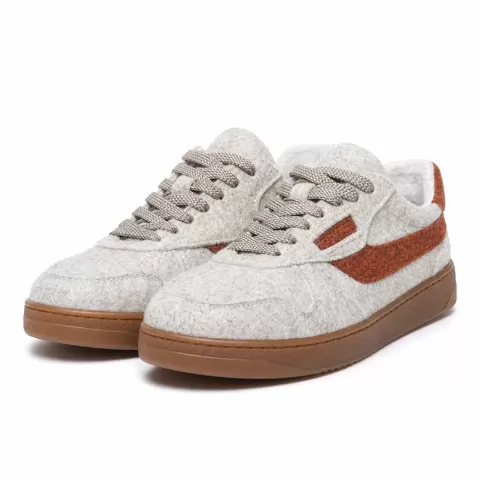 LeatherMen's Italian felt sneakers Alen-V-14Inner finish (your choice): Italian wool on a backing layer or brushed cotton (baika); sole: light brown TP…€103View
Are felt sneakers a good idea for winter?
Felt sneakers make sense for cold, dry city days, offices and travel, where you want warmth without a tall boot. They are not made for deep snow or standing water, because the upper is felt from toe to heel and the shoe is low.
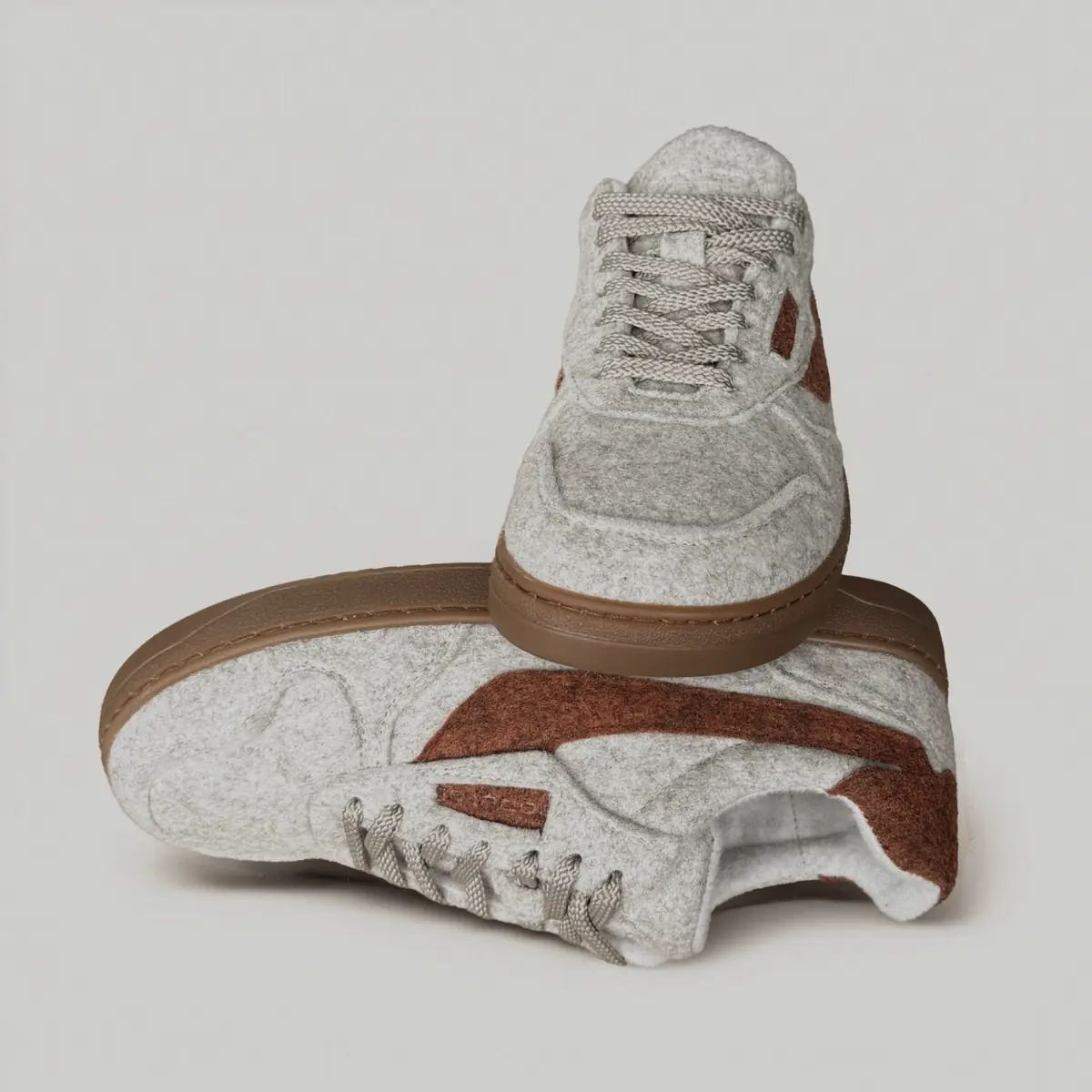
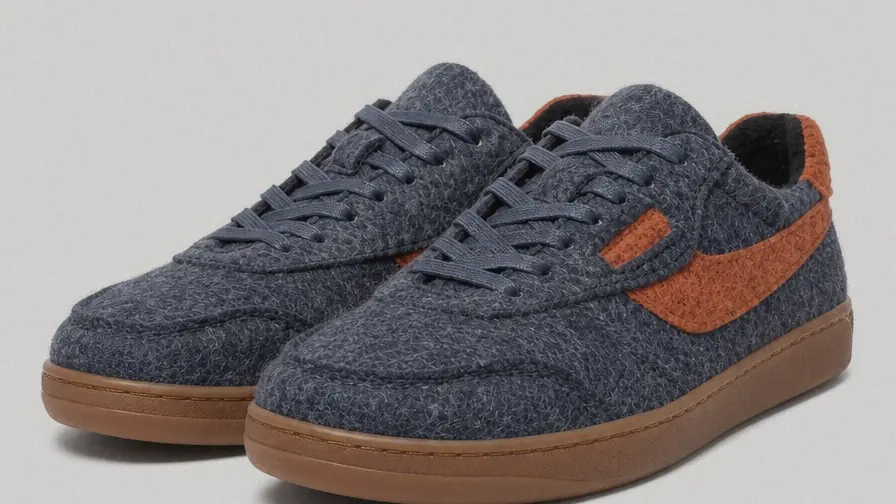
The men's Alen-V sneakers have an Italian felt upper with contrasting felt inserts: dark grey with light grey on Alen-V-12, blue with terracotta on Alen-V-13, light beige-grey with terracotta on Alen-V-14. The product pages list an anatomical last, a hard-wearing TPE sole and an autumn–winter–spring season. The inner finish comes in two versions: Italian wool on a backing layer, or brushed cotton (baika). Our manager can also adapt a catalogue model to foot width or instep height, as the pages state.
If you already wear leather winter sneakers, felt ones feel softer and lighter on the foot. Our guide “Winter sneakers” explains when low shoes stop being enough.
Can you wear felt boots in snow and slush?
Dry snow is fine; long walks in slush are where felt struggles. A leather base and a TPE sole help a lot, but water that sits on the felt shaft will soak in. Plan your route, and give the pair time to dry afterwards.
- Before the season. The care notes on our pages suggest a water-repellent spray if needed. Test it on a hidden area of the felt first.
- In wet snow. Walk, do not wade. The leather base handles splashes; the felt shaft should not stand in water.
- Salt. Wipe salt off the leather the same day; brush the felt once it is dry. Our guide “Road salt on shoes” has the details for leather.
- Rotation. On wet weeks, alternate with leather boots so the felt pair always starts the day dry.
How do you care for felt boots?
Felt needs very little: a regular dry brush, careful spot-cleaning and slow drying. The care notes on our Cloud and Alen-V pages come down to four steps.
- Dry cleaning. Remove dust and dry dirt with a soft clothes or shoe brush.
- Stains. Use a slightly damp soft cloth with a small amount of wool-care product. Test it first, do not rub hard and do not soak the material through.
- Drying. Room temperature, away from radiators. Stuff the shafts with paper so they keep their shape; see “How to dry wet shoes”.
- Moisture protection. A water-repellent spray if needed.
For the leather base of the Cloud boots, wipe it with a soft damp cloth and use a matching smooth-leather cream. Store felt footwear in a dry, ventilated place with boot shapers or paper inside.
Who are felt boots for, and how do you choose a size?
Felt boots suit people who walk around town in cold, mostly dry weather and want warmth with a softer, more textured look than leather. They also suit anyone whose feet sweat in fully synthetic winter shoes. If your winter is mostly rain and slush, choose leather boots instead.
Size by foot length, not by the number you wore in another brand. Measure your foot in the evening, in the socks you will wear, then compare with the table on that exact model's page. The Cloud table runs from 23.6 cm foot length for size 36 to 26.9 cm for size 41; the Alen-V table runs from 25.4 cm for size 39 to 29.7 cm for size 45. Step-by-step instructions are in “How to measure your foot at home”.
Sizes in stock ship today or tomorrow; a size made to order takes up to 3 business days to make. Shipping is free worldwide, and delivery usually takes 5–10 business days to the EU, the UK, Switzerland, Norway, Liechtenstein and Moldova, and 7–12 to the US, Canada, Israel, New Zealand, Georgia and Montenegro.
Browse women's boots, women's winter footwear, men's sneakers and men's winter footwear.
FAQ
Are felt boots warmer than leather boots?
A thick felt shaft holds a lot of still air, so it insulates better than a single layer of leather. In practice, warmth depends on the whole boot: lining, insole, sole thickness and fit. Babylon's Cloud boots combine a felt shaft with Italian wool insulation inside, while the leather base protects the area that touches wet ground.
Can I wear felt boots in the rain?
Felt is not water-resistant: it soaks up water and then dries slowly. Light rain or a short walk through wet snow is fine if the pair has a leather base and a rubber-type sole, and you dry it properly afterwards. For long walks in heavy rain, choose leather boots and save felt for dry, cold days.
How do traditional felt boots differ from modern ones?
Traditional felt boots of the Eastern European winter are felted from wool as a single piece, without seams, and are often worn with galoshes. Modern city felt boots usually combine a felt shaft with a leather foot, a lining or insulation, a zip and a moulded sole.
Do felt boots stretch over time?
Felt is a dense, matted material and keeps its shape well in a properly made boot, but it moulds slightly to the leg with wear. Do not buy a tight pair hoping it will stretch. Babylon's Cloud boots are made on a standard, true-to-size last, so the product page advises taking your usual size.
How do I clean felt boots at home?
Brush off dry dirt with a soft clothes brush. For a stain, use a slightly damp soft cloth with a small amount of wool-care product, test it on a hidden spot first and never soak the felt. Dry the boots at room temperature, away from radiators, and stuff the shafts with paper.
Are felt sneakers good for winter?
They suit cold, dry city days, the office and travel more than deep snow. Babylon's Alen-V felt sneakers list an autumn–winter–spring season, a hard-wearing TPE sole and an inner finish of either Italian wool on a backing layer or brushed cotton. For slush and deep snow, a taller boot is the better choice.
Together with Nataliia Nikitska, he founded Babylon in Kharkiv in 1997 as a wholesale leather footwear manufacturer; since 2015 the brand has sold directly, in its showrooms and online. Today its family-owned factory has 25 craftspeople and 2 technologists and makes 5,000–10,000 pairs a month. All articles by this author
Sources and notes
 How to choose
Best handmade leather sneakers under $200: how to judge quality and price
Plenty of leather sneakers are sold as handmade, and the prices run from under $100 to well over $400. Here is what the word honestly covers at a factory, where your money goes and how to check a pair in half a minute.
 How to choose
Shoes as a New Year gift: how to get the size right
Warm winter boots, sheepskin boots or fur-lined sneakers make a gift that gets worn all winter, as long as the pair fits. Here is how to find out the size without spoiling the surprise, which styles are easiest to get right and how exchanges work if you miss.
 How to choose
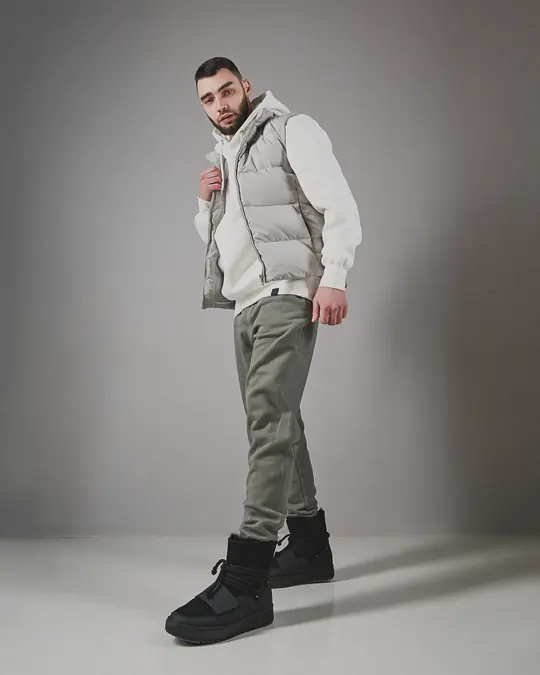
Men's shearling boots: a buyer's checklist and how to style them
Men's shearling boots differ more than they look: in how they fasten, what the outside is made of, the sole and the height. Here is a checklist to compare pairs, and outfits from workwear to an overcoat.