



Best handmade leather sneakers under $200: how to judge quality and price
Plenty of leather sneakers are sold as handmade, and the prices run from under $100 to well over $400. Here is what the word honestly covers at a factory, where your money goes and how to check a pair in half a minute.
In short
Good handmade leather sneakers under $200 have a full leather upper, a leather lining, a firm heel counter, a neatly finished sole edge and dense, even stitching. Handmade means stitching and lasting by hand, not that no machines are used. Direct-to-consumer makers such as Veja, Beckett Simonon, Oliver Cabell, Greats and Babylon sell in this range; Babylon makes its pairs at its family-owned factory with Respira Italian lining leather in models that list it.
Disclosure. This guide is written by Babylon, a shoe factory that makes some of the sneakers discussed here. We list other makers where they fit a need better, and every fact about them was checked on their own websites in October 2026.
What does "handmade" actually mean for leather sneakers?
At a factory, handmade means that people guide every critical step: they stitch the upper, pull it over the last and fit the sole. It does not mean that no machines are used. Sewing machines, presses and often automated cutting tables are normal in good workshops, and the word tells you more when a maker says which steps are done by hand.
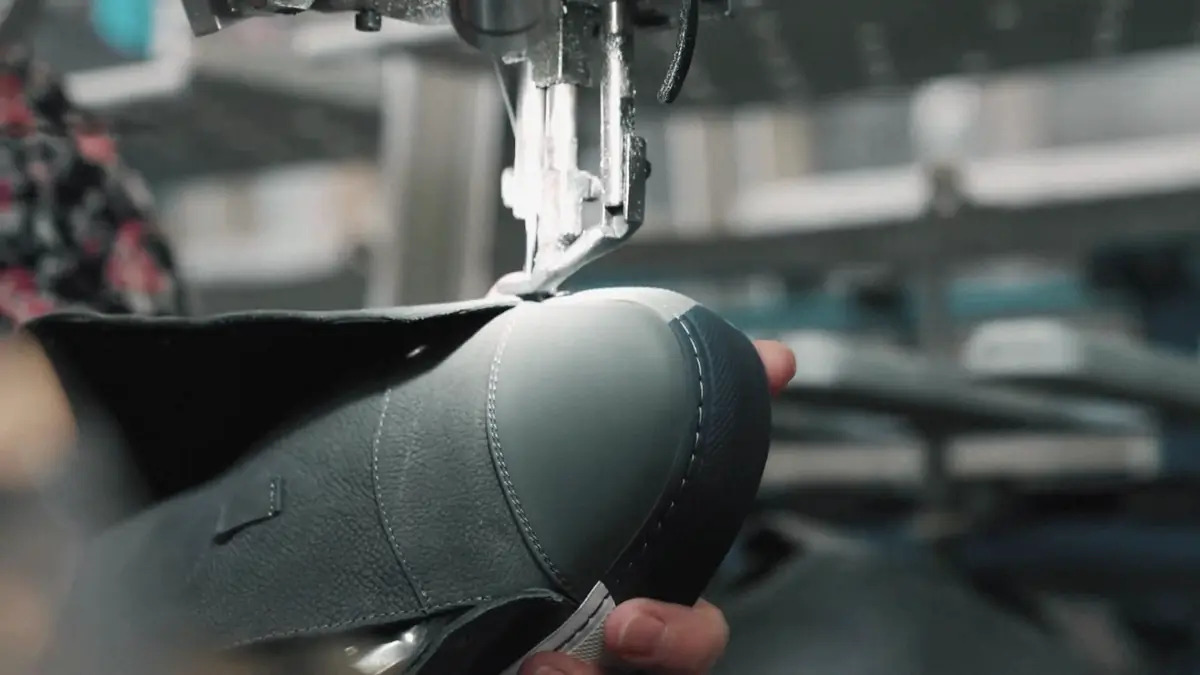
Here is how it works at Babylon, as an example. The brand has made shoes since 1997 at its family-owned factory in Kharkiv, Ukraine, with 25 craftspeople and 2 technologists. Leather can be cut on an automated cutting table, so we never call our shoes hand-cut. The uppers are stitched by hand on industrial sewing machines and lasted by hand, and each pair is checked before it ships. Our sneaker pages list the sole material, not the way it is attached, so we do not make claims about that either.
When a brand says "handmade", ask three things:
- Which steps are by hand? Stitching and lasting matter most for fit and finish.
- Where is the workshop? A country of manufacture on the product page is a basic sign of transparency.
- What is the construction? Some makers name it, for example Strobel or Blake; many do not.
Where does the money go in a pair of leather sneakers?
Most of the price is not the leather. A pair pays for materials, labour, the factory's overheads, then for distribution: importers, wholesalers and the shop's margin, or the advertising and returns of a direct seller. Shipping and import duties come on top when the pair crosses a border.
This is why the same quality can cost very different amounts:
- Materials. Upper leather, lining leather, insole, sole unit, laces, thread and the box.
- Labour. Wages in the country of manufacture make the biggest difference between a Portuguese, an Italian and an Eastern European pair of similar build.
- Retail chain. In classic wholesale, a shoe passes through a distributor and a store, and each adds its margin. That is often the largest single share of the shelf price.
- Direct-to-consumer (DTC). Brands such as Veja, Greats, Beckett Simonon and Babylon sell from their own sites, so there is no store margin. Instead they pay for advertising, photography, payment fees and returns.
- Shipping and duties. Free shipping is built into the price somewhere. Import duties and VAT depend on where the pair is made and where you live.
What do you typically get under $100, $100–200 and above $200?
Price tiers are a rough guide, not a rule, but they follow the cost logic above. Under $100, leather sneakers are usually mass-produced; between $100 and $200, direct sellers offer full leather builds; above $200, you mostly pay for Italian workshops, premium leathers and brand.
- Under $100. Often coated or corrected-grain leather, a textile lining, a foam insole and a glued sole made in very large runs. Fine for a season or two; check the heel lining before you buy.
- $100–200. Where most DTC leather sneakers sit. Expect full-grain or good genuine leather, often a leather lining or leather-covered insole, and a named country of manufacture.
- Above $200. Italian workshops, named tanneries, full-aniline leathers, leather linings, sometimes stitched soles. The extra money buys finish and provenance more than years of wear.
How can you check a leather sneaker's quality in 30 seconds?
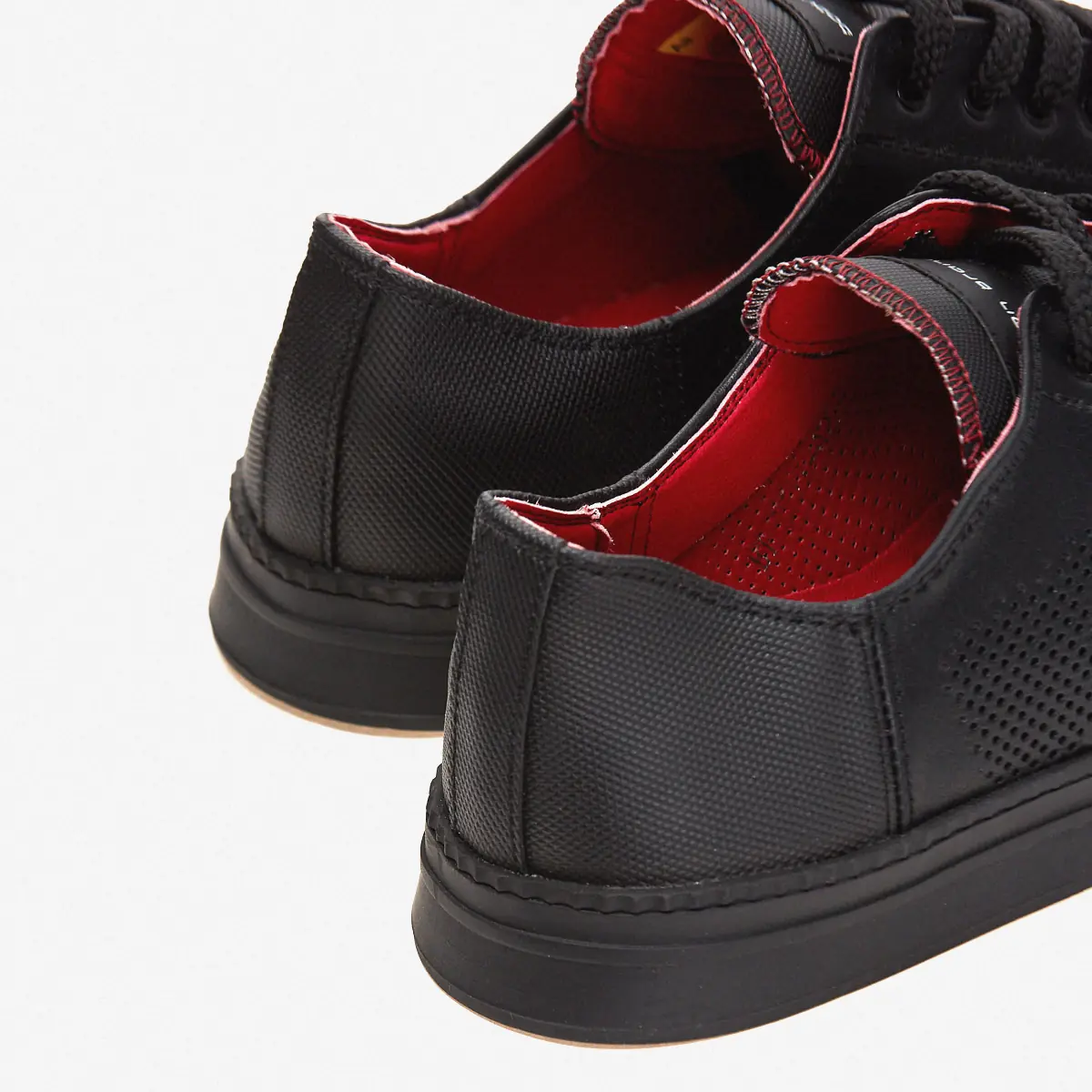
Look at the leather surface and edges, press the heel, look inside and read the composition. Eight quick checks tell you most of what the price should have paid for, in a shop or when the box arrives.
| What to check | How to check in 30 seconds | What it tells you |
|---|---|---|
| Leather grade | Look for fine natural grain that varies slightly; flex the toe and see if a plastic-like film creases | Full or genuine grain breathes and ages well; a thick coating cracks sooner |
| Lining | Look inside the heel and read the composition: leather or textile | A leather lining resists rubbing and lets moisture out |
| Heel counter | Squeeze the back of the heel between thumb and finger | A firm counter springs back and holds the foot |
| Sole and attachment | Look along the joint of sole and upper; read whether the maker names stitching or construction | No gaps or glue marks; a named stitched sole can be resoled more easily |
| Edge finish | Run a finger along cut leather edges and the collar | Smooth, sealed edges mean careful finishing |
| Insole | Press it and check the material in the composition | Leather or leather-covered foam moulds to the foot and stays fresher |
| Stitching | Count the stitches over a few centimetres on both shoes | Dense, even, straight seams that match left and right |
| Smell and finish | Smell the inside, look at colour evenness | A leather smell and even dye; a strong chemical smell suggests heavy coating |
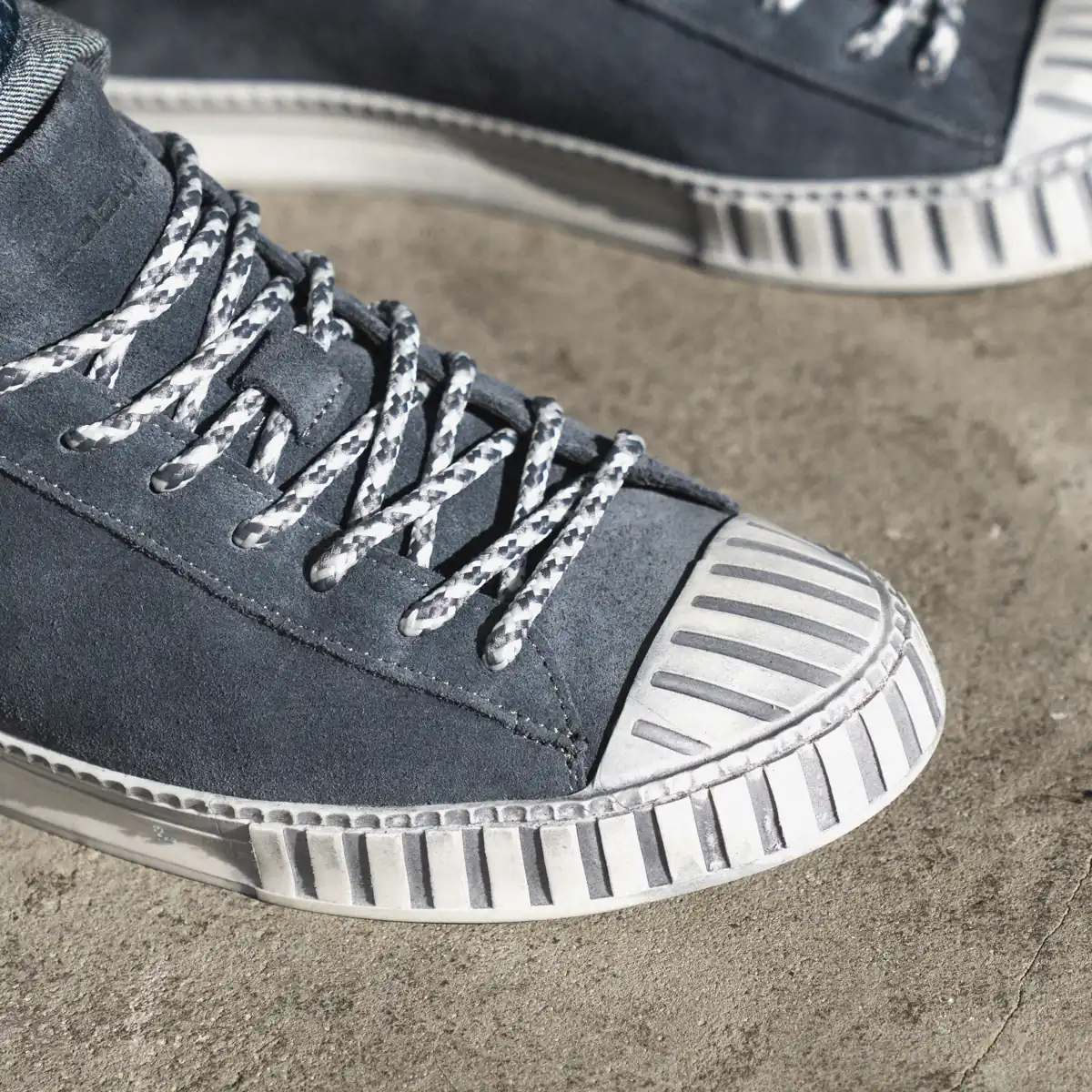
How to tell genuine leather from synthetic by the edge and grain is covered in "Genuine leather vs faux leather". If you are choosing between flat-soled sneakers and cushioned trainers, see "Plimsolls vs trainers".
How do handmade leather sneakers from different makers compare?
The makers below all sell leather sneakers direct from their own sites. Four list core leather models at about $179–$199, two Italian workshops start higher. We include only what each official product page stated on 19 October 2026; where a field is not stated, we say so.
| Maker and model | Made in | Upper and lining | Construction stated | Listed price |
|---|---|---|---|---|
| Veja V-10 Leather | Brazil | Bovine leather from Uruguay, tanned in Brazil; recycled polyester lining | Not stated | About $180 |
| Beckett Simonon Reid | Workshop in Bogotá, Colombia | Full-grain calfskin from a Gold-rated tannery in Arzignano, Italy; Vachetta leather lining | Not stated; made to order | About $179 |
| Oliver Cabell Low 1 | Not stated on the page | Full-grain Italian leather; organic Italian textile lining | Not stated | From about $180 |
| Greats Royale 2.0 | Portugal | Leather upper; leather-lined footbed | Strobel | About $199 |
| Koio Capri | Tuscany, Italy | Full-aniline leather; Italian calf leather lining | Not stated | About $295 |
| Velasca Belèratt | Montegranaro, Italy | Calfskin; calf leather lining | Strobel | About $410 |
| Babylon (Flow, Montana, Space) | Family-owned factory | Genuine leather; Respira Italian lining leather where the composition lists it | Not stated | Under $200 with shipping; duties extra |
Prices are as listed in US dollars on each maker's site in October 2026 and can change. The Beckett Simonon tannery rating refers to the Leather Working Group, an industry body that audits tanneries.
Pros and cons in short:
- Veja: clear sourcing of leather, but a textile lining in this model.
- Beckett Simonon: named tannery and a leather lining; made to order, so you wait longer.
- Oliver Cabell: Italian leather; textile lining, country not stated on the page.
- Greats: made in Portugal, construction named; footbed rather than full lining described.
- Koio and Velasca: Italian workshops and leather linings, at roughly 1.6 to 2.3 times the price of the $180 group.
Which leather sneakers should you buy?
Choose by what matters most to you: lining, provenance, price or speed of delivery. No single maker wins on all four, so decide which compromise you can live with.
- You want a leather lining under $200: Beckett Simonon or Babylon models with Respira lining.
- You want Italian provenance and do not mind the price: Koio or Velasca.
- You value sourcing transparency for the leather: Veja.
- You want white leather sneakers that go with everything: any maker in this list has white versions; keep them clean with our guide "How to clean white leather sneakers" and see "What to wear with sneakers".
- You have wide feet: look for a maker that describes the last, then compare foot length with each size table.
Where does Babylon fit, and where does it not?
Babylon fits buyers who want a leather upper and a leather lining at a factory-direct price under $200, shipping included. It fits less well if you need the pair in days, want to try it in a store abroad or are looking for a stitched-sole luxury sneaker.
Where it fits:
- Factory-direct price. No importer, wholesaler or store margin; the euro price on the English site includes worldwide shipping.
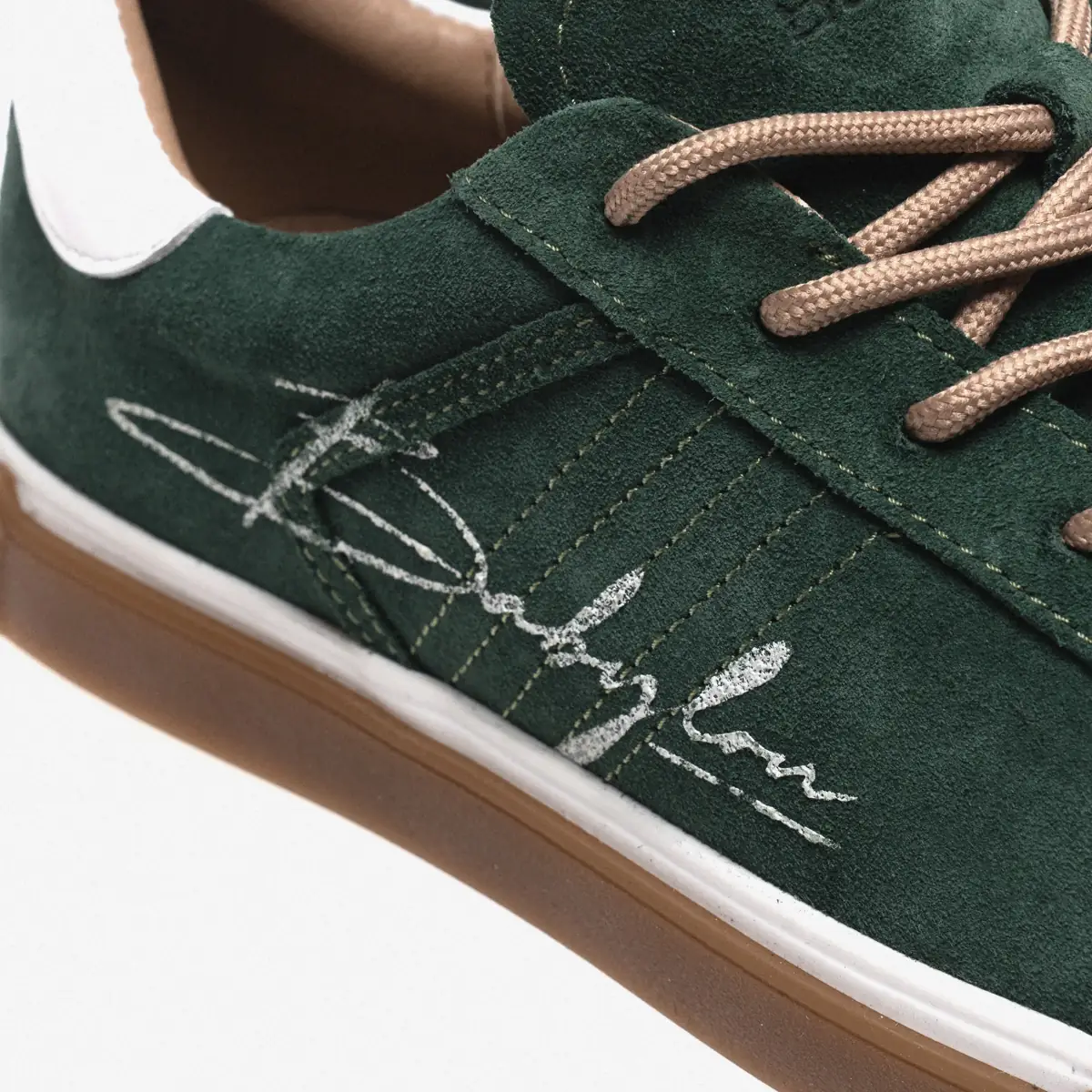
- Leather inside and out. Flow-10 (women's, white) lists a genuine leather upper, Respira Italian lining leather, a leather insole and a light, flexible rubber sole; Flow-98 (men's, green) has the same build with a genuine nubuck upper. Montana-23 has a genuine nubuck upper, a red Respira lining, a porous rubber insole topped with Respira leather and a polyurethane sole, with a reinforced toe.
- Fit. Space-90, a white women's sneaker in combination genuine leather with Respira lining, has a relaxed last that the page describes as suitable for wide feet. A catalogue model can be adapted to foot width or instep height — ask our manager.
- Summer option. Montana-911-P has a perforated genuine leather upper and an insole of foam rubber covered with genuine leather; its composition does not list a lining.
Where it does not:
- Import charges on arrival. The pairs ship from outside the EU, so VAT, the EU flat fee on low-value parcels, local duties or carrier fees may be charged when the parcel arrives; see Shipping & duties.
- Delivery time. Usually 5–10 business days (7–12 to the US, Canada, Israel, New Zealand, Georgia and Montenegro), plus up to 3 business days if your size is made to order.
- No stores abroad. Trying on means ordering; returns are possible within 30 days of delivery, and return postage for a non-defective pair is on you (International returns).
- Sole construction. Our pages state the sole material, not a stitched construction, so do not expect a stitched cupsole unless a model's composition says so.
 LeatherWomen's leather sneakers Flow-10Lining: Respira — Italian lining leather; insole: leather; sole: light€103View
 NubuckMen's nubuck sneakers Flow-98Lining: Respira — Italian lining leather; insole: leather; sole: light€103View
 NubuckMen's nubuck sneakers Montana-23Lining: breathable Italian Respira leather; insole: porous rubber topped with Respira leather; sole: polyur…€103View
 LeatherMen's summer leather sneakers Montana-911-PInsole: foam rubber covered with genuine leather; sole: polyurethane; sole attachment: cemented and pressed€98View
 LeatherWomen's sneakers in combination leather Space-90Lining: Respira — Italian lining leather; sole: flexible; sole attachment: cemented and pressed€103View
To choose the size, measure your foot and compare the length with the table on that model's page; "EU, US and UK shoe sizes" explains the conversion. More about how we work is on Our story. Browse men's leather sneakers, women's leather sneakers, men's white sneakers and women's white sneakers.
FAQ
Are handmade leather sneakers worth the extra money?
They are when the money goes into materials you can check: a full leather upper, a leather lining, a firm heel counter and a well-finished sole edge. A pair built that way holds its shape and can be cleaned and conditioned for several seasons. If the lining is thin textile and the edges are rough, the label adds little.
What is the difference between full-grain and corrected-grain leather?
Full-grain leather keeps the natural outer surface of the hide, so it breathes, shows slight variation in the grain and ages well. Corrected-grain leather has the surface sanded and coated with a finish to hide flaws, which looks uniform at first but cracks along the flex line sooner. Makers rarely label the grade, so check the surface and the edge.
Is Italian leather always better?
Not automatically. Italy has many good tanneries, but the grade, thickness and finish of a hide matter more than the country. A well-chosen Spanish or Turkish leather can outlast a thin Italian one. Read what the maker says about the grade and the lining, and look at the pair itself.
Why do some DTC sneakers cost $180 and others over $400?
Mostly labour costs where the pair is made, the leather supplier and finish, the construction and the brand's marketing budget. In our comparison, the makers in Brazil, Portugal and Colombia list their pairs between about $179 and $199, while the two Italian models we checked are listed at about $295 and $410 on their makers' sites.
Do I pay import duties when ordering Babylon sneakers from abroad?
Possibly. Babylon's euro prices include worldwide shipping, but import duties, VAT or carrier fees of your country are not included and are paid on arrival where they apply. The Shipping & duties page explains the rules for the EU, the UK, the US and Canada. Delivery usually takes 5–10 business days (7–12 to the US, Canada, Israel, New Zealand, Georgia and Montenegro).
How should handmade leather sneakers fit?
Snug at the heel, with room to move your toes and no pressure across the widest part of the foot. Leather softens a little but does not grow a size. Measure your foot length in centimetres and compare it with the size table of that exact model, because each last is different.
Works at Babylon's family-owned factory in Kharkiv, Ukraine. The factory employs 25 craftspeople and 2 technologists; leather and fur come from Spain and Turkey, soles are made to order, and every pair is made by hand. All articles by this author
Sources and notes
- Leather — Wikipedia
- Aniline leather — Wikipedia
- Shoe last — Wikipedia
- Goodyear welt — Wikipedia
- Direct-to-consumer — Wikipedia
- Directive 94/11/EC on the labelling of materials used in footwear — EUR-Lex
- Leather Working Group
- VEJA — V-10 Leather product page
- Oliver Cabell — Low 1 White product page
- Beckett Simonon — Reid Sneakers product page
- Beckett Simonon — home page (made to order)
- GREATS — The Royale 2.0 product page
- Koio — Capri product page
- Velasca — Belèratt product page
 How to choose
Felt boots today: how wool felt works in a city winter
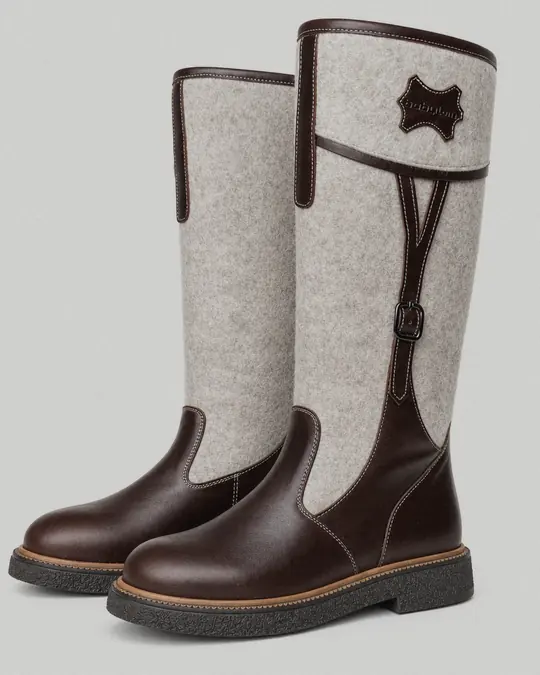
Felt is one of the oldest winter materials, and it is back in city footwear. Here is what felt actually is, why it keeps feet warm, where it struggles, and how modern felt boots and felt sneakers are built to cope with wet streets.
 How to choose
Shoes as a New Year gift: how to get the size right
Warm winter boots, sheepskin boots or fur-lined sneakers make a gift that gets worn all winter, as long as the pair fits. Here is how to find out the size without spoiling the surprise, which styles are easiest to get right and how exchanges work if you miss.
 How to choose
Men's shearling boots: a buyer's checklist and how to style them
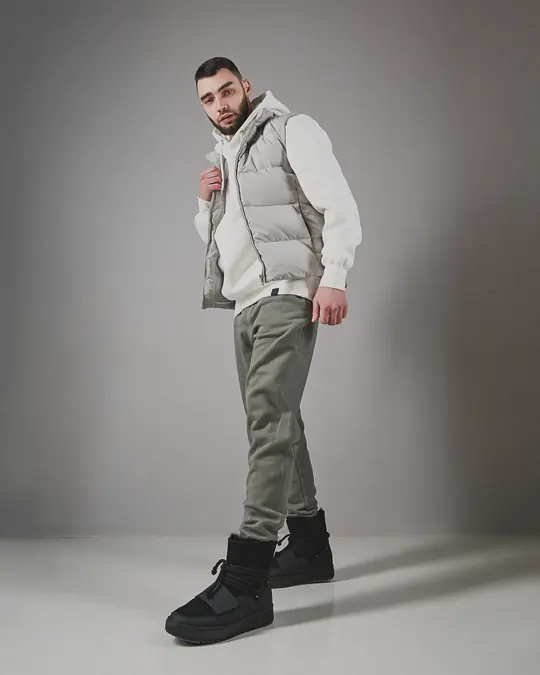
Men's shearling boots differ more than they look: in how they fasten, what the outside is made of, the sole and the height. Here is a checklist to compare pairs, and outfits from workwear to an overcoat.