



How to lace sneakers: 4 ways for low-top and high-top pairs
How to lace sneakers criss-cross, straight, with a window or a heel lock — step by step, with diagrams. Plus how to lace them so they don’t pinch, how to hide laces and what length you need.

In short
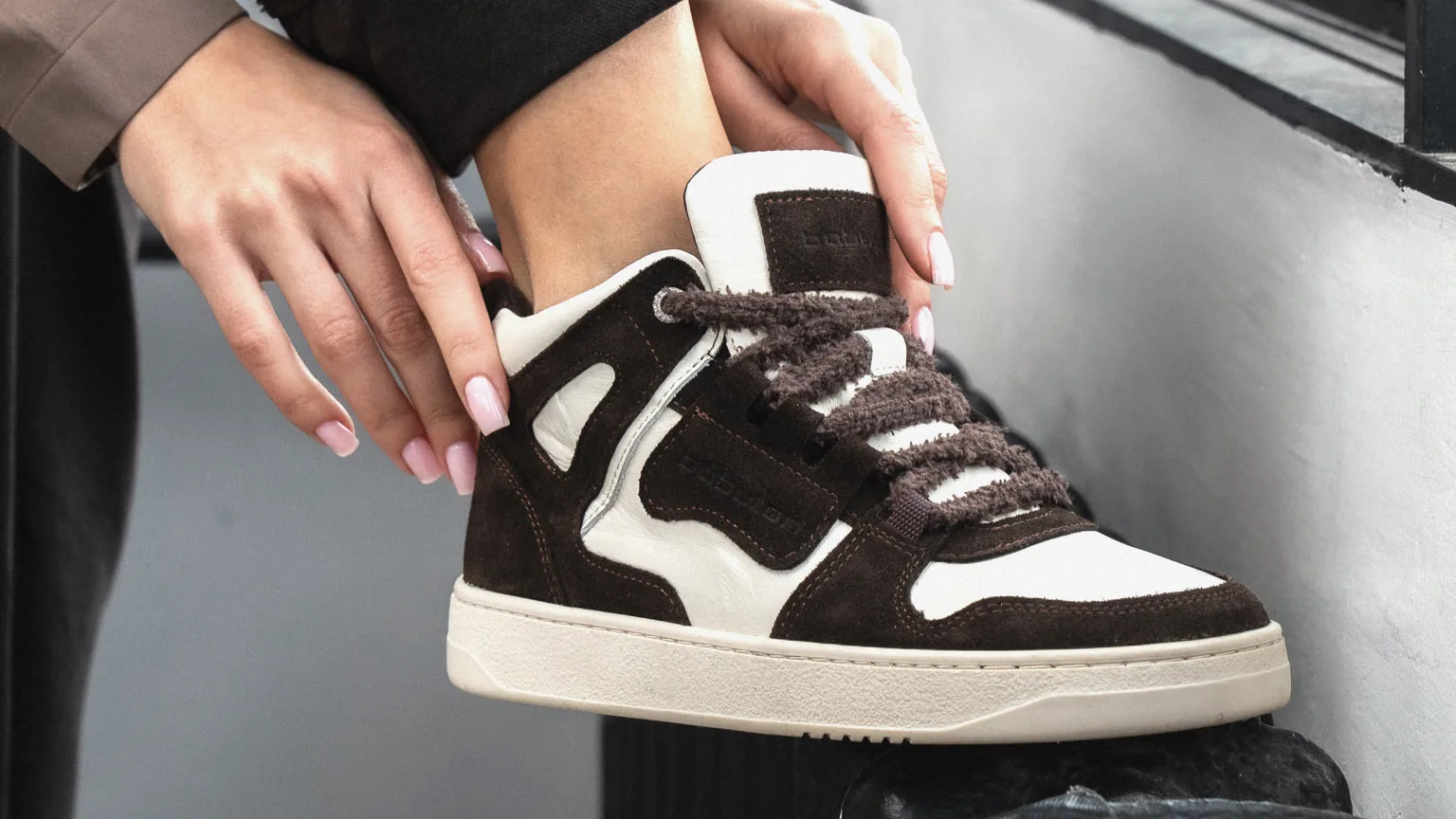
Most sneakers are laced criss-cross. Straight bar lacing hides the lace for a cleaner look, window lacing or loose lower crosses help with wide feet or a high instep, and a heel lock on the top eyelets stops your heel slipping in high-tops. Low-tops usually need 100–130 cm laces, high-tops 130–170 cm. If a pair pinches even with loose laces, check the size. Babylon is a family-owned factory in Kharkiv making handmade sneakers since 1997.
Which lacing method should you choose for sneakers?
For most sneakers, classic criss-cross lacing is enough: it holds the foot evenly on low-tops and high-tops alike. For a cleaner look, lace straight; for a high instep, use a window; for heel slip in high-tops, use a heel lock.
Sneakers are laced from the toe up, so the first pair of eyelets is the one closest to your toes. Four methods are worth knowing:
- Criss-cross. The all-rounder: easy to tighten and secure.
- Straight (bar) lacing. Only horizontal bars show; the rest of the lace is hidden under the eyelet flaps.
- Window lacing. Criss-cross with one uncrossed section that takes pressure off the instep.
- Heel lock. Two small loops on the top eyelets hold the ankle firmly in high-tops.
How do you lace sneakers criss-cross?
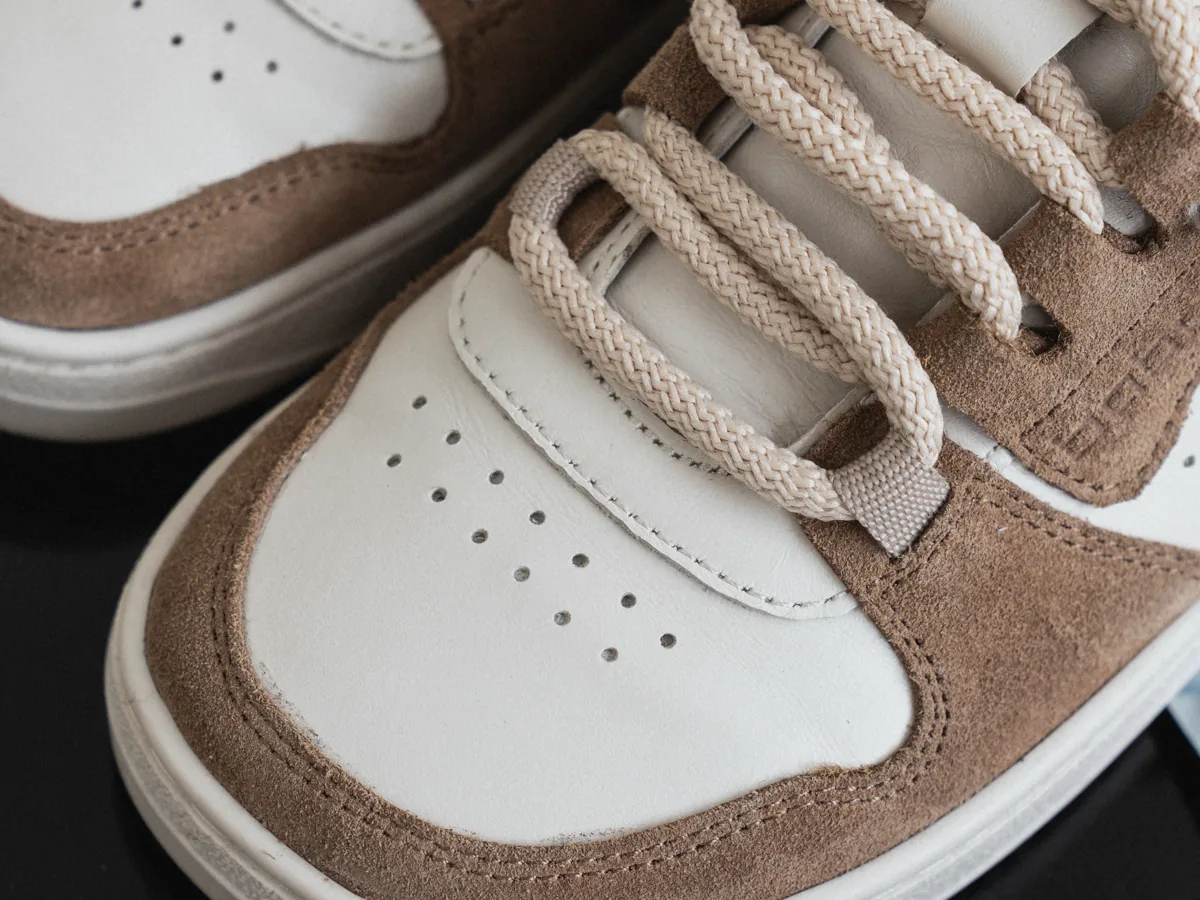
Run the lace straight across the bottom pair of eyelets, even out the ends and cross them all the way up, feeding each end into the eyelets the same way every time — from above.
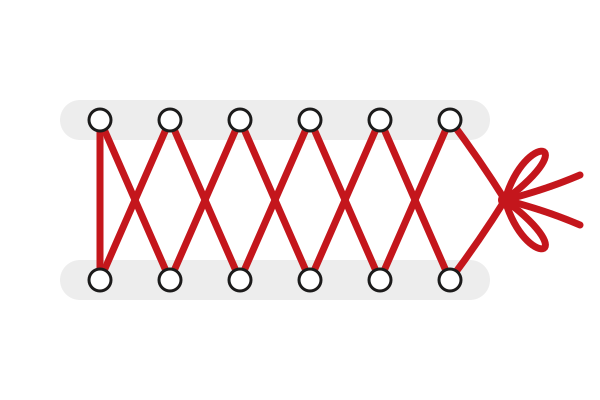
- Thread the lace through the two bottom eyelets so the straight section lies over the tongue, and even out the ends.
- Cross the ends and feed each one into the next eyelet on the opposite side.
- Repeat up to the top pair. On low-tops you can leave the top pair empty if your foot already feels secure.
- Tighten from the toe upwards, one cross at a time, so the tension spreads evenly instead of bunching at the ankle.
How do you lace sneakers straight, without crossovers?
Use straight bar lacing: only horizontal bars show on top, while the lace between them runs inside, under the eyelet flaps. It comes out neatest on an even number of eyelet pairs, such as six.
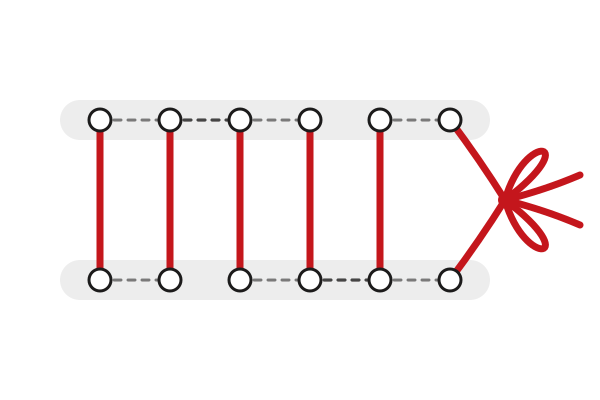
- Run the lace straight across the bottom pair of eyelets and feed both ends inside the shoe.
- Bring the left end out through the second left eyelet and straight across into the second right one.
- Run the right end up inside to the third right eyelet, then straight across into the third left one.
- Keep going: each end skips up two pairs inside, then crosses straight over. Both ends exit at the top pair.
It holds a little less firmly than criss-cross, but no crossovers press on your instep.
How should you lace sneakers so they don’t pinch wide feet or a high instep?
Loosen the lacing exactly where it pinches. For a high instep, use window lacing: for one or two pairs of eyelets the lace runs up the side without crossing. For wide feet, keep the lower crosses loose and don’t over-tighten overall — laces should hold the foot, not squeeze it.
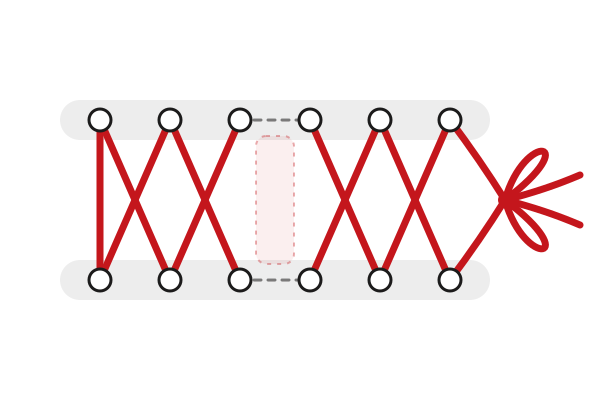
- High instep. Lace criss-cross up to where it presses, feed each end into the next eyelet on the same side, then continue criss-cross.
- Wide feet. Leave the lower crosses loose, or lace the bottom section straight, so the toe area can open up.
Some models are designed for wider feet from the start: the specification of the Space-21-X high-tops lists a fit suitable for wide feet. Browse more models in men’s sneakers and women’s sneakers.
How do you lace high-top sneakers so your heel doesn’t slip?
Tie a heel lock on the top eyelets: feed each end into the top eyelet on the same side to make two small loops, then cross the ends and thread them through the opposite loops. Pulled tight, it keeps your heel in place.
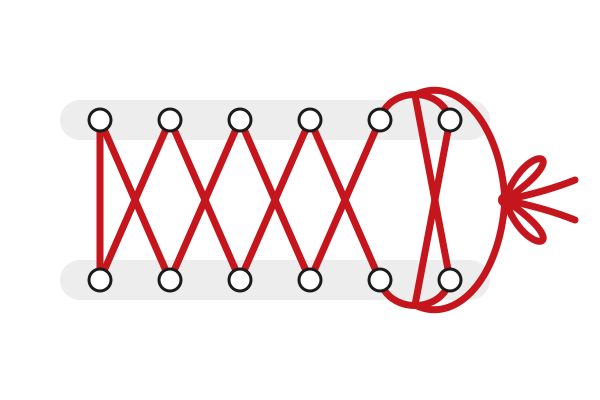
- Lace criss-cross up to the second-to-last pair of eyelets.
- Take each end straight up its own side into the top eyelet, leaving a small loop.
- Cross the ends and thread each one through the loop on the opposite side.
- Pull the ends down and outwards so the loops grip the ankle, then tie your bow.
A heel lock pays off most on high-top sneakers. Insulated high-tops are collected in men’s winter sneakers. The Space-21-X offers a choice of Respira, an Italian lining leather, or fur; the women’s Space-74-X, Respira or natural fur.
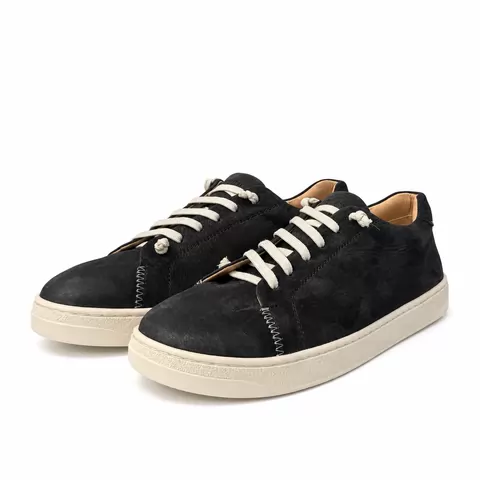 NubuckMen's nubuck sneakers DRIFT-11Lining: Respira — Italian lining leather; last: anatomical; laces: rubber€103View
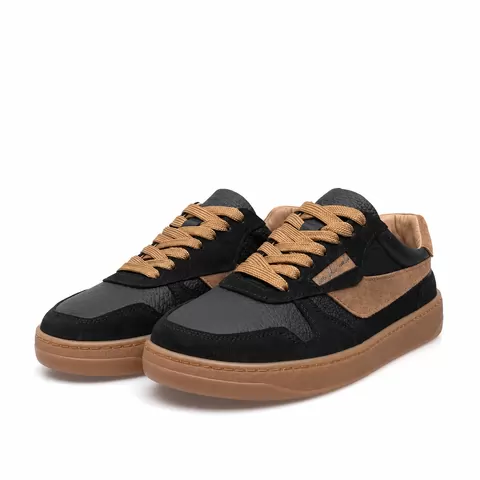 NubuckMen's sneakers in leather and nubuck Alen-11Lining: Respira — Italian lining leather; sole: flexible; sole attachment: cemented and pressed€103View
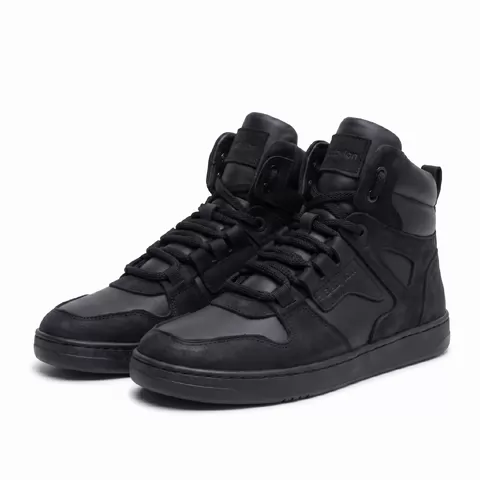 NubuckMen's high-top sneakers in leather and nubuck Space-21-XLining options: Respira — Italian lining leather or fur (same price); sole: rubber; sole attachment: cement…€121View
 LeatherWomen's leather sneakers Flow-10Lining: Respira — Italian lining leather; insole: leather; sole: light€103View
 LeatherWomen's sneakers in combination leather Space-94Lining: Respira — Italian lining leather; sole: flexible; sole attachment: cemented and pressed€103View
 NubuckWomen's high-top sneakers in leather and nubuck Space-74-XLining options: Respira — Italian lining leather or natural fur (+€7); last: anatomical; sole: TPE (thermop…€121View
How do you tie laces so they stay tied, and how do you hide them?
The simplest fix is a double knot: after your usual bow, tie the loops together once more. Also check the bow itself: a good one sits across the shoe, while a crooked bow that points towards the toe comes undone more often.
- Double knot. Holds firmly but takes longer to undo.
- A straight bow. A crooked bow is usually a granny knot. Retie it, starting the first cross in the opposite direction, and the bow will sit across the shoe.
- Hide the ends. Tuck the bow and ends under the top crosses, or inside along the tongue if that doesn’t press on your instep.
Another option is rubber laces that you don’t have to retie every time. The men’s DRIFT-11 sneakers, for example, list rubber laces in their specification, and the product description notes that they are quick to fasten and always look neat.
What length of laces do sneakers need?
Count the pairs of eyelets: low-tops with 5–6 pairs usually need 100–130 cm laces, high-tops with 7–8 pairs need 130–170 cm. Or simply measure your old lace.
| Eyelet pairs | Sneaker type | Lace length |
|---|---|---|
| 4 | low-top, short lacing | 90–100 cm (35–40 in) |
| 5 | low-top | 100–120 cm (40–47 in) |
| 6 | low-top | 120–130 cm (47–51 in) |
| 7 | mid-top and high-top | 130–150 cm (51–59 in) |
| 8 | high-top | 150–170 cm (59–67 in) |
| 9 or more | high-top | 170–180 cm (67–71 in) |
This is a common rule of thumb, not an exact standard: eyelet spacing varies between models. For a heel lock, go one size longer.
How should you care for shoelaces?
Take the laces out and wash them separately by hand in warm, mildly soapy water, then dry them flat — never on a radiator.
For cleaning the pair itself — upper, sole and inserts — see how to clean white leather sneakers at home. And if you are swapping laces to refresh a look, our guide on how to wear sneakers has outfit ideas.
Babylon is a family-owned factory in Kharkiv, Ukraine, making shoes since 1997. Our sneakers are handmade, with quality control at every stage of production.
FAQ
Do you have to lace sneakers to the top eyelet?
Not necessarily. On low-tops you can leave the top pair empty if your foot feels secure and your heel doesn’t slip. On high-tops it is better to use the top eyelets: they hold the ankle, and with a heel lock they also stop your heel from lifting as you walk.
How do you lace sneakers so the laces don’t show?
Use straight bar lacing: only horizontal bars show on top, and the rest of the lace runs inside under the eyelet flaps. Tuck the bow and the ends under the top bars or inside along the tongue. On low-tops that slip on easily, you can tie the ends under the tongue and use a shoehorn.
Why do my sneaker laces keep coming undone?
The usual culprit is a granny knot: the bow sits along the shoe instead of across it and loosens quickly. Retie the laces, starting the first cross in the opposite direction. A double knot also helps. Smooth synthetic laces slip more than cotton ones, so tie them with extra care.
What should you do if sneakers press on your instep?
Loosen the lacing and use a window: where it presses, run the lace up the side without crossing. You can also skip the eyelet over the highest point of your instep. If the pressure stays even with loose laces, measure your foot and check the size chart on the product page.
How do you know what length of laces you need?
The easiest way is to measure your old lace end to end. If you don’t have it, count the eyelet pairs: 5–6 pairs usually take 100–130 cm, 7–8 pairs take 130–170 cm. For a heel lock or wide lacing, choose slightly longer laces.
Works at Babylon's family-owned factory in Kharkiv, Ukraine. The factory employs 25 craftspeople and 2 technologists; leather and fur come from Spain and Turkey, soles are made to order, and every pair is made by hand. All articles by this author
Sources and notes
 Size & fit
Wide toe box shoes vs barefoot shoes: what's the difference?
Many people who look for barefoot shoes really want one thing: room for their toes. A wide toe box is one feature of barefoot shoes, but it also exists in ordinary cushioned sneakers and warm winter boots. Here is how the two differ.
 Size & fit
Anatomical shoe last: what it is and how it feels on the foot
“Anatomical last” appears in the composition of many sneakers and boots, but what does it actually mean? Here is a plain explanation of how such a last fits, who it suits and how to get the size right.
 Size & fit
How to stretch leather shoes and sneakers at home when they feel tight
Leather shoes can be stretched a little in width, but hardly at all in length. Here are the safe methods, the risky hacks, and the cases where exchanging a tight pair makes more sense than stretching it.