


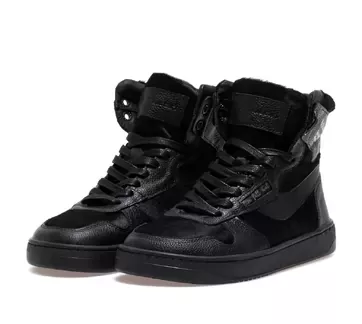

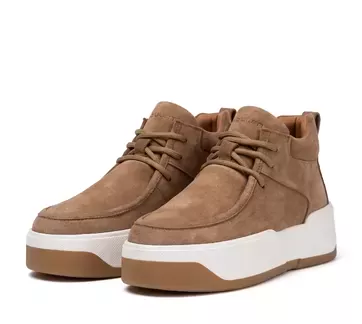
How to stretch leather shoes and sneakers at home when they feel tight
Leather shoes can be stretched a little in width, but hardly at all in length. Here are the safe methods, the risky hacks, and the cases where exchanging a tight pair makes more sense than stretching it.
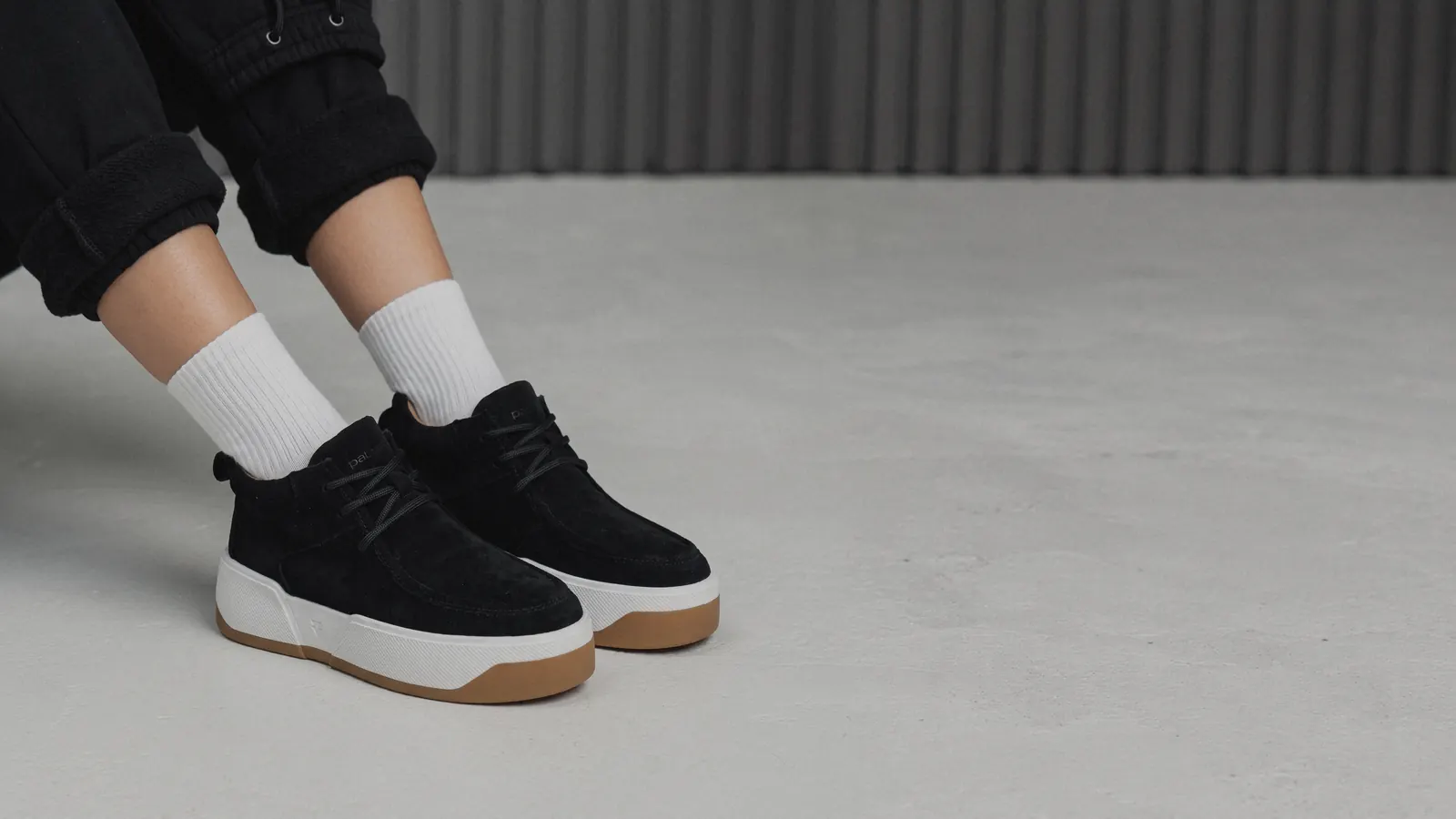
In short
Leather shoes can only be stretched a little, and only in width: shoe-care specialists estimate about half a size, occasionally up to one size. Length barely changes because the toe and heel have stiffeners. Safe methods are wearing them in at home with thick socks, a shoe stretcher, a stretch spray and a cobbler. Babylon, a Ukrainian footwear manufacturer, suggests checking the exchange terms first if a new pair feels tight: returns apply only to unworn shoes.
Can leather shoes be stretched?
Yes, but only a little and mostly in width. Genuine leather gives under the pressure and warmth of your foot, so a pair that pinches at the sides can ease up. Length barely changes: the toe and heel hold their shape and the sole does not get longer.
Specialists at Skolyx, a Swedish shoe-care retailer, estimate that ordinary genuine leather gives about half a size, occasionally up to one size, and only in width. Length cannot be changed much, they explain, because most shoes have firm stiffeners in the toe and heel. So before doing anything, work out where the pair is tight:
- Pressure at the sides, across the toes or on the bunion area. Stretching can help.
- Toes hit the front, the heel barely goes in. The pair is too short; only another size will help.
- Pressure over the instep. Loosen and re-lace first, then think about a stretcher.
Tight shoes are not a minor issue: the NHS lists shoes of the wrong size among the common causes of corns and calluses.
How do you break in new leather sneakers at home?
The gentlest method is wearing them indoors for short periods with thick socks. Warmth and movement gradually shape the leather to your foot. The NHS gives the same advice to avoid blisters: wear new shoes for short periods at first.
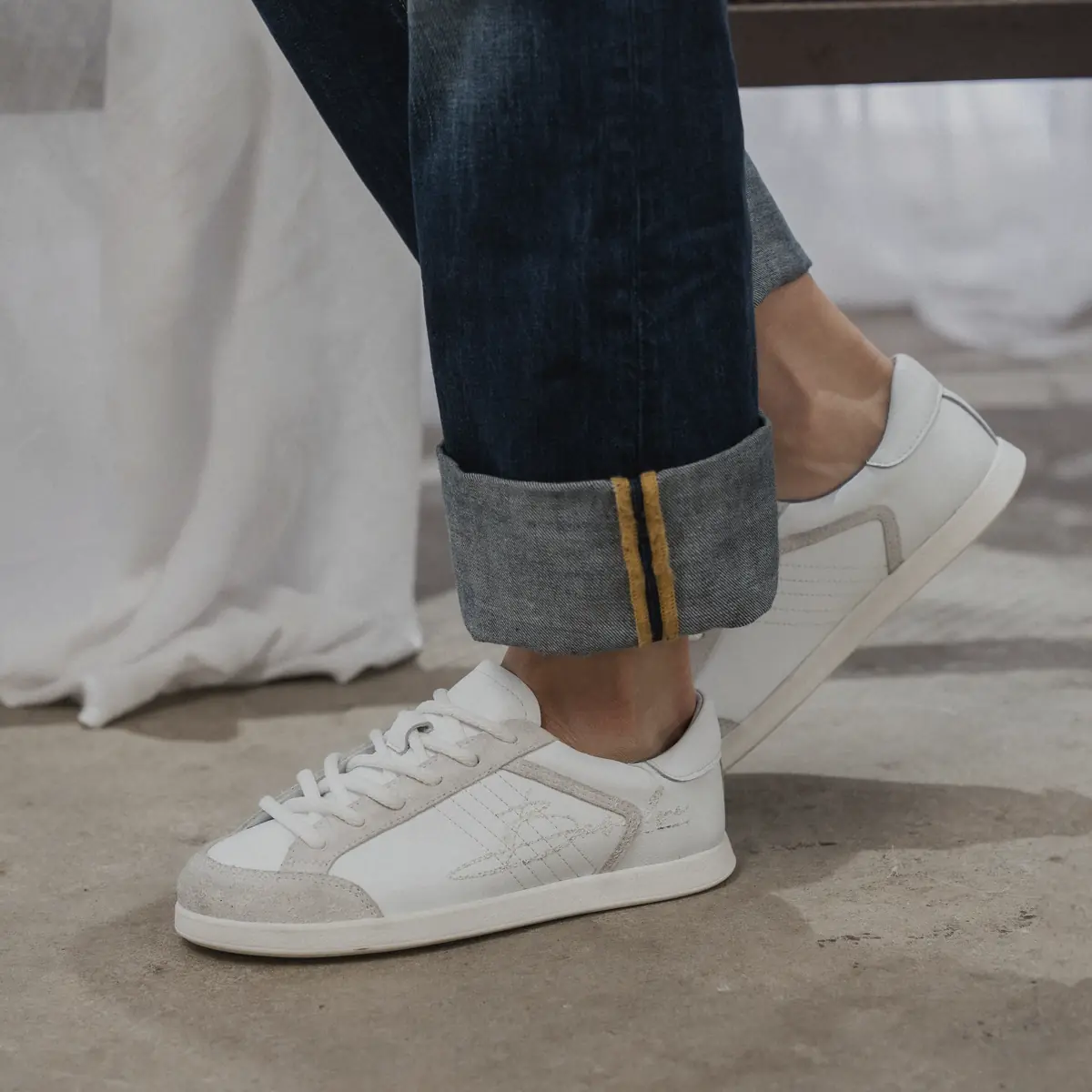
- Socks. One thick pair or two regular pairs, so the fit feels noticeably snugger but not painful.
- Time. 20–30 minutes a few times a day, not a whole day at once.
- Laces. Lace up as usual so your foot sits as it will outdoors.
- Clean floor. Walk on a carpet or wooden floor and do not go outside until you are sure you are keeping the pair. The exchange section below explains why.
If the pair is just as tight after two or three evenings, home wearing will not fix it: move on to a stretcher or an exchange.
How do you stretch shoes in width?
The most reliable tool is a shoe stretcher, with or without a stretch spray. A stretcher is a foot-shaped device with a screw that widens it; plug-in knobs let you target a bunion or little-toe spot.
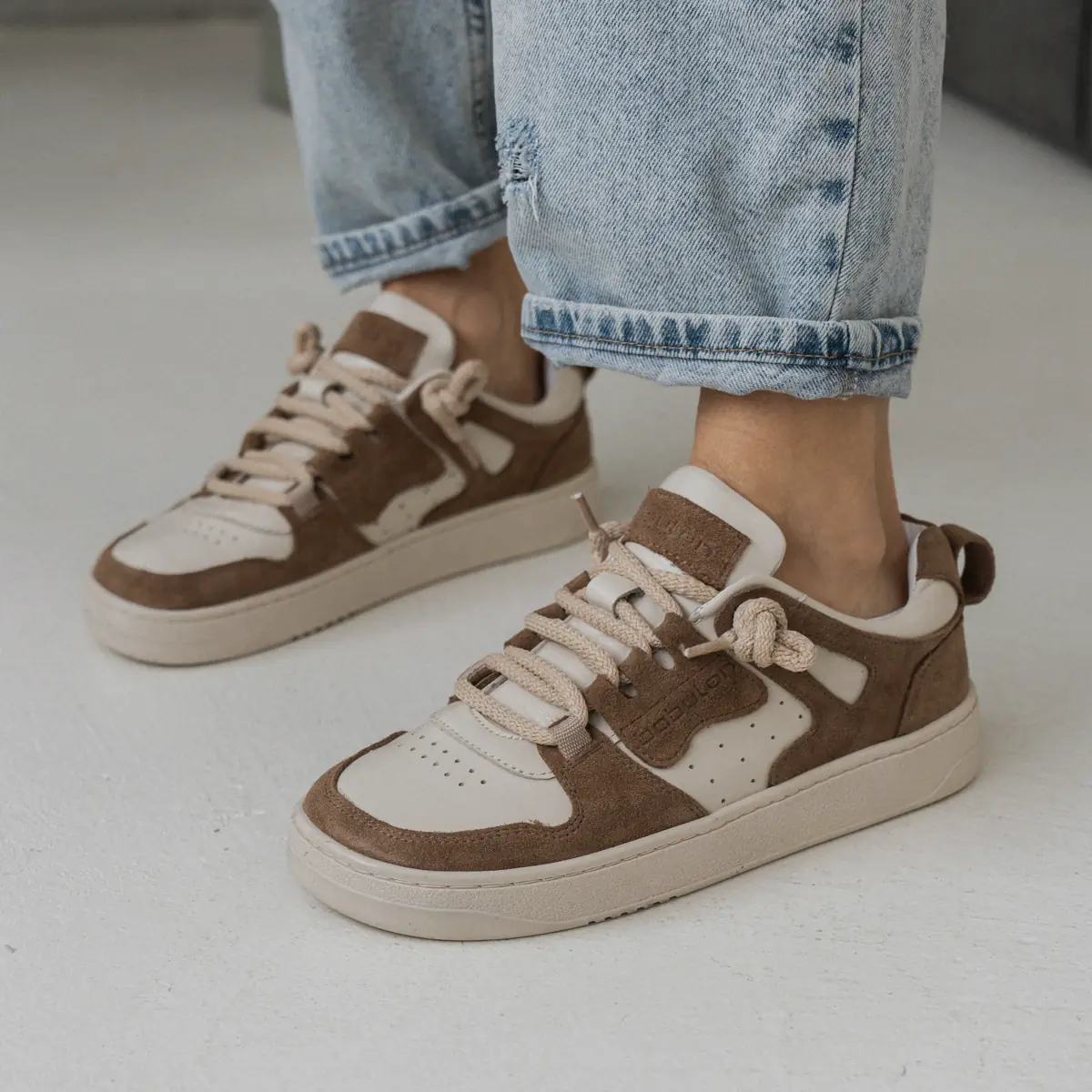
- Spray. If you like, apply a stretch spray to the tight area, mostly inside. Tarrago, the spray maker, advises testing it on a hidden area first and letting it dry for about 5 minutes.
- Stretcher. Insert it, turn to light tension and leave it overnight, about 12 hours.
- Repeat. Try the shoes on and repeat with slightly more tension if needed. Shoe-care specialists warn against doing it all at once, as too much tension can cause cracks. Do not push the stretcher right into a hard toe cap: only the leather behind it will stretch.
A stretch spray softens the leather fibres, so it works together with a stretcher or wearing. On its own it will not widen the shoe.
Can shoes be stretched in length?
Practically no. Most shoes have stiffeners in the toe and heel; even leather ones give only marginally, and the sole does not lengthen at all. If your toes hit the front, the pair is too short.
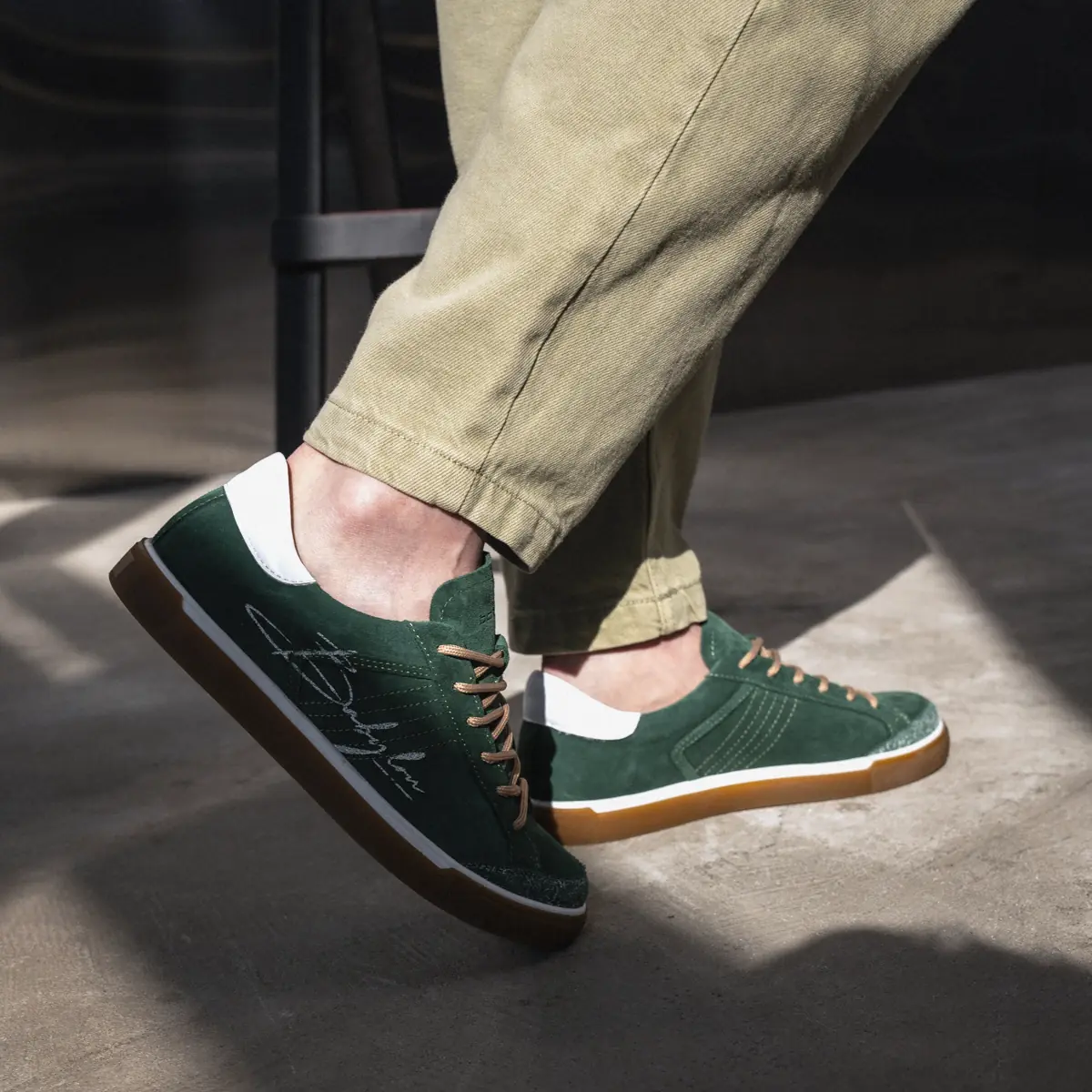
In short sneakers the foot slides forward with each step and the toes knock against the front. Only a bigger size will help. To get the length right next time, follow our guide on how to measure your foot at home.
When should you take shoes to a cobbler?
When the pair is expensive, made of thick leather or tight in one particular spot. A cobbler stretches shoes on professional equipment and can target an area such as the bunion. Shoe-care specialists also recommend a cobbler for expensive, delicate or tricky pairs. Expect the same half size in width at most: even a cobbler cannot add length.
Which home stretching hacks damage shoes?
Boiling water, a freezer bag of water, a hair dryer and alcohol on nubuck or suede are the best-known hacks, and all of them can ruin a pair. Leather dislikes sudden heat, long soaking and liquids that leave marks.
| Method | What can happen |
|---|---|
| Hot or boiling water | Leather in hot water can shrink, harden and turn brittle, leaving the pair even tighter |
| Bag of water in the freezer | Water expands by about 9% as it freezes, pushes unevenly, and the leather is left wet after thawing |
| Hair dryer or radiator | Sudden heat dries leather out; Babylon product pages say not to dry shoes with a hair dryer or on a radiator to avoid deformation |
| Alcohol on nubuck or suede | Liquid leaves dark spots and tide marks on the nap, and excess moisture damages suede |
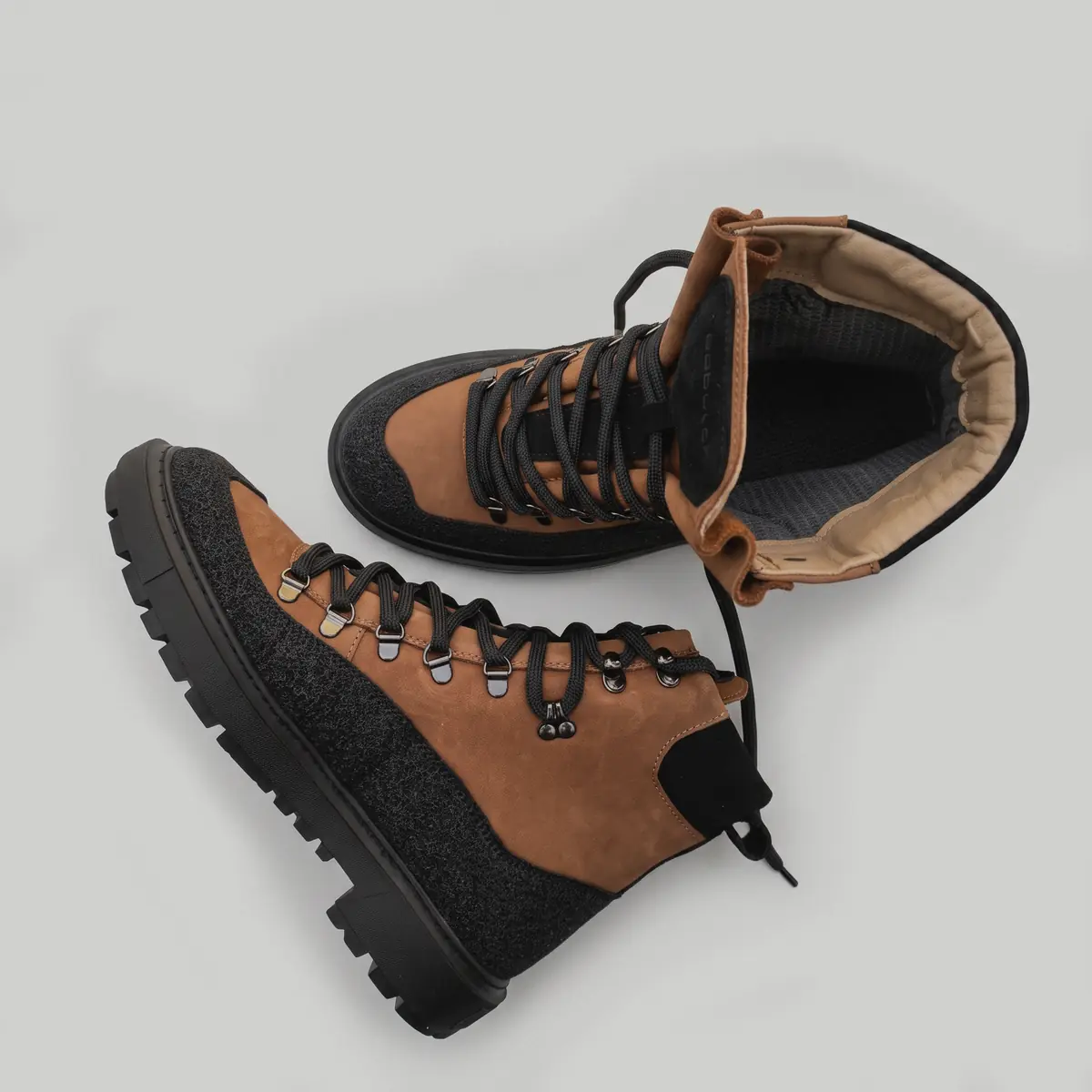
If your shoes get wet, let them dry naturally, away from direct sun and heat sources. Do not dry them on a radiator or with a hair dryer, or the leather may lose its shape.
How do you stretch shoes made of different materials?
It depends on the upper and lining. Smooth genuine leather gives best; nubuck and suede also give but dislike liquids. Patent and faux leather barely stretch, and sheepskin-lined pairs should not be stretched at all.
| Material | Does it stretch? | What to do |
|---|---|---|
| Smooth genuine leather | A little, in width | Wearing in, stretcher, spray, cobbler |
| Nubuck and suede | A little, in width | Stretcher; spray only after a hidden-area test, no alcohol or water |
| Patent leather, faux leather | Hardly | The plastic finish can crack, so exchange instead |
| Sheepskin-lined | Not needed | The fleece packs down with wear; do not soak or heat |
To tell real leather from faux, see genuine leather or faux leather. Brush nubuck and suede after using a spray, as explained in how to clean nubuck and suede. Why new sheepskin boots feel snug is covered in our sheepskin boot sizing guide.
When is exchanging better than stretching?
If the pair is too short, tighter than about half a size, or made of patent or faux leather, exchange it. Babylon accepts international returns and exchanges within 30 days of delivery for unused, unworn items in their original condition.
- Try them on indoors, on a clean floor. Walk around for a few minutes.
- Too short or very tight? Contact our manager before using a stretcher or spray: items showing signs of wear or alteration may be refused.
- Exchange. Exchanges depend on stock; for size exchanges, return postage is paid by the customer.
Full details are on the returns and exchanges page.
How do you choose a size that will not pinch?
Measure your foot in the evening, standing, and compare the length with the size chart on the specific model's page. Almost every Babylon model is made on its own last, so the same size number can mean a different foot length in different models.
Babylon is a Ukrainian footwear manufacturer with a family-owned factory in Kharkiv since 1997, and its shoes are handmade from genuine leather. Shipping worldwide is free and takes 5–10 business days (7–12 to the US, Canada, Israel, New Zealand, Georgia and Montenegro). Four leather models with a size chart on their pages:
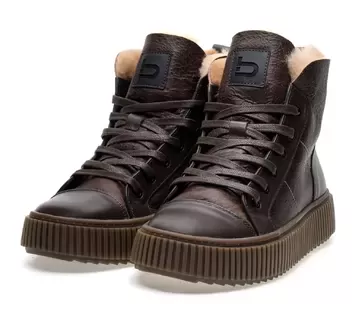
- Women's Flow-10 sneakers: genuine leather upper, soft leather lining, leather insole, light flexible sole.
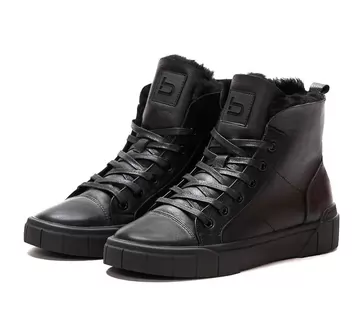
- Men's Flow-98 sneakers: the same build with a genuine nubuck upper, plus a protective liquid-rubber coating on the toe.
- Women's Space-94 sneakers: combination genuine leather with leather lining; per the product page, a roomy fit that does not pinch even a wide foot.
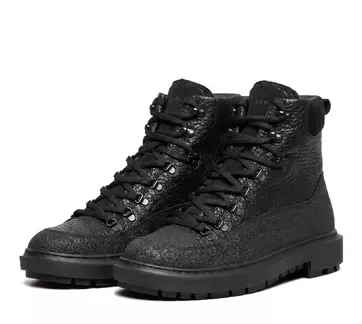
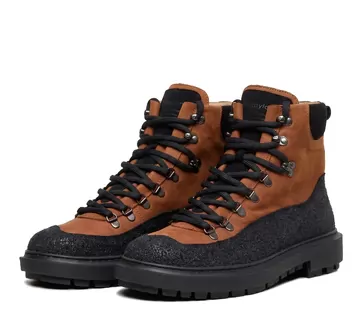
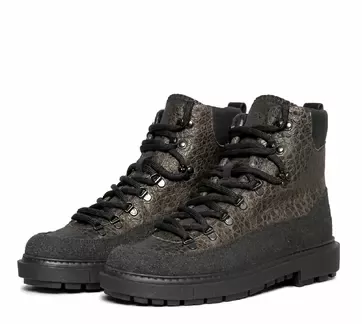
- Men's Armor-24 boots: genuine leather, breathable Respira leather lining or Winterfrost 500 insulation, chunky sole with deep tread.
 LeatherWomen's leather sneakers Flow-10Lining: Respira — Italian lining leather; insole: leather; sole: light€95View
 NubuckMen's nubuck sneakers Flow-98Lining: Respira — Italian lining leather; insole: leather; sole: light€95View
 LeatherWomen's sneakers in combination leather Space-94Lining: Respira — Italian lining leather; sole: flexible; sole attachment: cemented and pressed€95View
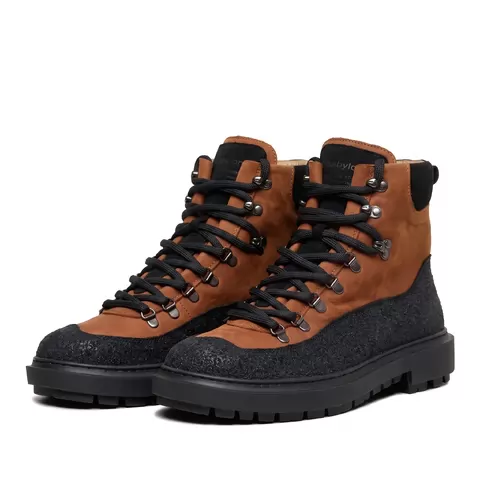 LeatherMen's leather boots Armor-24Winterfrost 500: insulation between the upper and the lining; rated from +5 to −15 °C; sole: chunky€120View
If your foot is wide, send our manager its width along with the length and we will suggest a model. See how to choose your size for measuring tips, and browse men's sneakers and women's sneakers.
FAQ
How much can leather shoes be stretched?
Not much. Shoe-care specialists estimate that ordinary genuine leather gives about half a size, sometimes up to one size, and only in width. The result depends on the thickness of the leather, the lining and the cut. If a pair is tighter than that, stretching will not fix it: you need another size or another model.
Can I stretch sneakers a full size longer?
Practically no. Sneakers have stiffeners in the toe and heel, and the sole does not get longer. A stretcher will widen the upper slightly, but your toes will still hit the front. If the sneakers are too short, the right fix is an exchange for a bigger size while the pair is unworn and in original condition.
How long should a shoe stretcher stay in?
Usually one night, about 12 hours, at light tension. Then try the shoes on and repeat if needed, increasing the tension a little each time. Do not try to stretch everything at once: too much force can damage both the stretcher and the leather, and may crack the upper at the flex points.
Can faux leather or patent leather shoes be stretched?
Hardly. Faux leather is a polymer coating on a fabric base, and patent leather also has a plastic finish. These materials barely give and can crack at the creases. If a faux or patent pair feels tight, exchanging it for another size is safer than trying a stretcher or a hot hair dryer.
Will a pair be accepted for exchange after stretching?
International returns and exchanges at Babylon are accepted within 30 days of delivery for unused, unworn items in original condition, and items showing signs of wear or alteration may be refused. After spray, a stretcher or outdoor walks, the pair may no longer qualify, so try it on indoors first and contact our manager.
Should I stretch sheepskin boots that feel snug?
Usually not. A new pair with sheepskin inside feels snug because the fleece is still springy, and it packs down to the shape of your foot with wear. Do not soak or heat sheepskin boots to stretch them. But if your toes hit the front or the pair hurts, you need a different size.
Works at Babylon's family-owned factory in Kharkiv, Ukraine. The factory employs 25 craftspeople and 2 technologists; leather and fur come from Spain and Turkey, soles are made to order, and every pair is made by hand. All articles by this author
Sources and notes
- Skolyx: Shoe stretchers — how much shoes can be stretched
- Skolyx: Guide on how to stretch shoes yourself
- Skolyx: Tarrago Shoe Expander
- The Shoe Care Shop: How to stretch tight leather shoes
- NHS: Blisters
- NHS: Corns and calluses
- Leather — Wikipedia
- Ice — Wikipedia
- Patent leather — Wikipedia
- Artificial leather — Wikipedia
- Suede — Wikipedia
 Size & fit
EU, US and UK shoe sizes: conversion chart and how to measure your foot
A conversion chart gets you to the right neighbourhood; your foot length in centimetres gets you to the right door. Here are the women's and men's EU–UK–US charts, why they are only a guide, and how to check a size against the chart of the exact model.
 Size & fit
How to choose your sheepskin boot size: how much room and how to measure
Sheepskin boots are chosen by foot length and the size chart of the specific model, not by your sneaker size. Here is why the fleece inside changes the fit, how much toe room to leave and what to do if you fall between two sizes.
 Size & fit
How to measure your foot at home and choose your shoe size online
When you buy shoes online, choose by foot length in centimetres, not by the number you are used to. Here is how to measure your foot correctly, how centimetres relate to EU sizes, and how to use the size table on each Babylon product page.